Caiman Research Bootcamp
Crocodilian Field Methods in the Amazon
Capture, Study and Tag Wild Caiman in the Amazon
A 2-week intensive field course focused on real crocodilian research and population monitoring.
Overview
The Hoja Nueva Caiman Research Course is a highly immersive, field-based program designed for individuals interested in or passionate about the research and conservation of crocodilians.
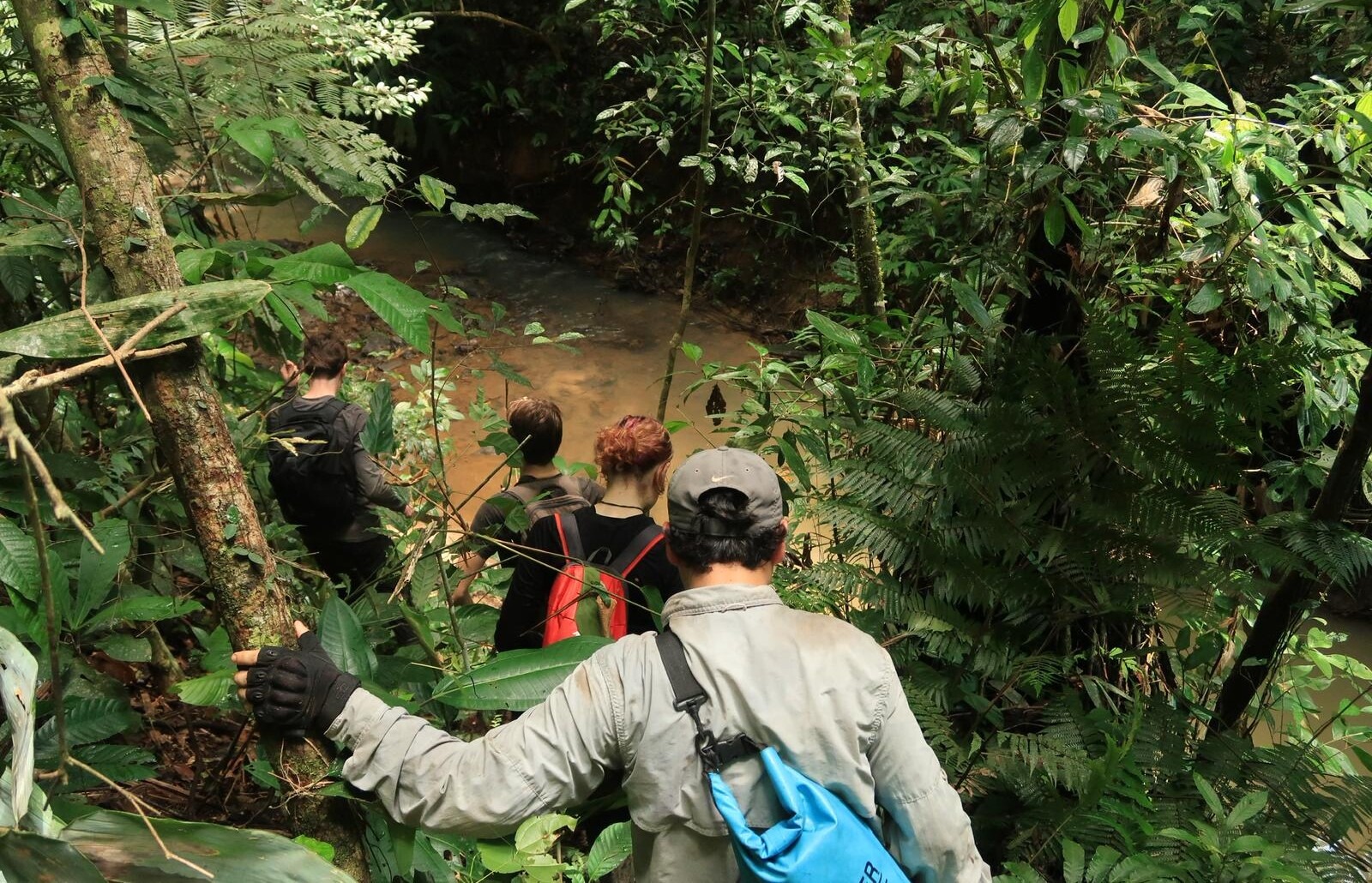
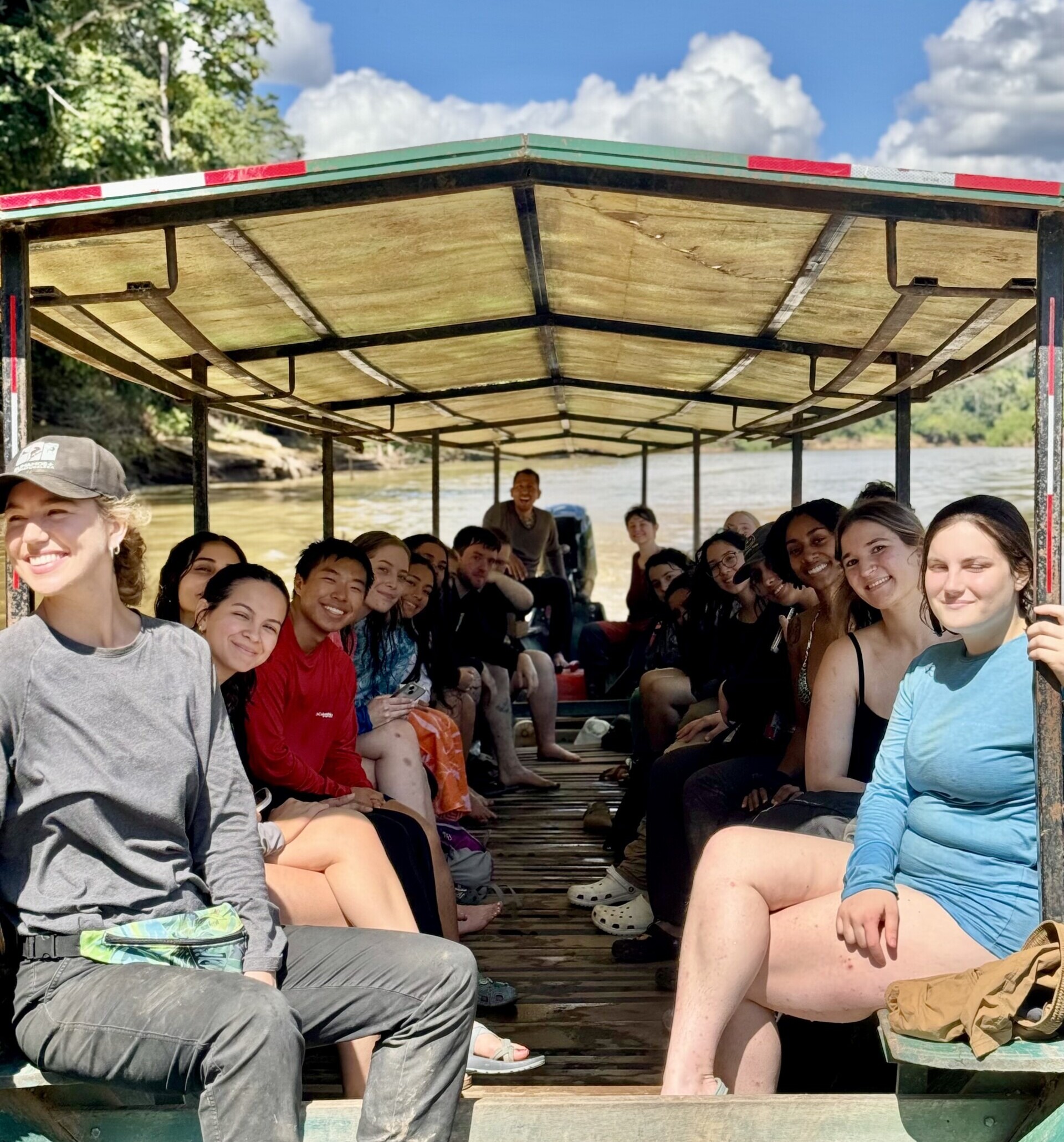
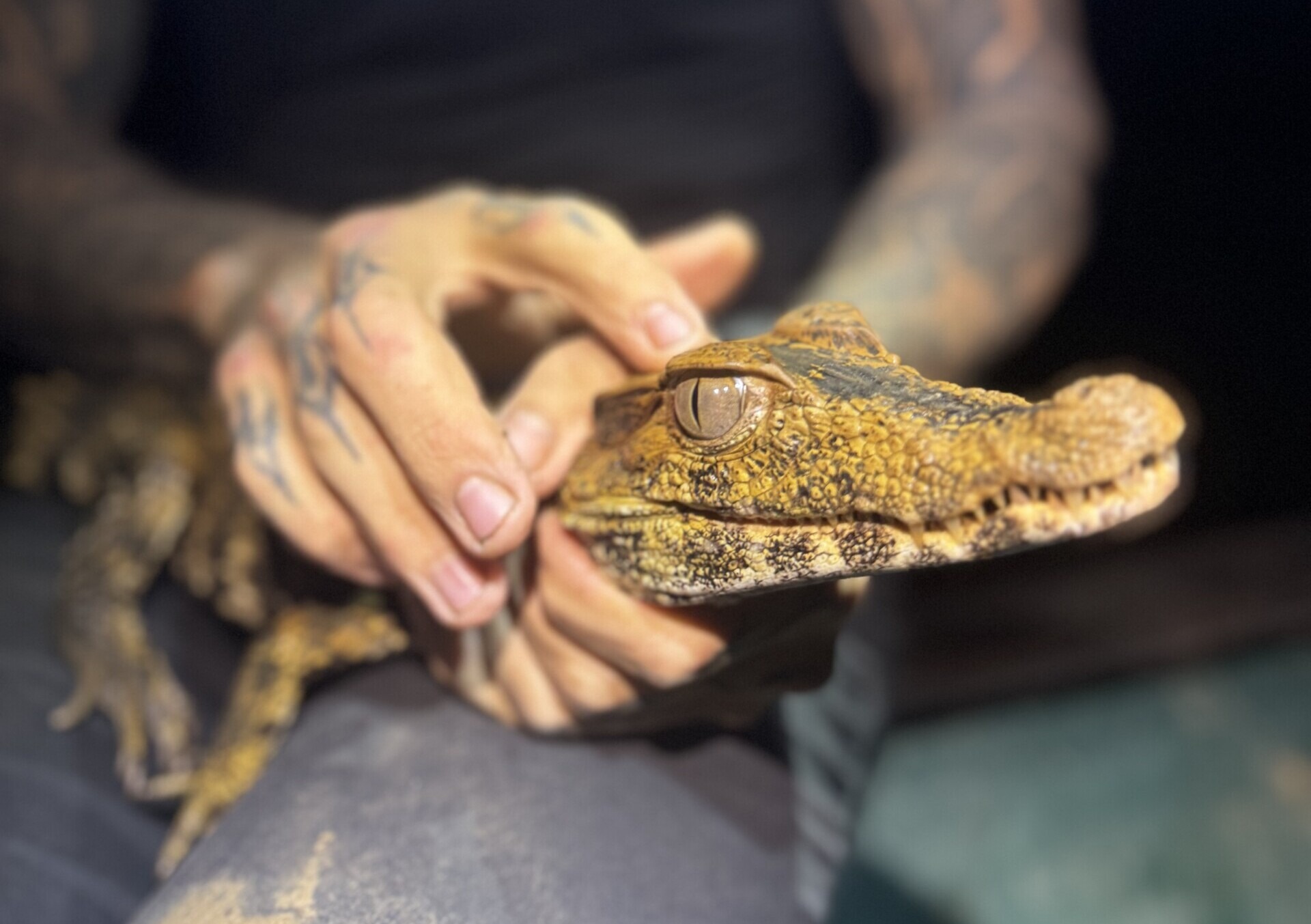
Set along the Las Piedras River in the Peruvian Amazon, this course provides hands-on training in crocodilian research methods through real data collection on wild caiman populations. Participants work directly with experienced field researchers to study three species:
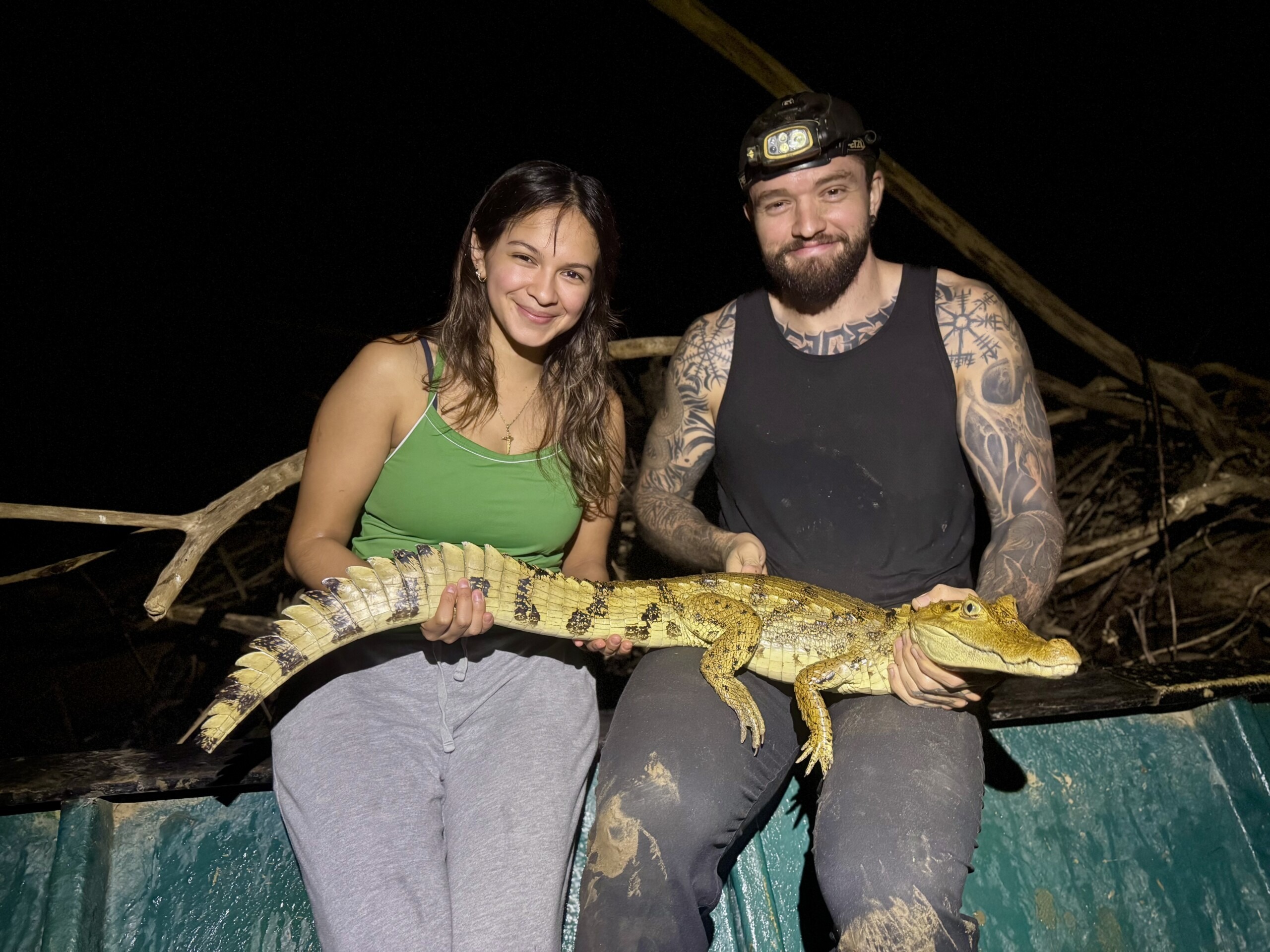
- Spectacled caiman (Caiman crocodilus)
- Dwarf caiman (Paleosuchus trigonatus)
- Black caiman (Melanosuchus niger)
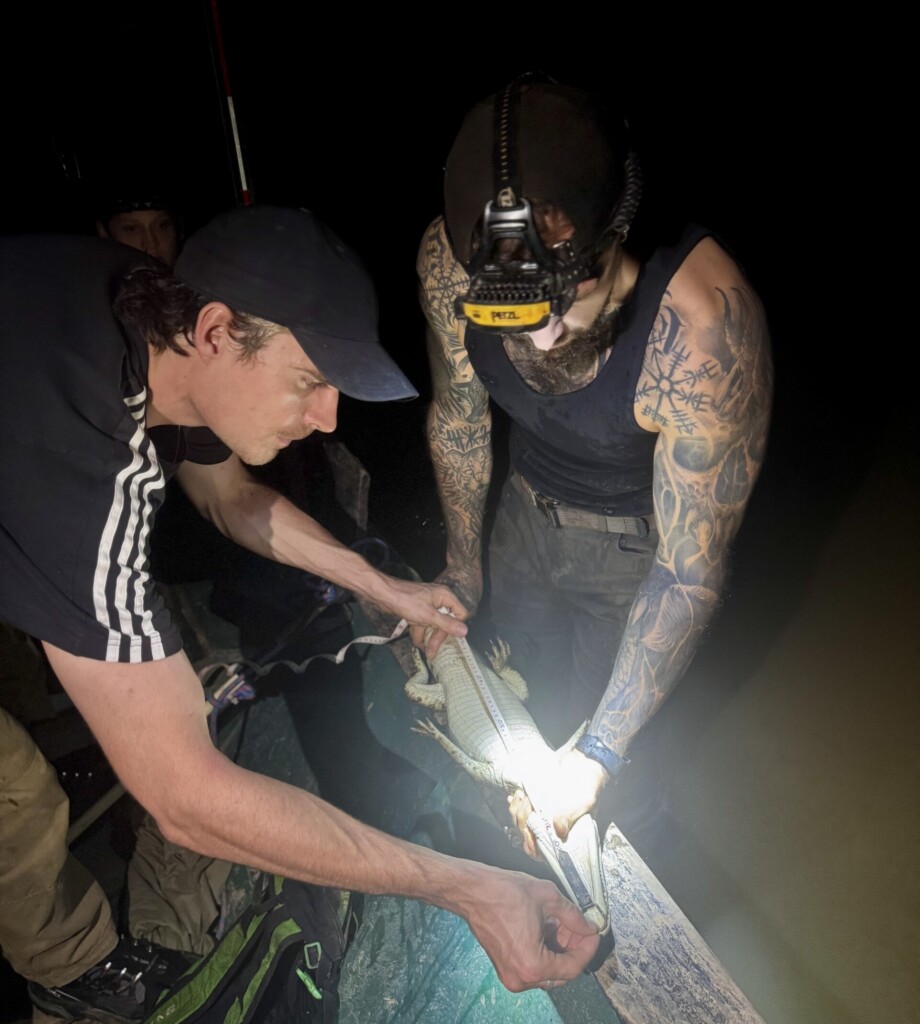
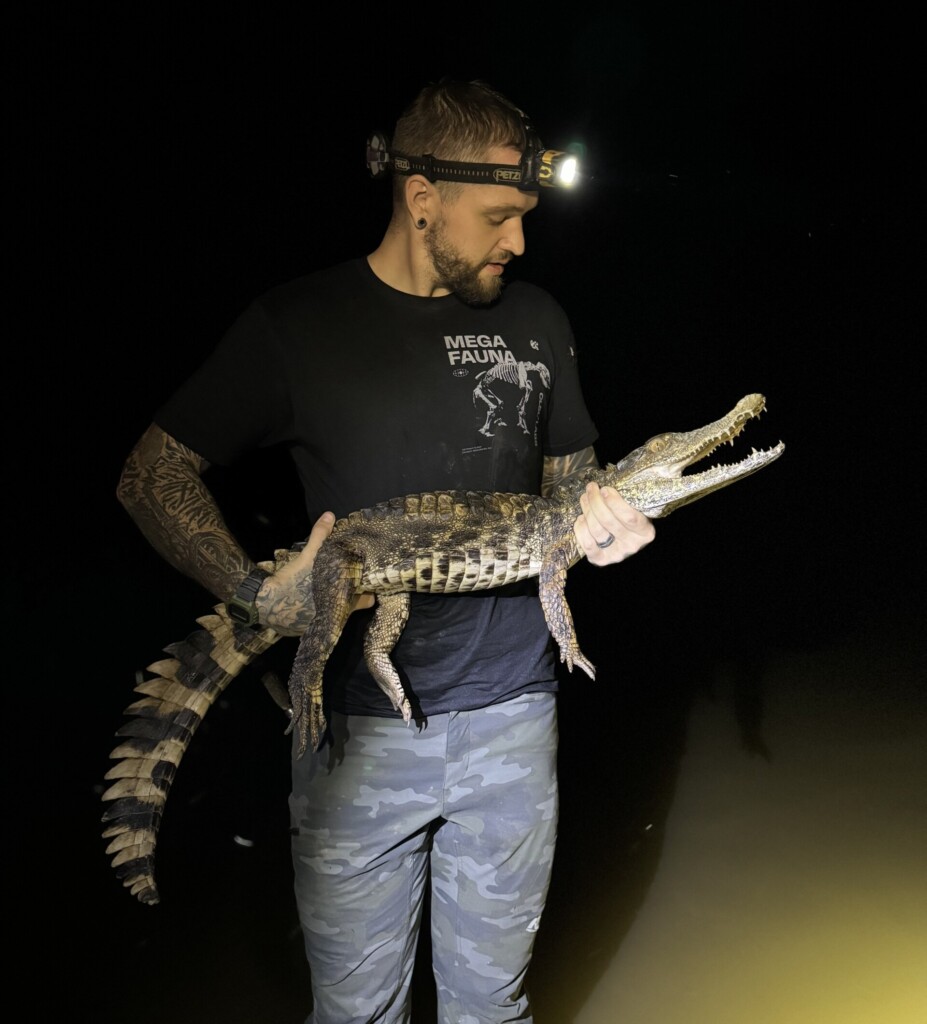
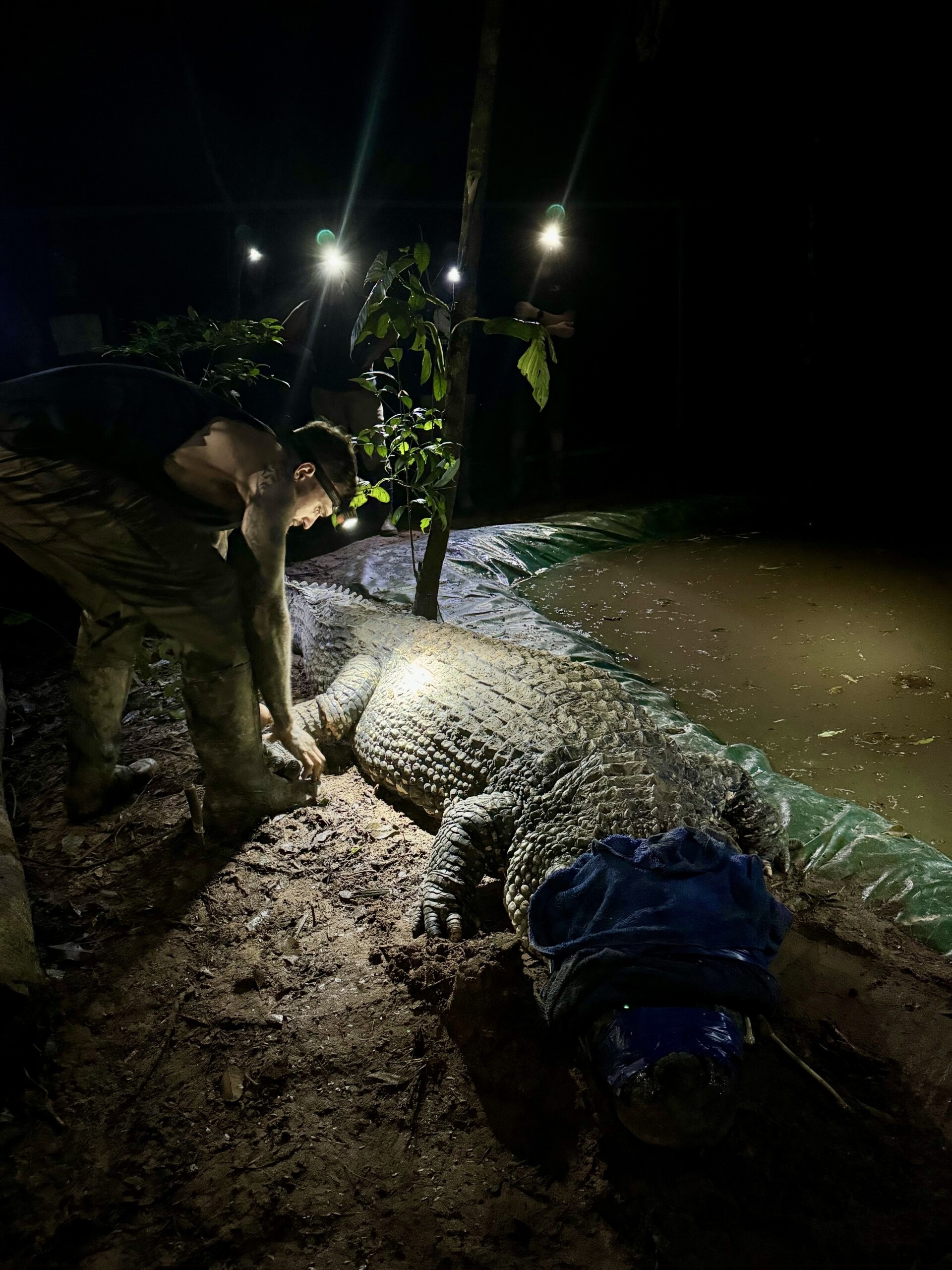
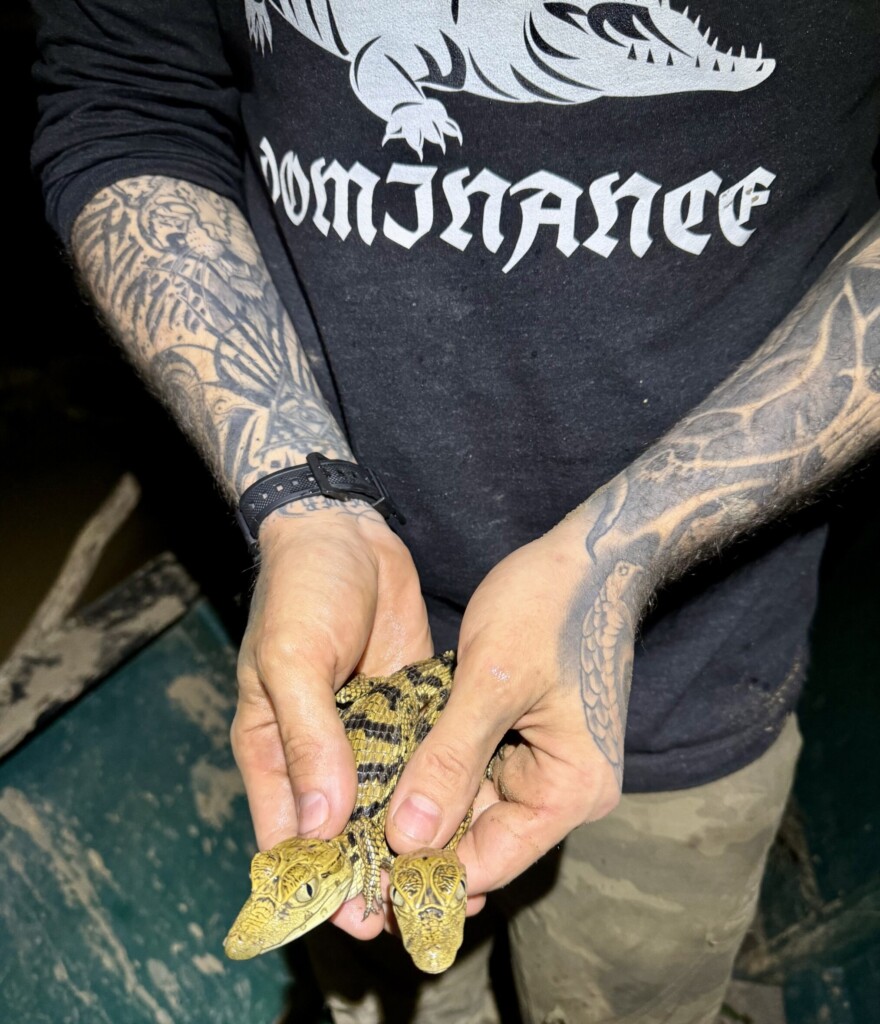
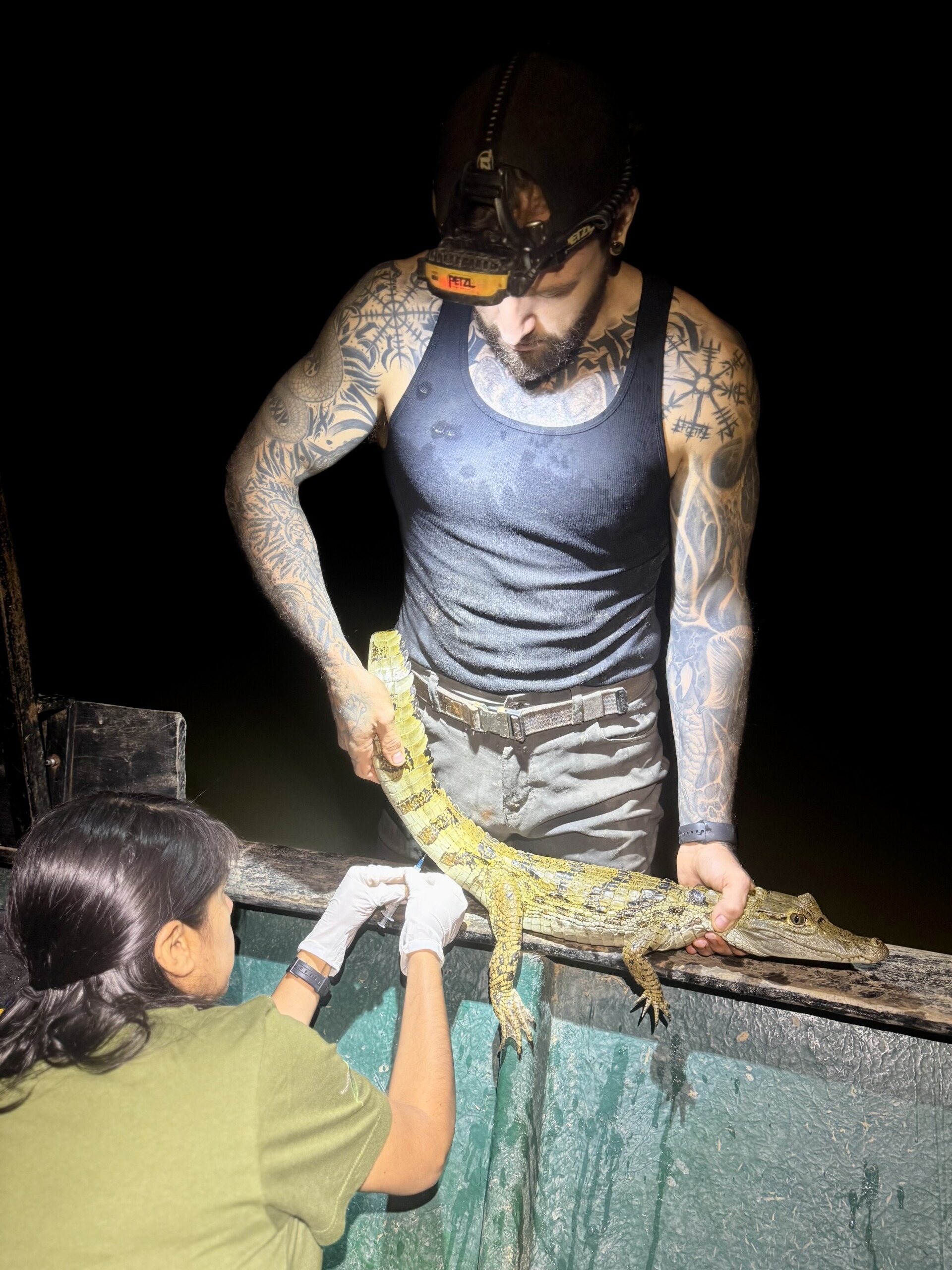
This is not a simulated or observational experience—participants are actively involved in capturing, handling, measuring, and tagging wild animals as part of ongoing long-term research.
What You'll Do
Your time in the course is split between daytime theory and nighttime fieldwork, reflecting how real crocodilian research is conducted.
Nighttime Fieldwork
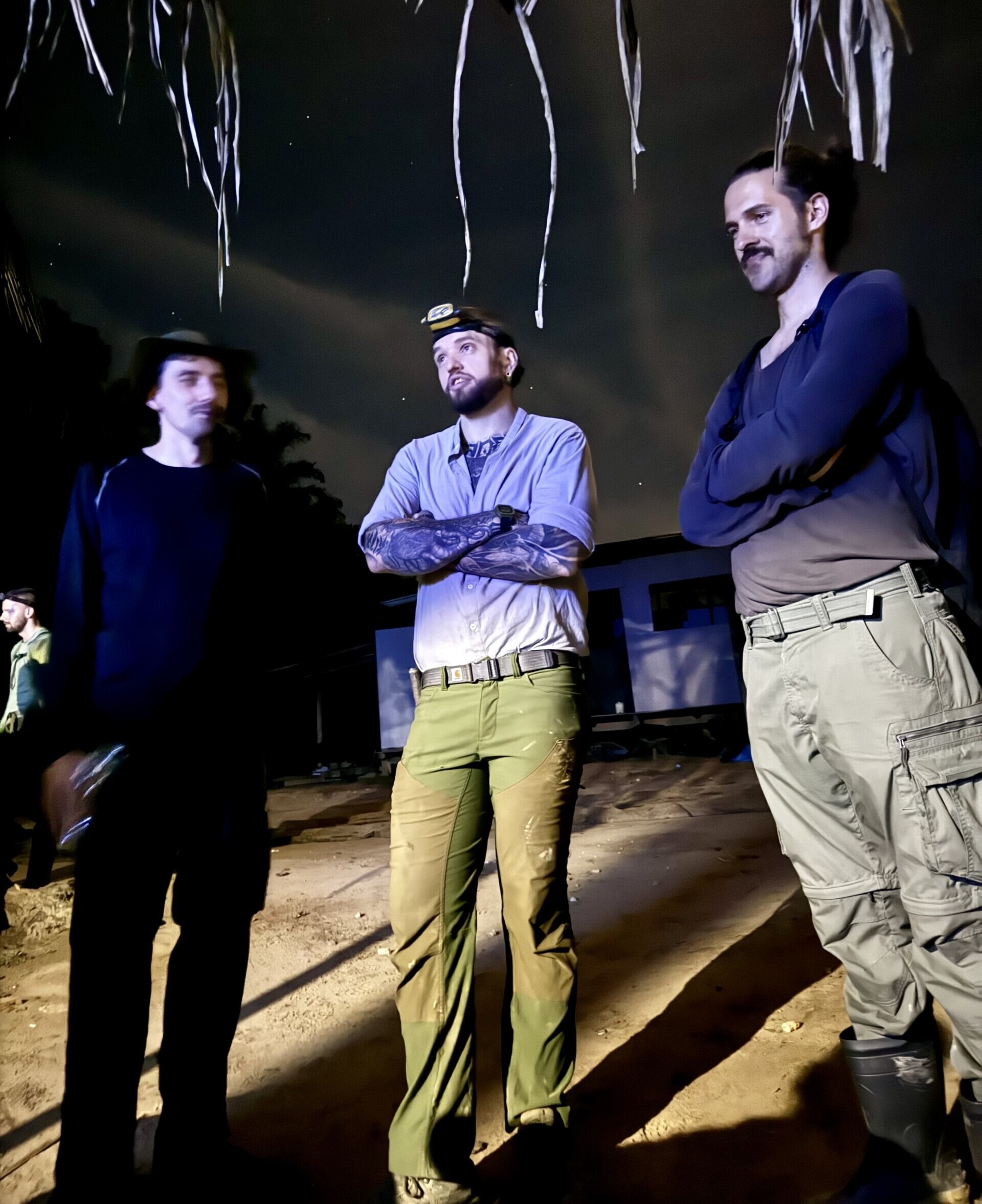
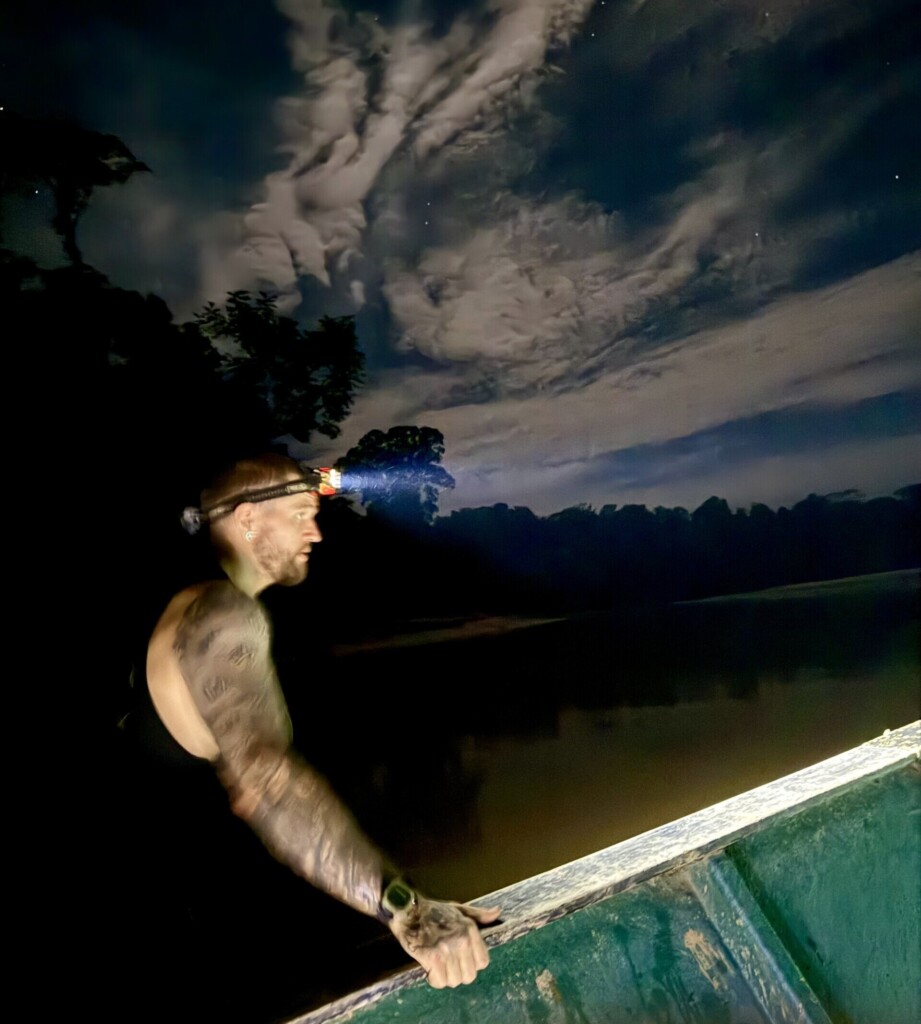
Most nights are spent on the river conducting active surveys and captures.
Activities Include:
- Boat-based nocturnal caiman spotlight surveys on Amazonian rivers and waterways
- Training in eye-shine detection, species identification, and size-class estimation
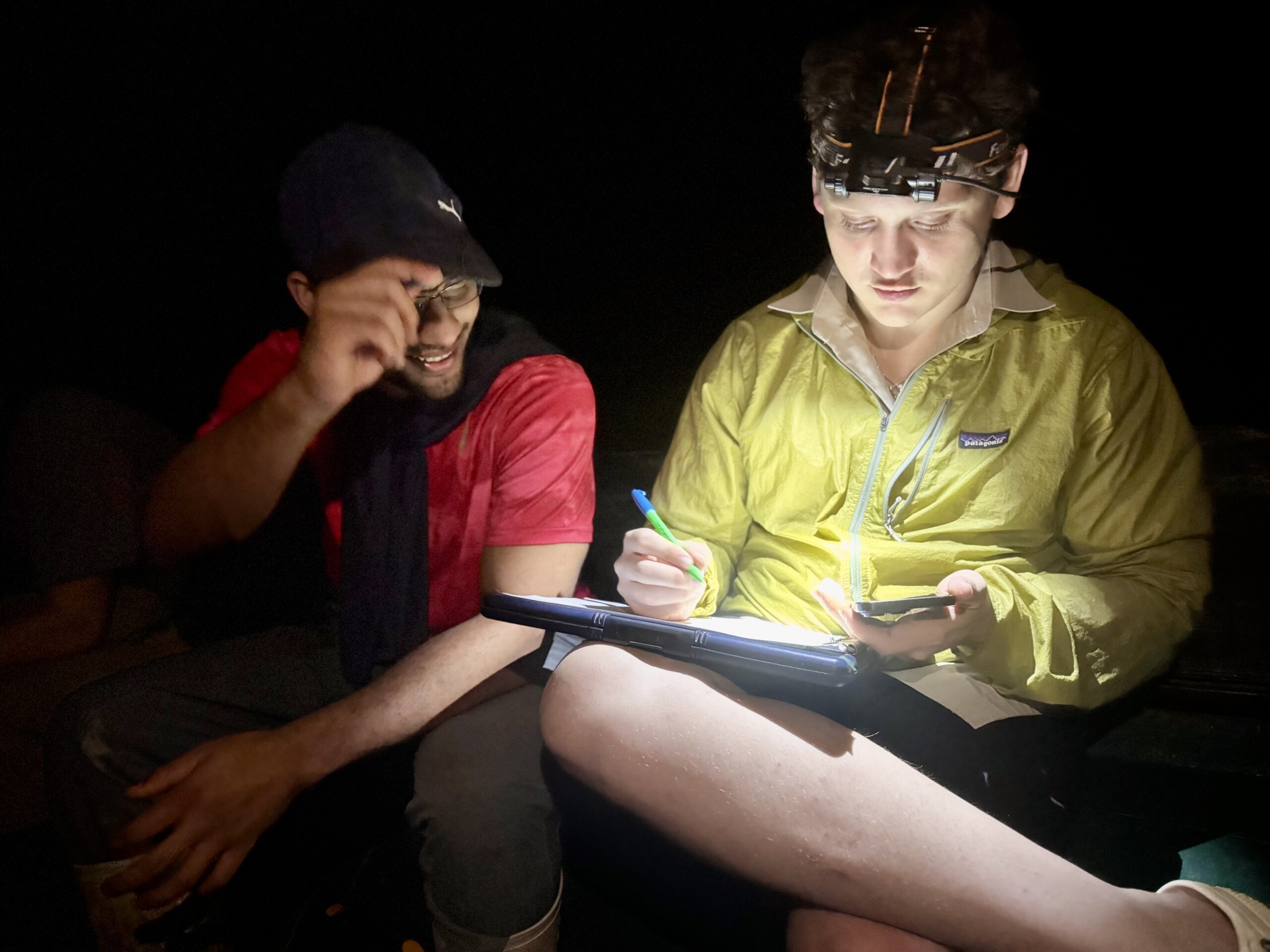
- Rotating student roles: observer, data recorder, GPS operator, spotlight assistant, and survey lead
- Night-time river navigation, boat communication, and hazard awareness
- Supervised approach techniques for caiman during surveys
- Practical training in safe riverbank approaches and controlled water-entry simulations
- Instructor-led demonstrations of caiman capture decision-making
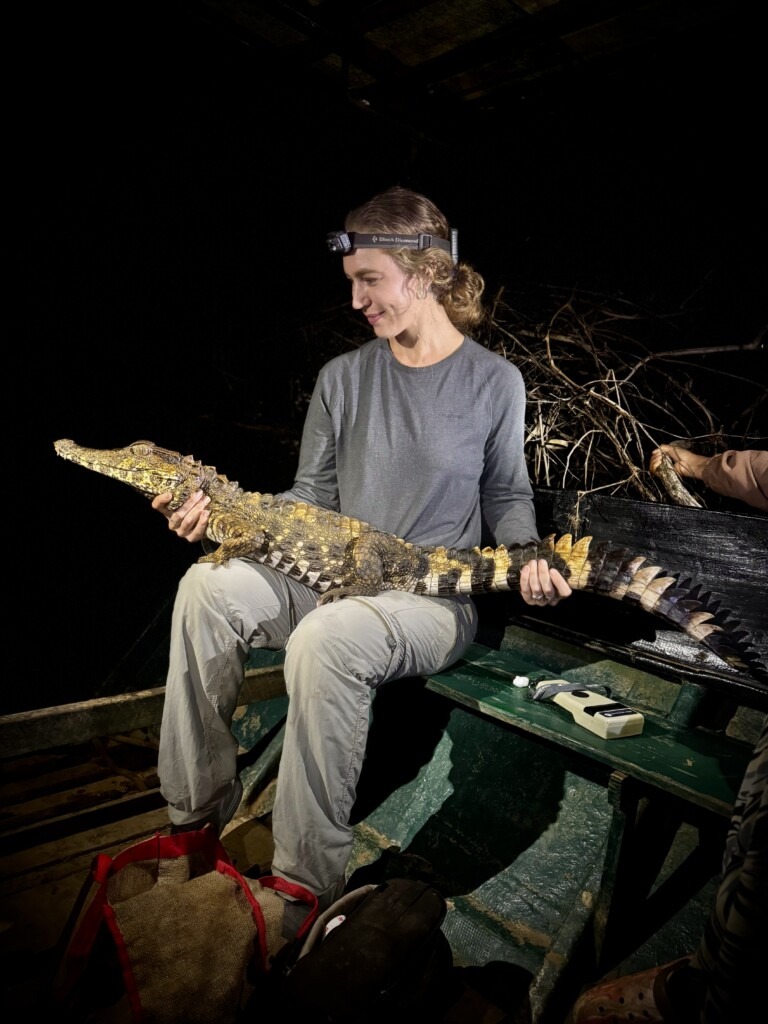
- Supervised assistance with capture, restraint, processing, and release when appropriate
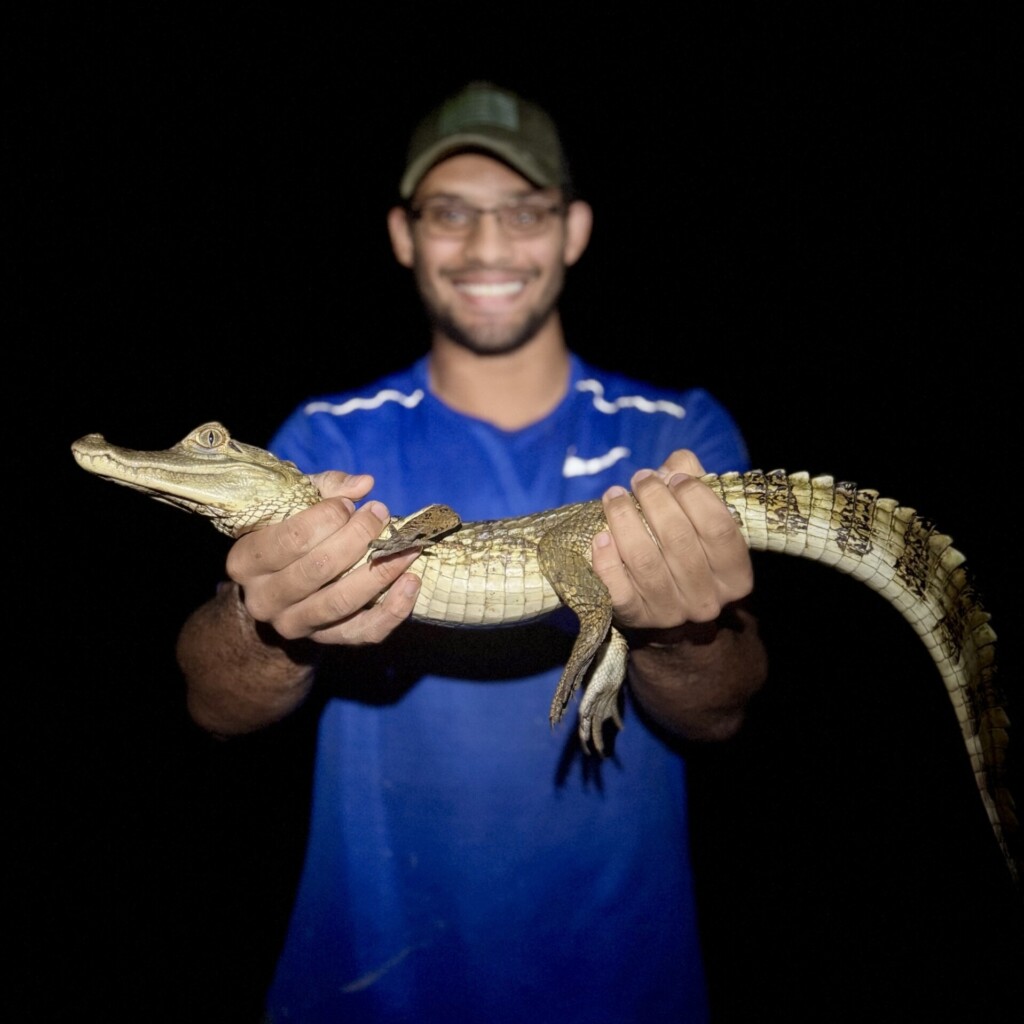
- Field practice with hand-capture techniques for smaller individuals and noose-based methods for larger animals
- Real-time data collection on caiman location, habitat, size class, behavior, and human disturbance
- Week 1 alternates between formal surveys and practical night-training sessions
- Week 2 includes surveys every night to maximize field experience and skill development
On a typical night, the team may sample 10-20 individuals, primarily spectacled caiman, with dwarf caiman and rare black caiman encounters.
This work contributes directly to Hoja Nueva’s multi-year population dataset.
Daytime Training & Lectures
During the day, participants receive structured instruction covering both theory and applied field science:
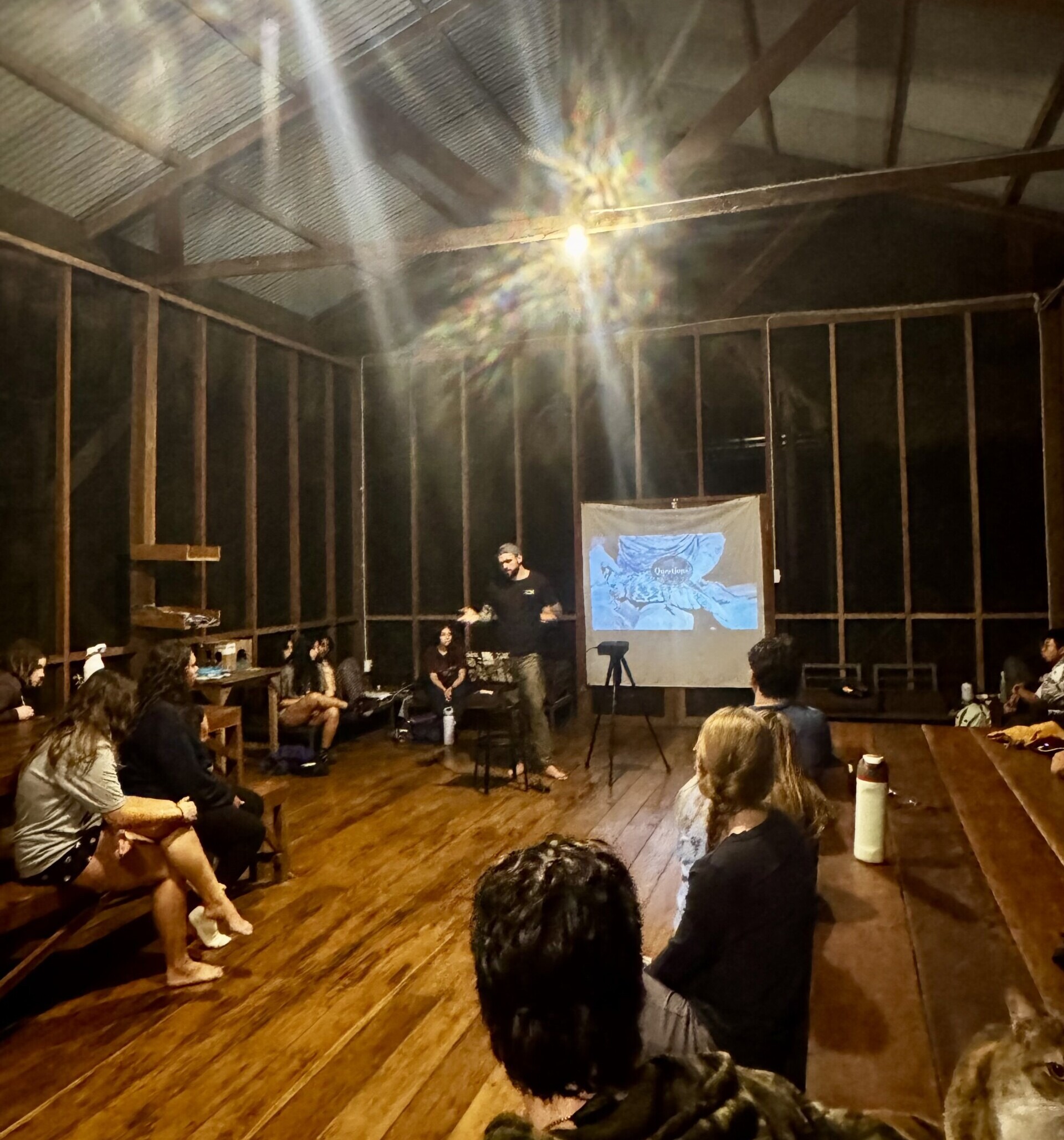
- Morning lectures focused on caiman biology, ecology, behavior, physiology, and conservation
- Afternoon practical sessions designed to turn lecture topics into field skills
- Crocodilian anatomy, stress, welfare, and safe handling principles
- Survey design, transect planning, GPS use, and habitat mapping
- Noose construction, capture gear preparation, and equipment checks
- Dry-land handling drills using models, ropes, bags, measuring tools, and processing stations
- PIT-tagging theory, scanner use, data recording, and sample-labeling practice
- Morphometric data collection, photography standards, and field processing workflow
- Data management, cleaning, mapping, and basic analysis of course survey results
- Threat assessment, conflict mitigation, community education, and coexistence strategies
- Practical conservation planning for long-term caiman monitoring programs
- Final student-led field planning, skills review, and applied conservation capstone
Each topic is directly linked to the fieldwork participants are conducting.
Research Focus
Participants contribute to real, ongoing research questions at Hoja Nueva.
📊 Population Dynamics
Using mark-recapture methods, researchers track:
- Population density
- Survival rates
- Growth patterns
- Recapture frequency over time
With multiple years of data already collected, participants are contributing to a growing long-term dataset.
🧬 Genetics & Health
When appropriate, biological samples may be collected for:
- Genetic analysis
- Disease screening
- Population connectivity studies
🌿 Habitat & Ecology
Participants will explore:
- Habitat associations across species
- Differences between river and interior habitats
- Effects of human presence and disturbance
- Niche partitioning between caiman species
Course Structure
- 15 days total at a research center in the Peruvian Amazon
- 12 full course days delivered across two Monday–Saturday training weeks
- Day 1: arrival, orientation, gear check, safety briefing, and introduction to the research center
- Week 1: foundations in caiman biology, safety, survey design, navigation, habitat work, capture theory, and controlled practical training
- Week 1 nights: alternating formal caiman surveys with night-time training activities
- Mid-course day: rest, data review, gear maintenance, optional natural history activities, and preparation for the intensive second week
- Week 2: advanced field application with nightly surveys, student role rotations, supervised capture/processing opportunities, PIT-tagging workflow, data analysis, and conservation planning
- Final course days: student-led survey planning, skills assessment, applied conservation capstone, final debrief, and certificate presentation
- Day 15: departure after breakfast and closing logistics
What You'll Learn
- How to identify Amazonian caiman species and understand their ecology, behavior, and habitat use
- How to conduct standardized nocturnal spotlight surveys from boats
- How to collect reliable field data under challenging night-time conditions
- How to navigate rivers at night using lights, GPS, teamwork, and field awareness
- How to assess when capture is appropriate, safe, ethical, and scientifically justified
- How to assist with caiman capture, handling, restraint, measurement, tagging, and release
- How hand-capture and noose-based methods are used in professional crocodilian research
- How to use PIT tags, scanners, field datasheets, GPS units, and biological sampling workflows
- How to map caiman habitat and record environmental and human-disturbance variables
- How to manage, clean, summarize, and interpret field data from caiman surveys
- How caiman research connects to conservation, community coexistence, and conflict mitigation
- How to think like a field biologist: safely, ethically, calmly, and with strong attention to data quality
A Typical Day
Morning
Data entry or lecture session
Afternoon
Training, preparation, or additional theory
Evening / Night
River surveys, spotting, capture, and data collection
This is a nocturnal, field-heavy course—your schedule follows the animals.
Life At Hoja Nueva
Participants live on-site at our rainforest research station within a 7,000-acre reserve.
Accommodation
- Shared jungle housing
- Beds with mosquito nets
- Communal living spaces
Facilities
- Solar electricity
- Composting toilets and showers
- Starlink Wi-Fi (limited daily hours)
- Hand-wash laundry
Food
- All meals provided
- Simple, nutritious meals
Environment
- Remote rainforest (~3 hours from nearest city)
- Hot, humid, physically demanding
- High biodiversity and constant wildlife presence
Who This Is For
This course is ideal for:
- Anyone who is passionate about the research and conservation of crocodilians
- Students in biology, ecology, or environmental science
- Pre-vet or veterinary students
- Early-career conservationists
Participants should be:
- Comfortable with physically demanding fieldwork
- Able to work at night
- Interested in scientific data collection
- Adaptable to remote living conditions
Program Details
| Duration | 3 weeks |
|---|---|
| Cost | $2,500 |
| Sessions | June & August |
| Cohort Size | Maximum 10 participants |
| Includes | Accommodation, meals, transport, training, equipment, and field participation |
What's Included
The course fee covers:
- Full participation in field research activities
- All training and instruction
- Access to equipment and field gear
- Accommodation and meals
- Local transport to/from Puerto Maldonado
- Ongoing mentorship from research staff
Participants also receive:
- Hoja Nueva field gear (shirt + hat)
- Certificate of completion
- 30% discount on a future internship
Ready to Join Us?
Join us in the Amazon to gain hands-on experience in one of the most unique and under-studied areas of wildlife research.
If you’re ready to learn real field methods, contribute to long-term conservation data, and work directly with wild caiman, we’d love to hear from you.