
Groups & Field Courses
BRING YOUR CLASSROOM TO THE AMAZON
Custom field programs for universities, schools, educational travel organizations, and professional groups
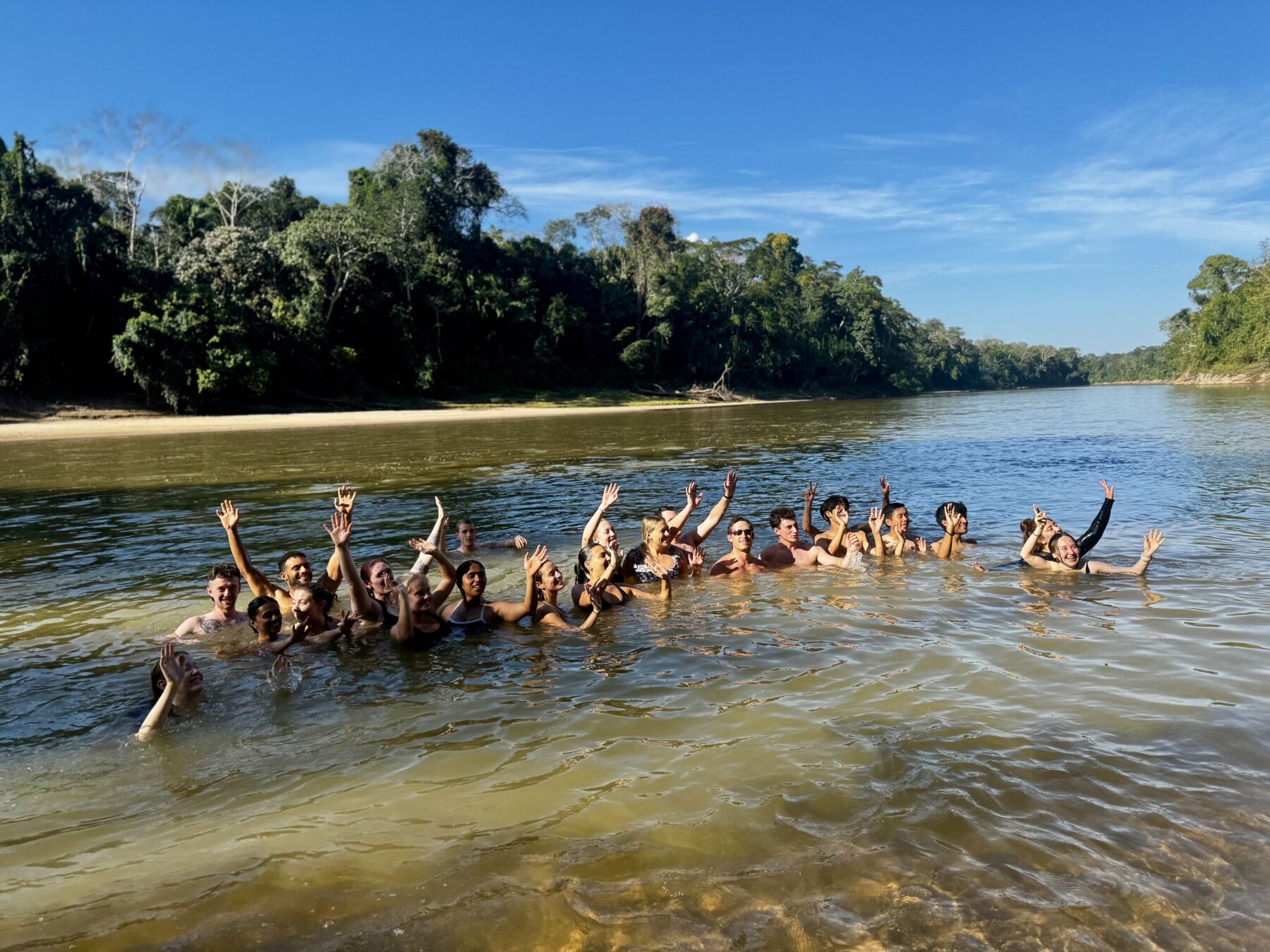
Hoja Nueva hosts academic and educational groups at our conservation and research center in the Peruvian Amazon.
From week-long rainforest immersions to specialized university field courses, we work with faculty, educators, and organizations to build programs around their group’s interests and learning objectives.
Rather than offering a fixed ecotourism package, our programs are built around the work already taking place at Hoja Nueva: ecological research, wildlife rehabilitation and rewilding, conservation medicine and One Health, tropical field methods, community conservation, and life at a remote Amazonian research station.
You bring the group. We help build the field experience.
WHO WE HOST
UNIVERSITY & COLLEGE GROUPS
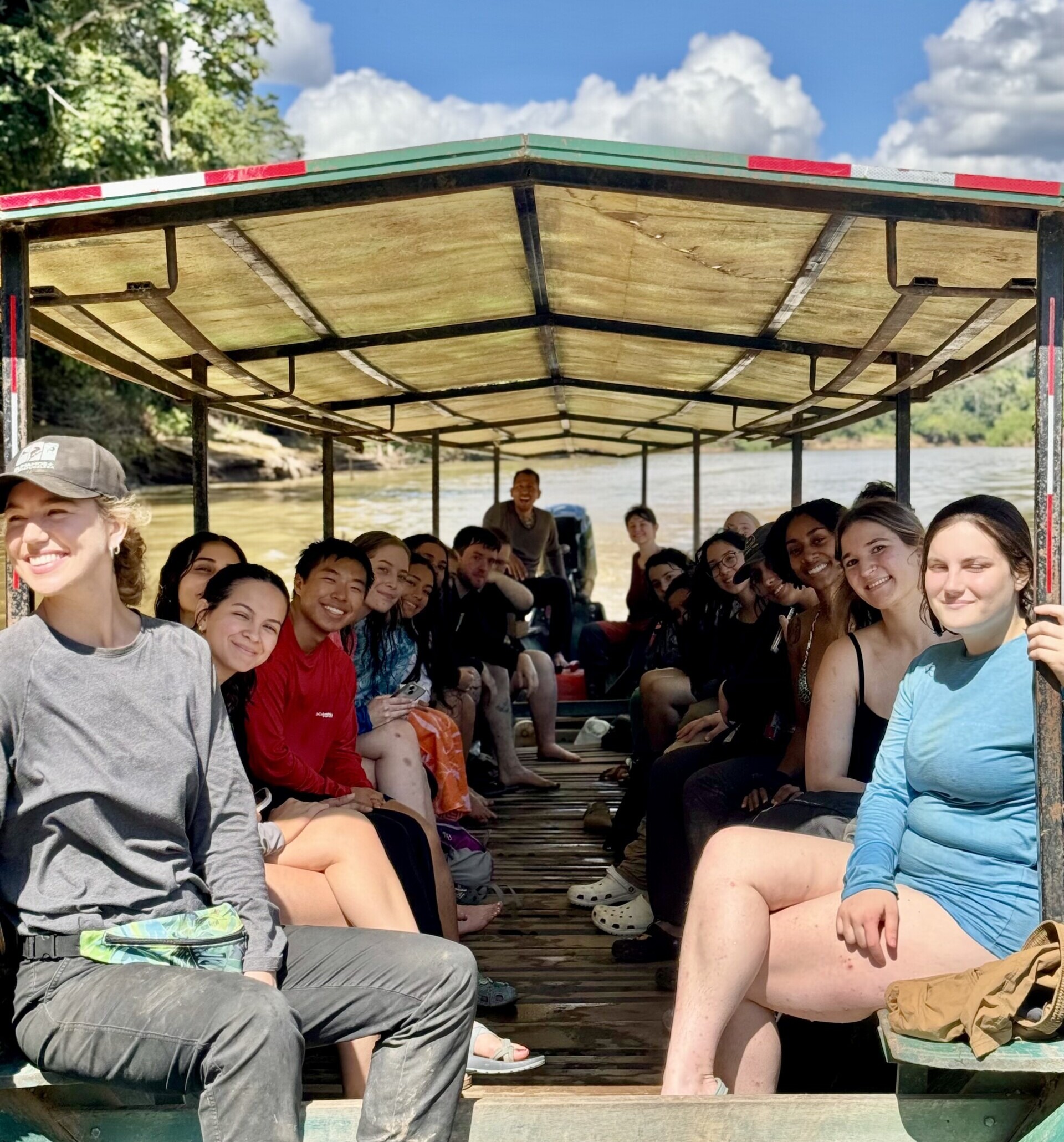
Faculty-led field courses, study-abroad programs, biology and ecology cohorts, veterinary and pre-veterinary students, and other academic groups.
Programs can be designed around university learning outcomes and may incorporate lectures, fieldwork, practical activities, data, student projects, or faculty-led teaching.
HIGH SCHOOL & YOUTH GROUPS
Educational programs for mature high-school students interested in tropical ecology, wildlife conservation, field science, and the Amazon.
Activities are adapted to participants’ age and experience while maintaining the same conservation ethics used throughout our programs.
EDUCATIONAL TRAVEL ORGANIZATIONS
We partner with organizations seeking an established Amazon field site for conservation-focused group travel.
Hoja Nueva can provide accommodation, meals, local logistics, programming, and field instruction while partner organizations coordinate the wider travel experience.
PROFESSIONAL & SPECIALIST GROUPS
We can also host researchers, veterinarians, conservation professionals, NGOs, workshops, specialist trainings, and collaborative field programs.

BUILD YOUR PROGRAM
EVERY GROUP IS DIFFERENT
Programs are designed around group size, age or academic level, length of stay, learning objectives, and areas of interest.
Depending on current research, wildlife cases, season, weather, permits, and field conditions, programs can draw from:
ECOLOGICAL RESEARCH
Camera trapping, wildlife monitoring, biodiversity surveys, field data collection, research design, species ecology, and introductions to quantitative methods.
WILDLIFE REHABILITATION & REWILDING
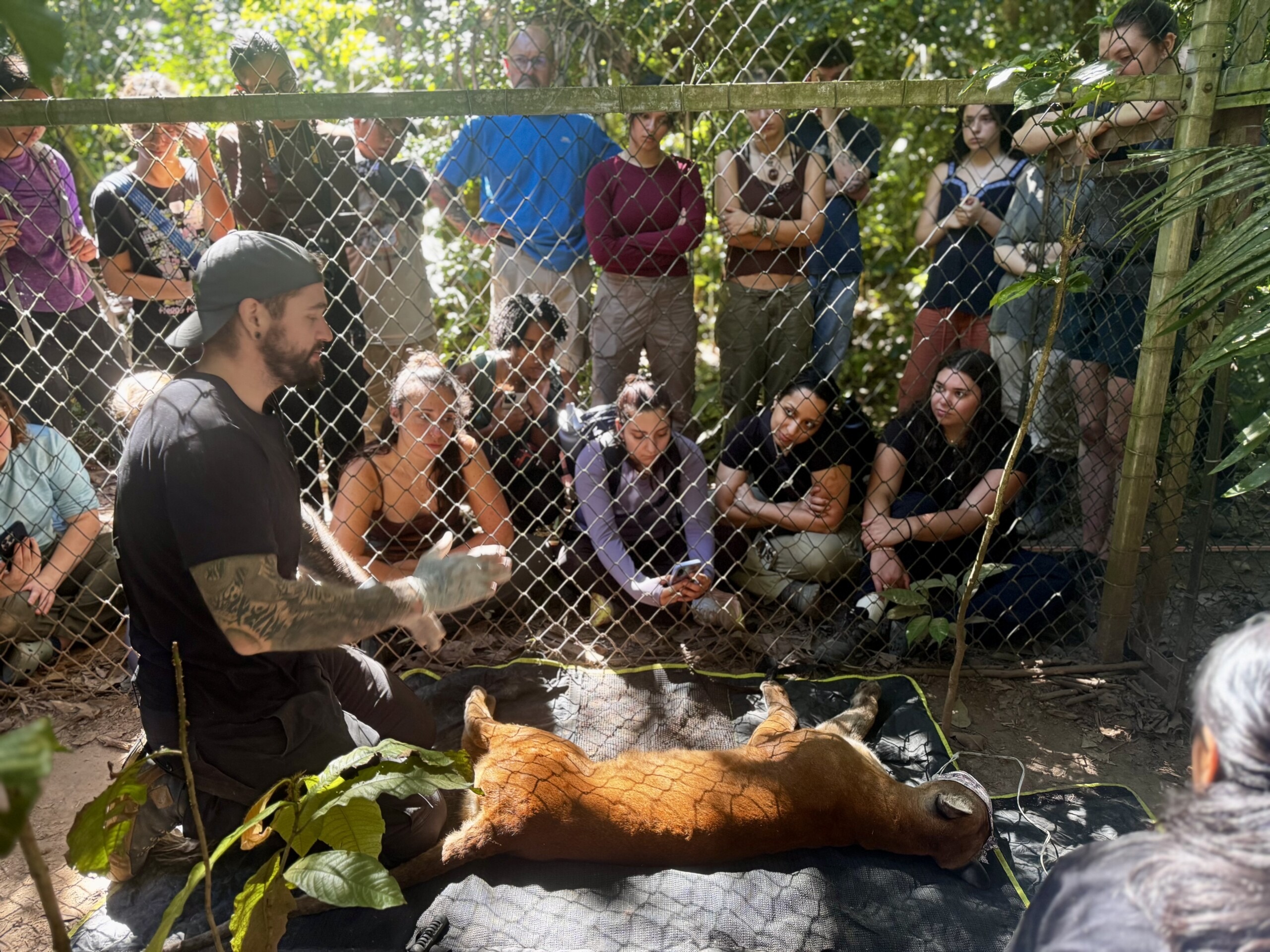
Rehabilitation principles, behavioral assessment, enrichment, release preparation, post-release monitoring, and hands-off support within our wildlife center.
WILDLIFE HEALTH & ONE HEALTH
Wildlife medicine, disease prevention, domestic-animal health, sterilization and vaccination programs, and the connections between human, animal, and ecosystem health.
TROPICAL ECOLOGY & FIELD SKILLS
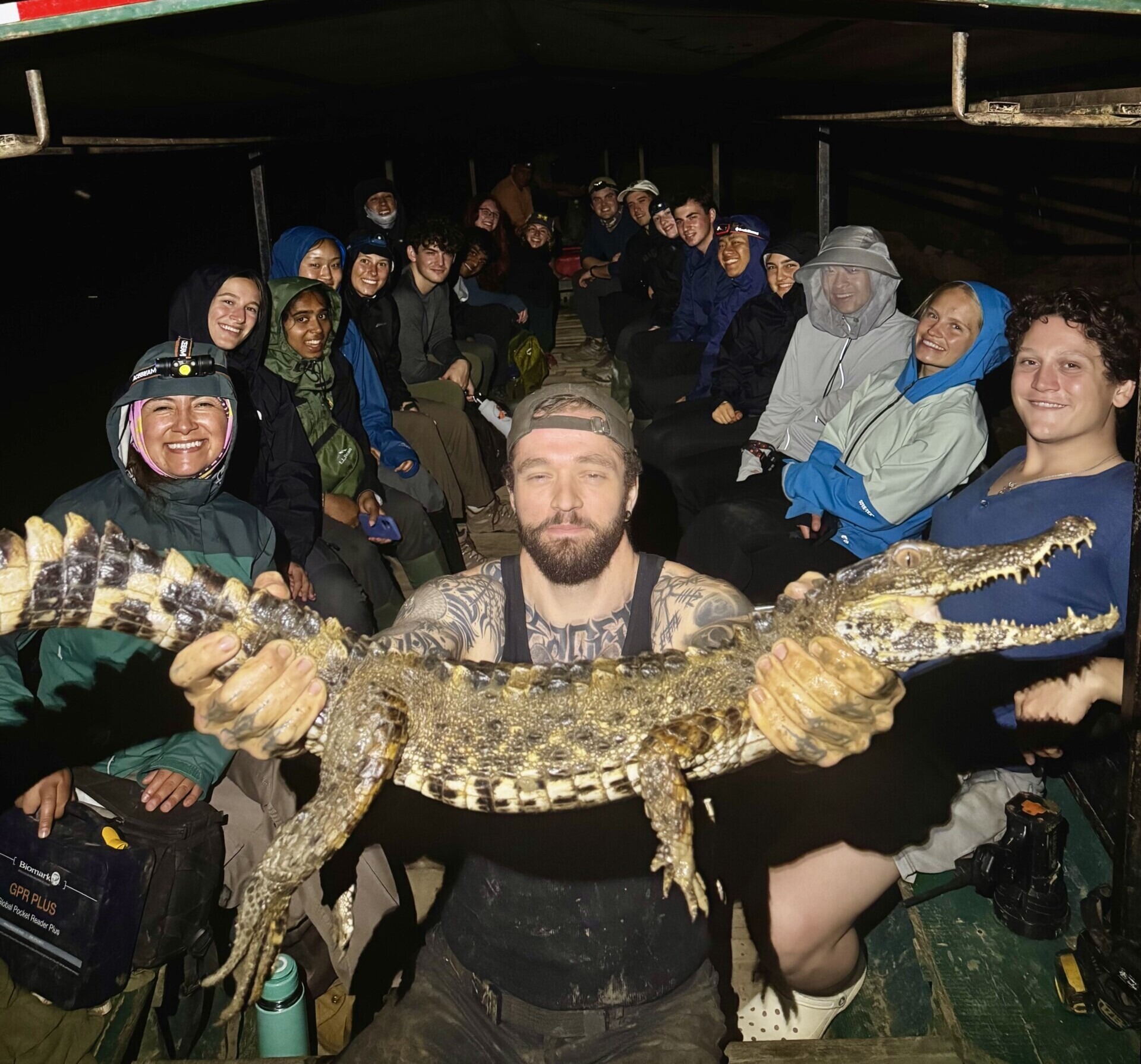
Rainforest ecology, wildlife tracking, GPS navigation, field safety, nocturnal surveys, natural history, and practical skills for working in remote tropical environments.
COMMUNITY & LANDSCAPE CONSERVATION
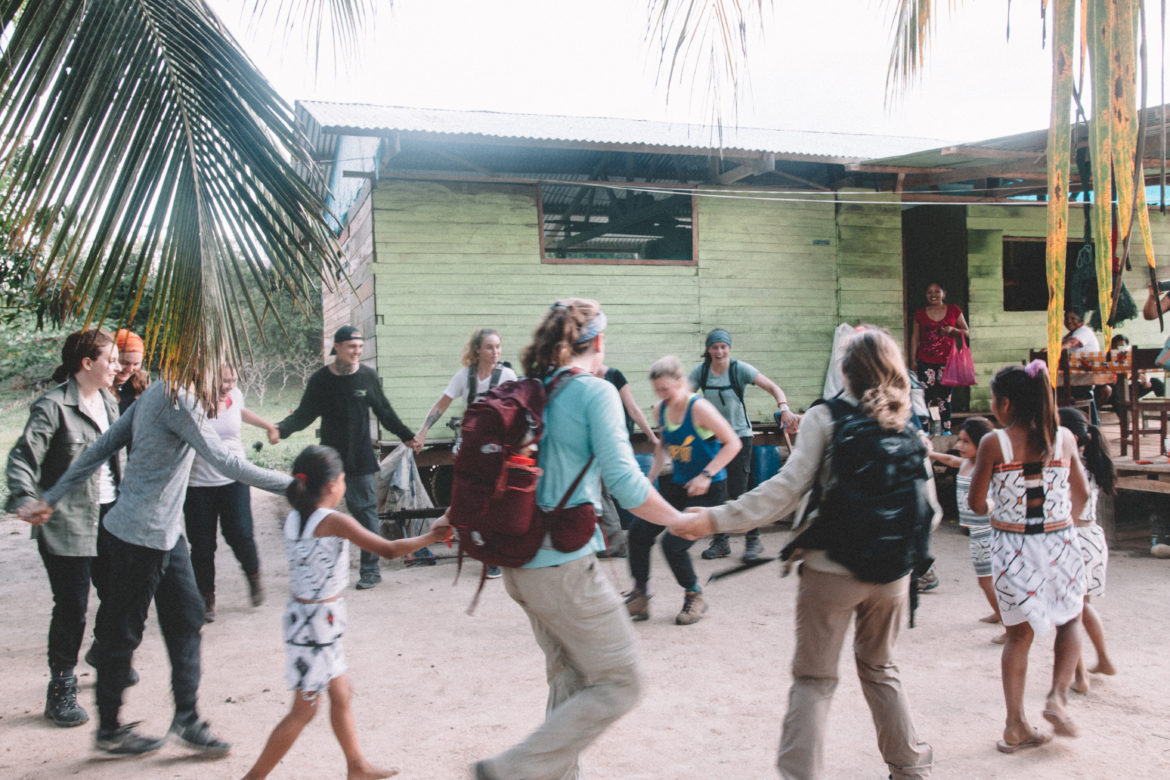
Environmental education, community partnerships, domestic-animal programs, landscape connectivity, and the realities of conservation beyond protected forest.
For advanced university groups, we can also incorporate camera-trap datasets, ecological statistics, research workshops, scientific interpretation, or small student projects.
Hoja Nueva is a working conservation organization, not a wildlife-interaction facility. Direct contact with wildlife is not part of our group programming.
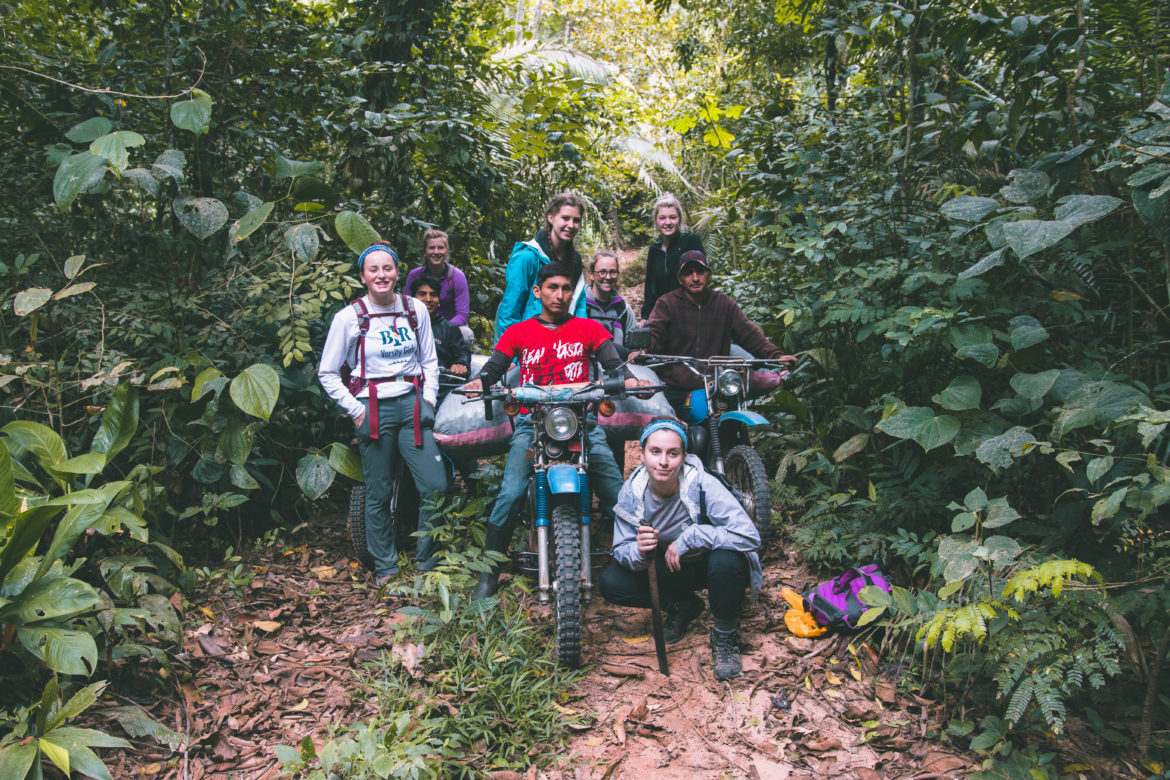
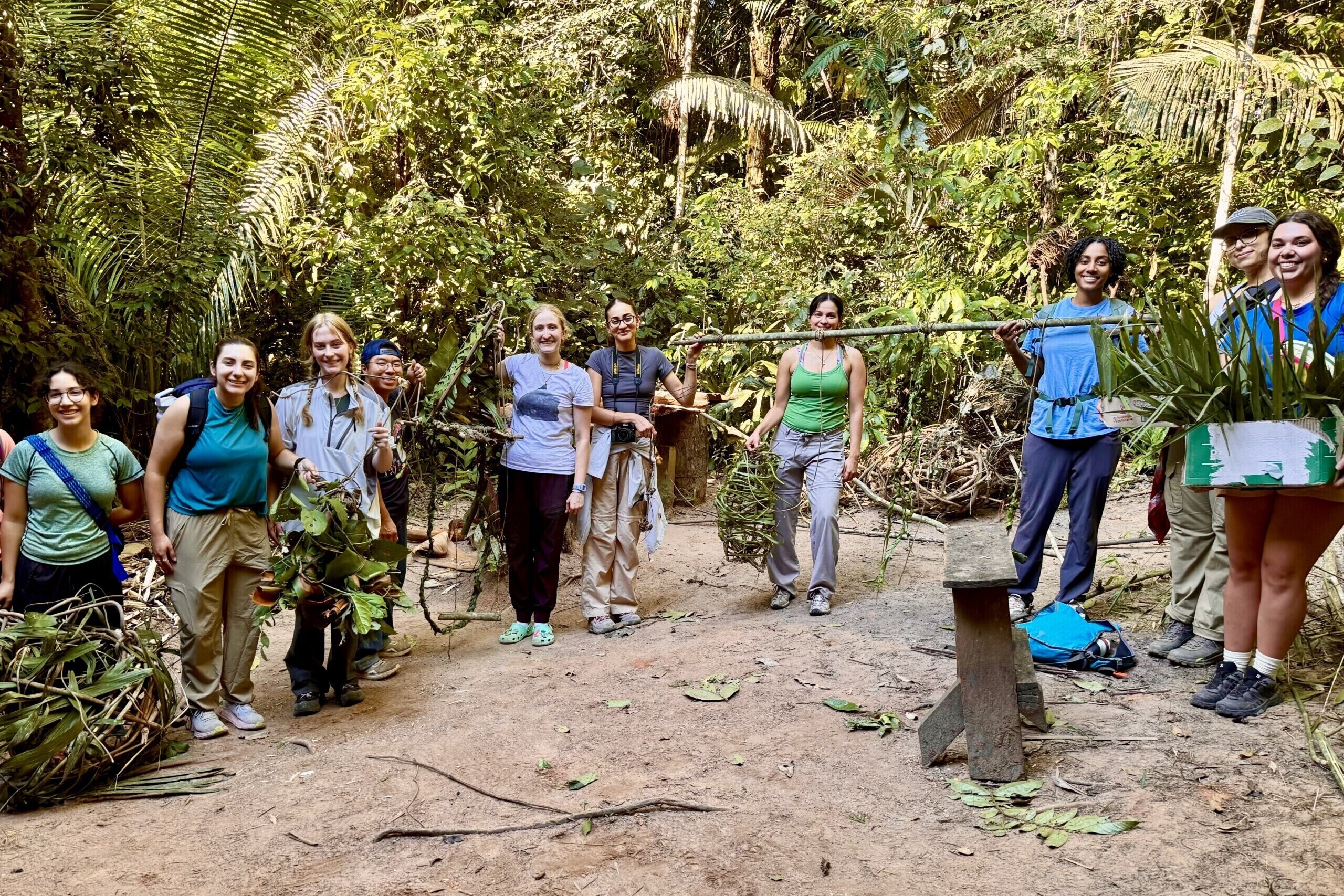
SAMPLE 7-DAY FIELD PROGRAM
WHAT A WEEK AT HOJA NUEVA COULD LOOK LIKE
Every itinerary is customized, but a typical one-week academic program might include:
DAY 1 — ARRIVAL & ORIENTATION
Travel into Las Piedras, settle into the research station, field safety, site orientation, and introduction to Hoja Nueva’s conservation model.
DAY 2 — REWILDING
Introduction to wildlife rehabilitation, minimum-contact protocols, behavioral preparation, release planning, and real case studies. Practical hands-off activity such as enrichment construction or collecting natural materials.
DAY 3 — AMAZON FIELD ECOLOGY
Full field day covering camera-trap methods, GPS and navigation, animal sign, habitat assessment, biodiversity monitoring, and tropical ecology.
Evening: nocturnal wildlife survey.
DAY 4 — RESEARCH IN PRACTICE
Explore how field observations become ecological data. Review camera-trap results, discuss study design, identify wildlife, and examine how research informs conservation decisions.
DAY 5 — CONSERVATION BEYOND THE FOREST
One Health, community conservation, domestic-animal management, environmental education, or another applied conservation component depending on current projects.
DAY 6 — AMAZON IMMERSION
A longer rainforest or river-based field day focused on wildlife observation, natural history, forest ecology, and the wider Las Piedras landscape.
DAY 7 — SYNTHESIS & DEPARTURE
Final workshop connecting wildlife rehabilitation, ecological research, habitat protection, and community conservation before departure for Puerto Maldonado.
Two-week programs allow significantly more time for research participation, field methods, specialist veterinary or rehabilitation content, community projects, student research, and deeper rainforest exploration.
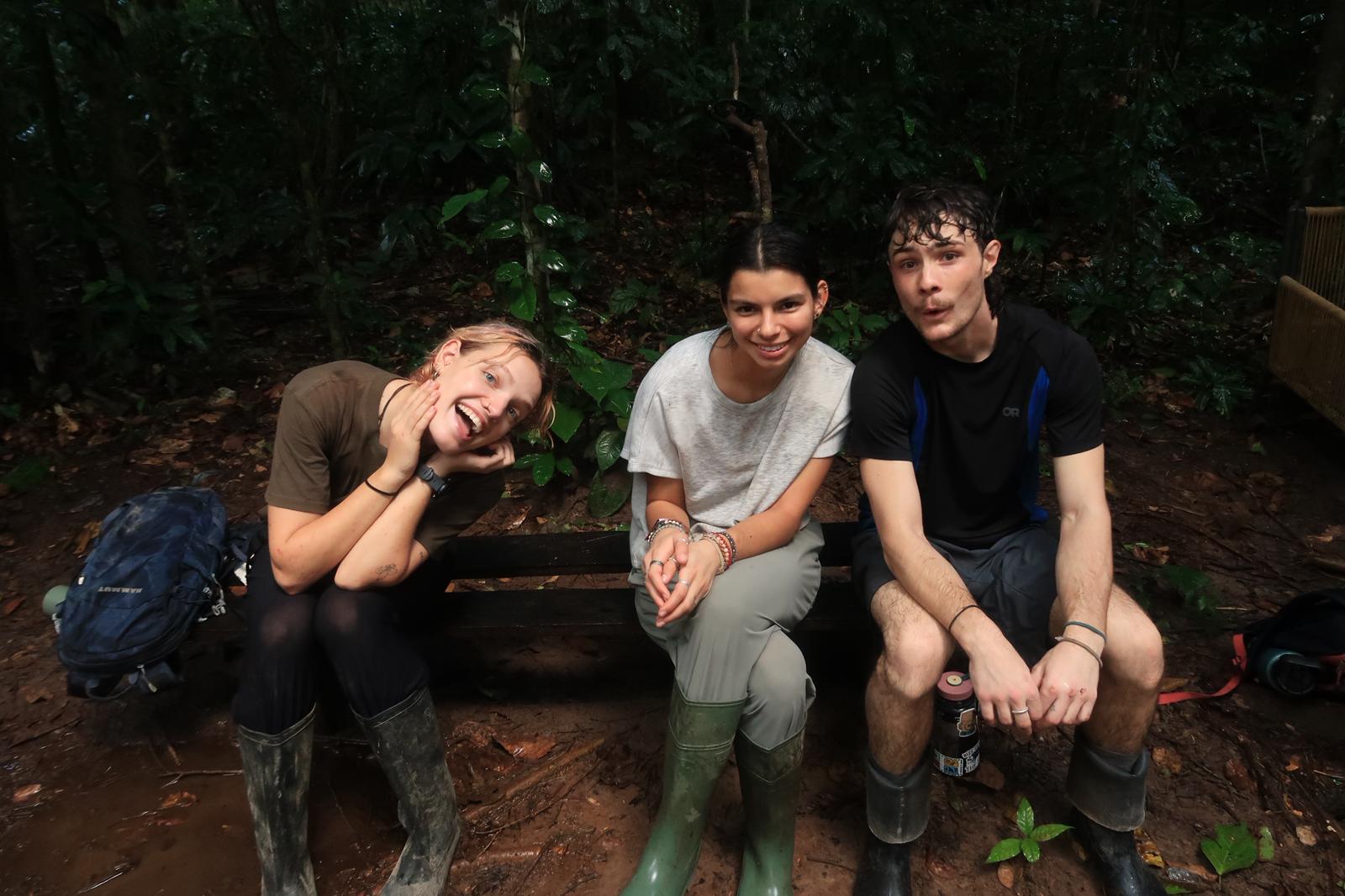
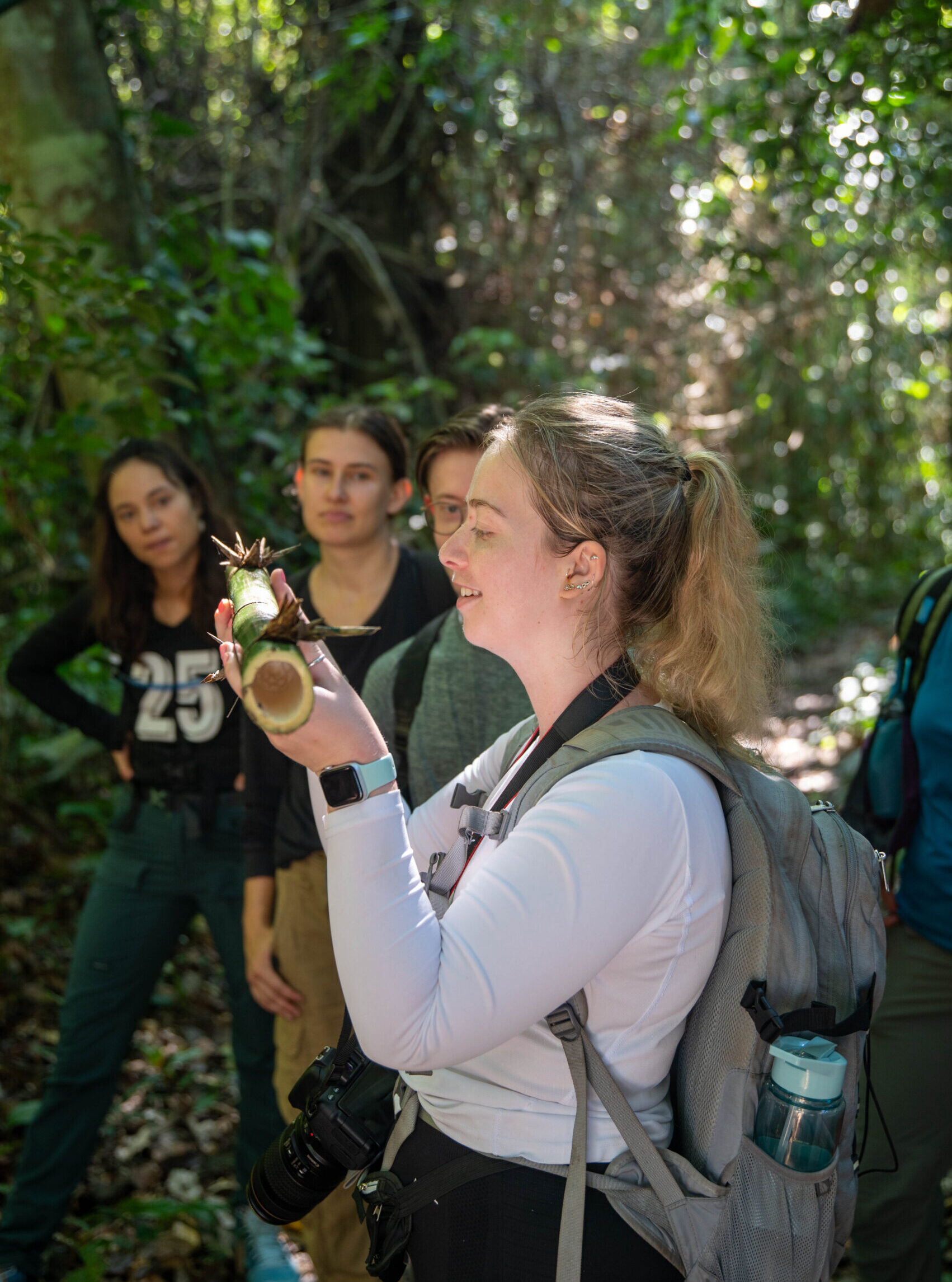
A REAL CONSERVATION EXPERIENCE
Participants are not visiting a simulated field school.
They stay within an operating conservation organization where researchers may be maintaining long-term camera grids, rehabilitation teams may be preparing wildlife for release, veterinarians may be managing active cases, and field teams may be collecting data for ongoing studies.
Because the work is real, exact activities cannot always be guaranteed months in advance.
What we can guarantee is something more valuable: direct exposure to how conservation actually works in the Amazon.
WHERE YOU'LL STAY
OUR AMAZON RESEARCH STATION
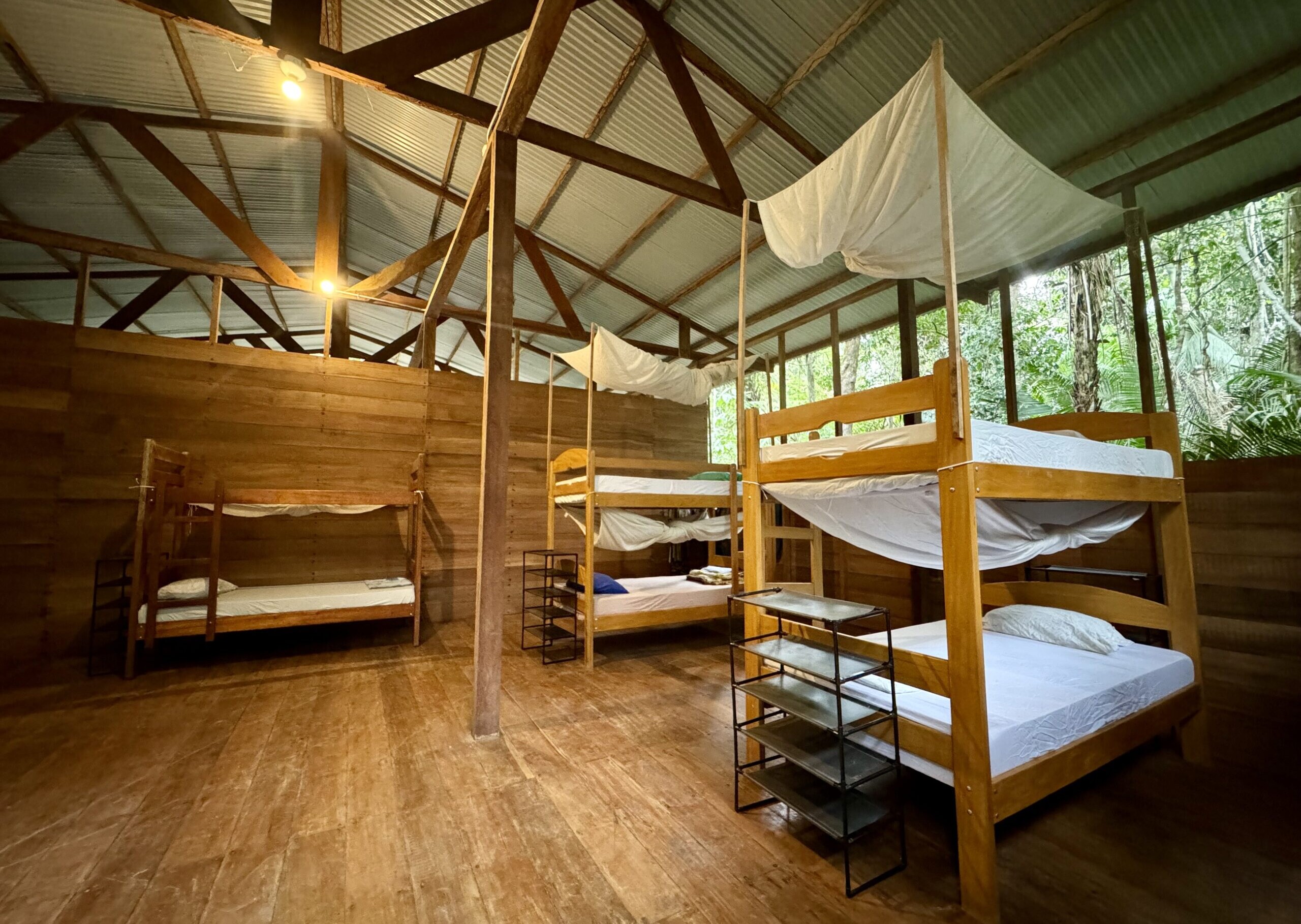
Groups stay at our purpose-built research and education center within protected primary rainforest in Las Piedras.
The station combines the experience of living deep in the Amazon with infrastructure designed for longer academic stays, including:
- shared accommodation
- communal dining and teaching areas
- full kitchen and prepared meals
- showers and water systems
- composting sanitation
- solar electricity
- limited Starlink connectivity
- research and work spaces
- immediate access to primary rainforest
It is remote, rustic, and intentionally immersed in the forest — but comfortable enough for students and researchers to spend meaningful time living and working here.
EXPERIENCE HOSTING ACADEMIC GROUPS
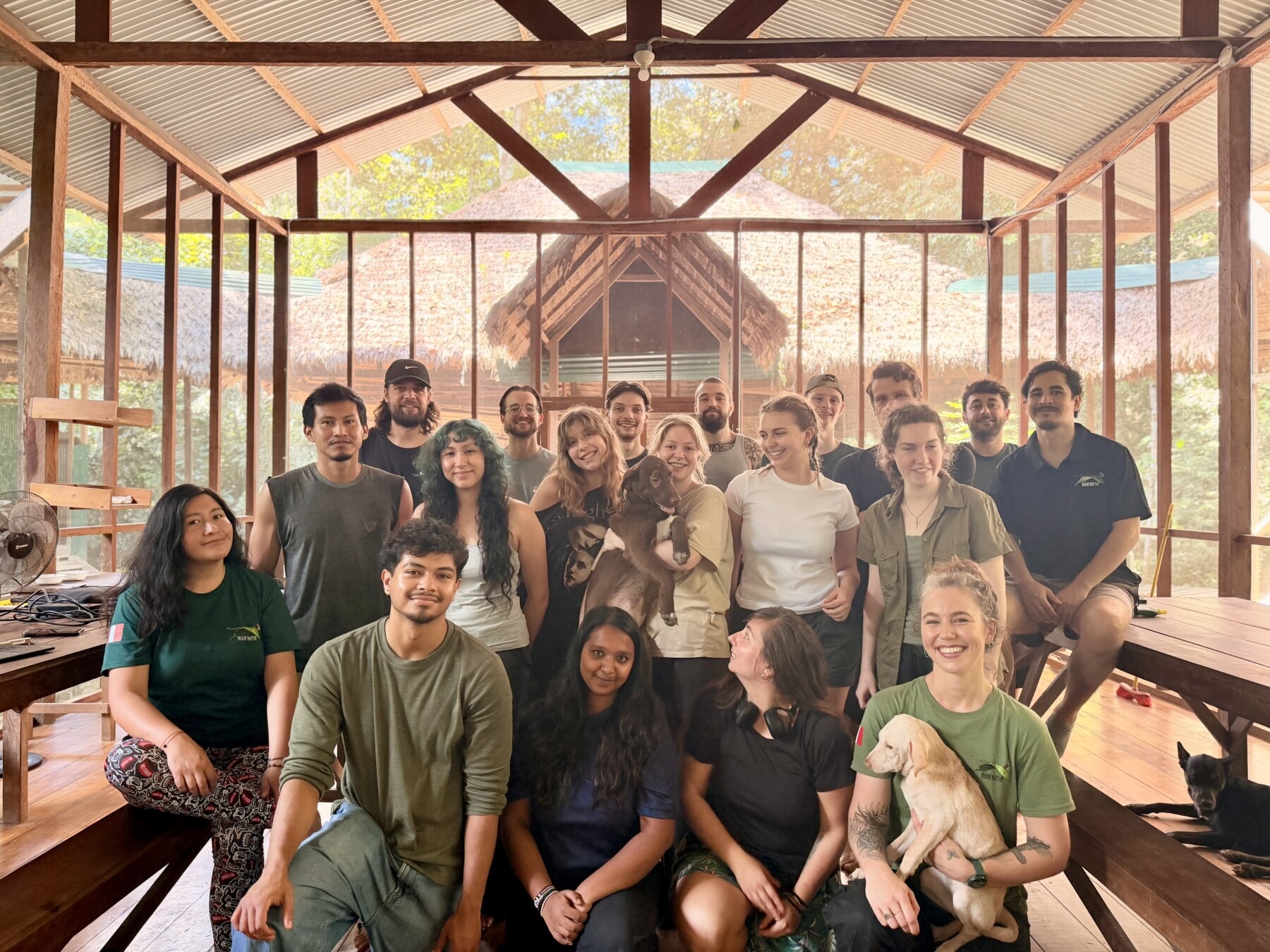
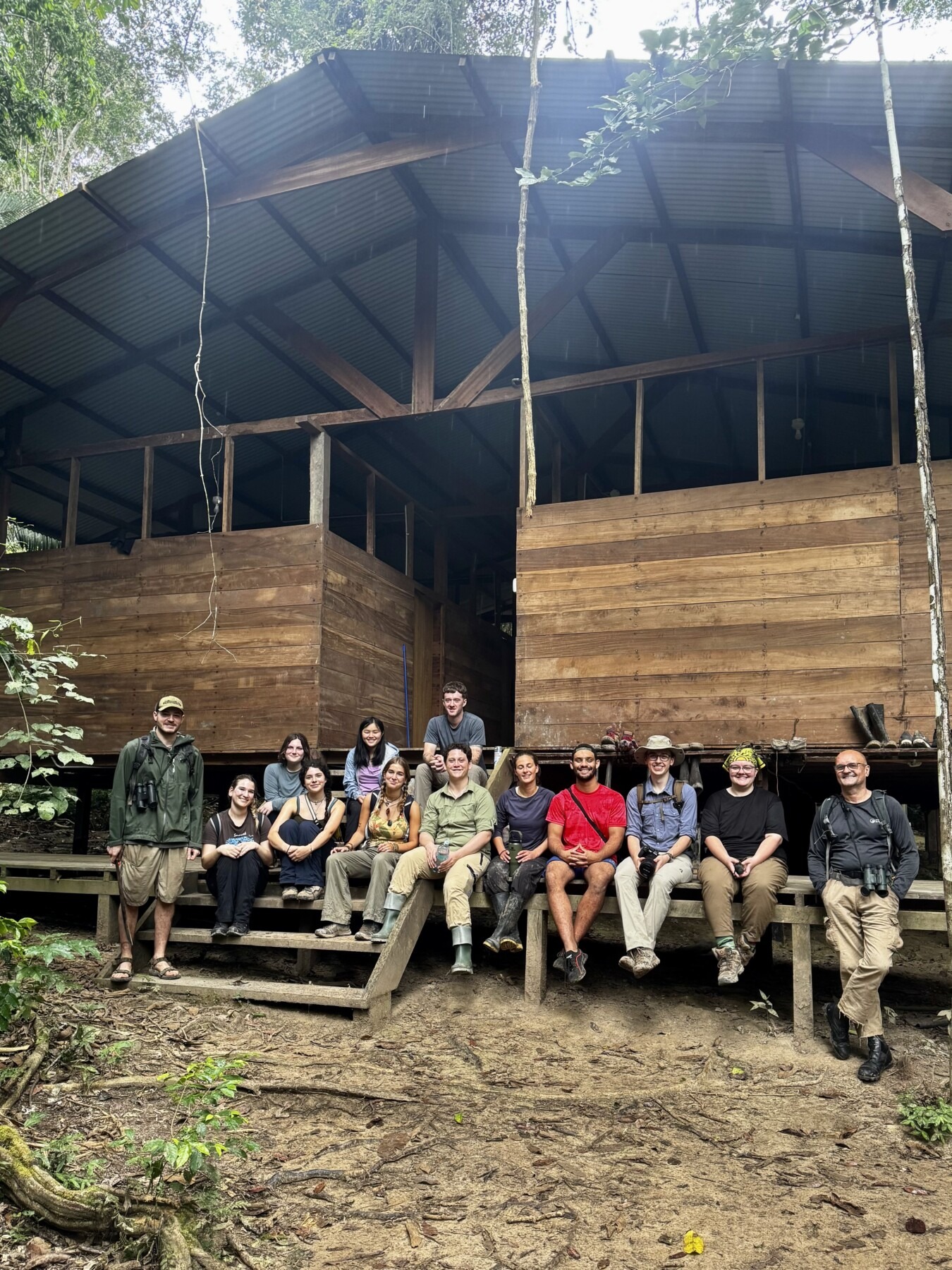
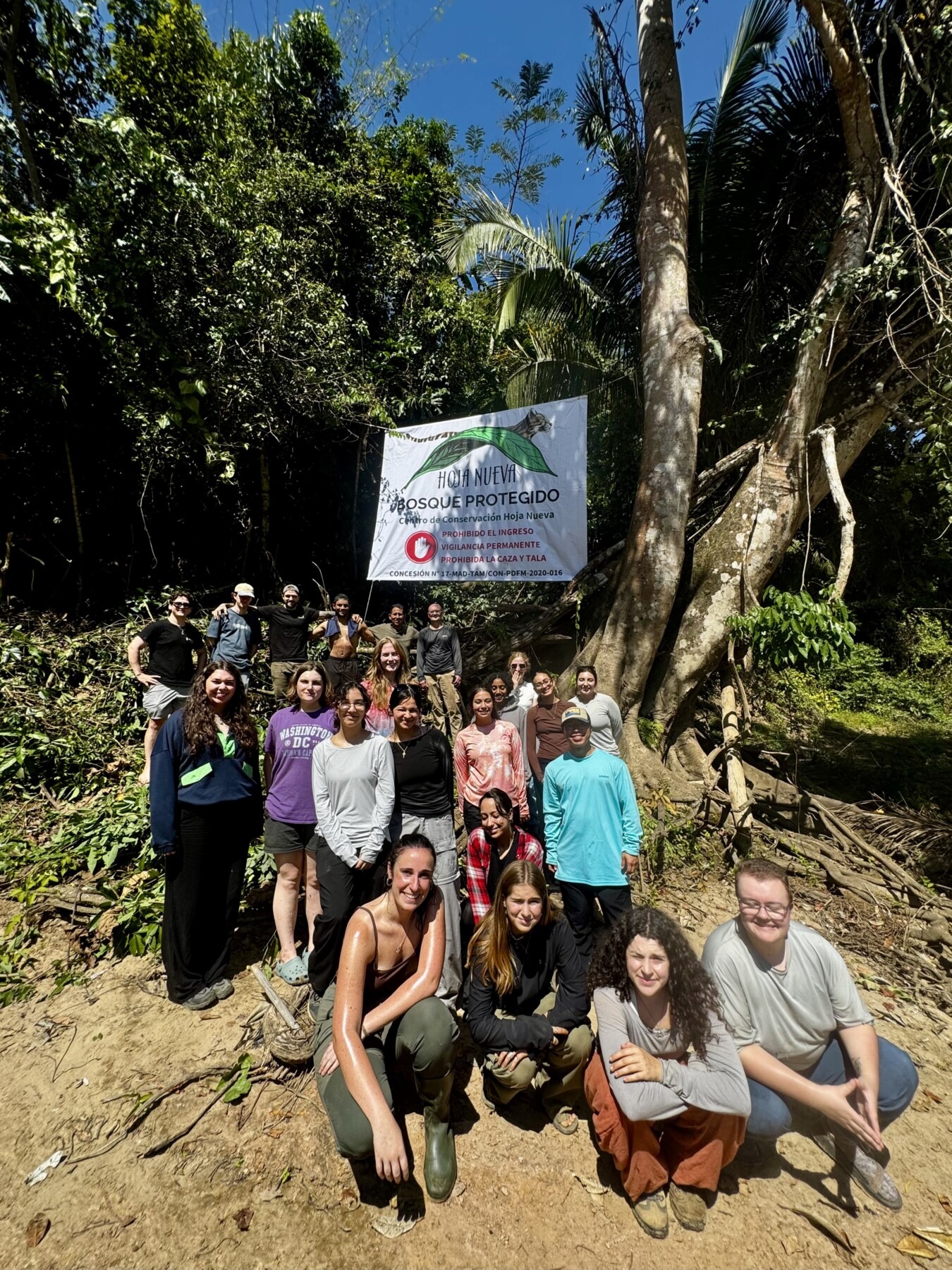
Hoja Nueva has hosted university, veterinary, educational travel, and professional groups from around the world.
Recent groups have included students and faculty from:
University of Michigan — Biology
Texas A&M University — Veterinary Medicine
Bainbridge High School — Environmental Sciences
Rustic Pathways — Teen Travel Programs
Working Abroad — Educational & Conservation Groups
We can work directly with faculty or with third-party educational travel organizations to build the program and coordinate the on-site experience.
PROGRAM DETAILS
LENGTH
Most group programs are 7–14 days, although shorter visits and longer academic programs may also be possible.
GROUP SIZE
Small and medium-sized (6-20 person) groups are generally the best fit for our remote facilities and field-based programming. Contact us with your estimated group size and we can discuss what is realistic.
WHAT CAN BE INCLUDED
Packages can incorporate:
Accommodation · Meals · Local transportation · Field programming · Instruction · Research activities · Community visits · Specialist workshops
PRICING
Group pricing is customized according to group size, program length, season, staffing, activities, transportation requirements, and any specialist programming requested.
START PLANNING YOUR PROGRAM
TELL US WHAT YOU WANT YOUR STUDENTS TO LEAVE WITH
Every group starts with a conversation.
Tell us who your participants are, when you hope to travel, how long you would like to stay, and what you want them to learn. We will work with you to build a realistic program around your objectives and the conservation opportunities available during your visit.