
OUR WORK
CONSERVATION IN PRACTICE:
One landscape. Four connected strategies.
Protecting Amazonian biodiversity is not one problem.
Wildlife trafficking, habitat loss, hunting, disease, domestic animals, gaps in ecological knowledge, weak infrastructure, and limited conservation capacity interact across the same landscape. Addressing one while ignoring the others rarely produces lasting change.
That is why our work is built around four connected strategies: rewilding, ecological research, habitat and landscape conservation, and education and capacity building.
Research helps us understand the wildlife we protect and improves how we plan releases. Protected forest provides both habitat and a living laboratory for long-term science. Community and One Health programs reduce threats beyond protected-land boundaries. Education and professional training build the people capable of carrying the work forward.
Together, these programs allow us to respond to immediate conservation problems while building the knowledge, infrastructure, partnerships, and local capacity required for long-term change in Las Piedras.
3,000+ hectares directly protected
100,000+ hectare collaborative conservation landscape
398 wild animals rescued
324 returned to the wild
01. REWILDING
RETURNING WILD ANIMALS TO WILD LIVES
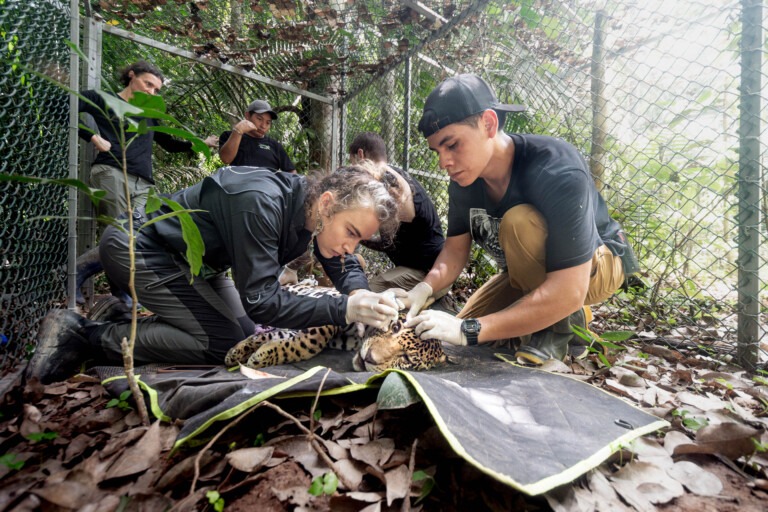
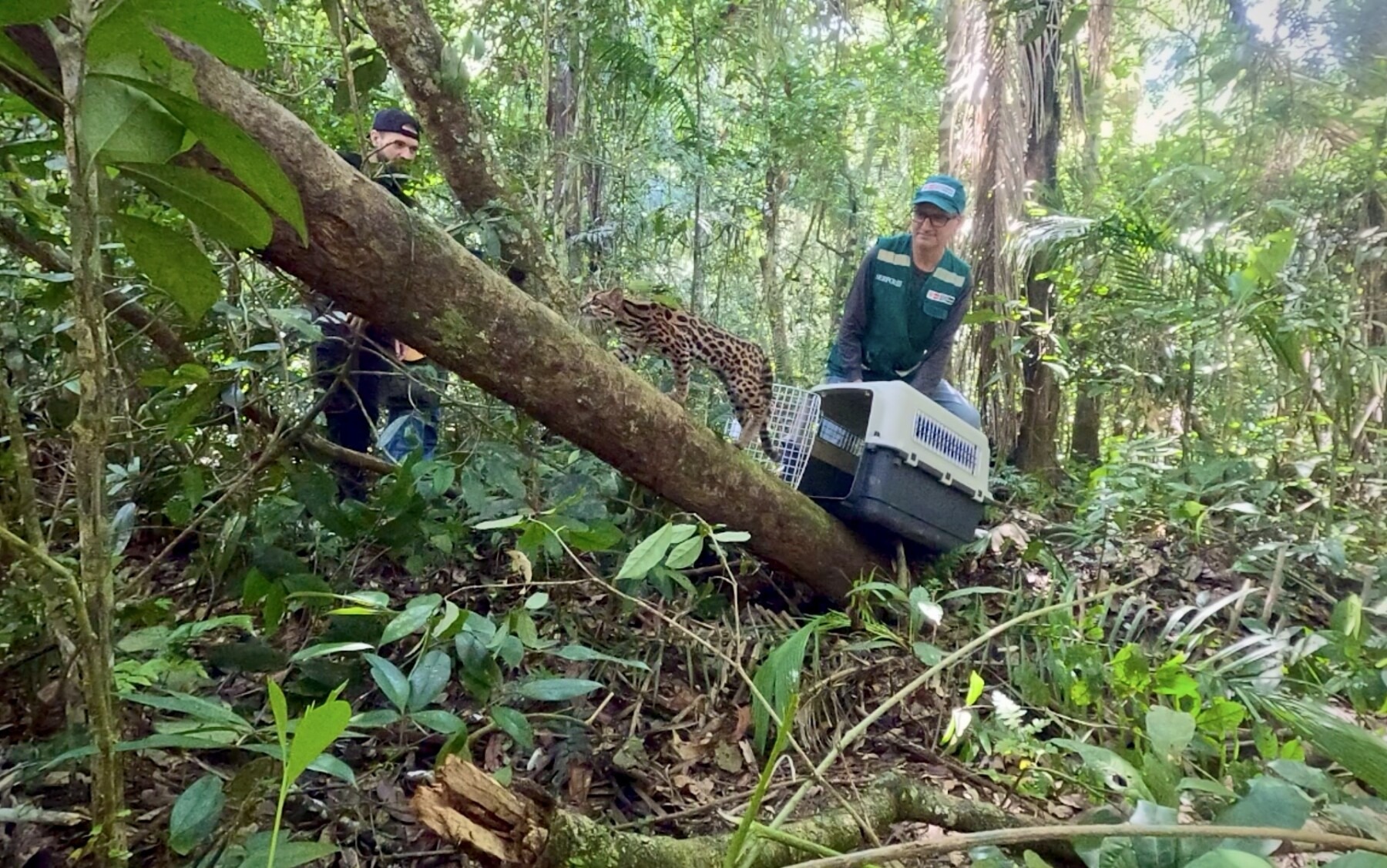
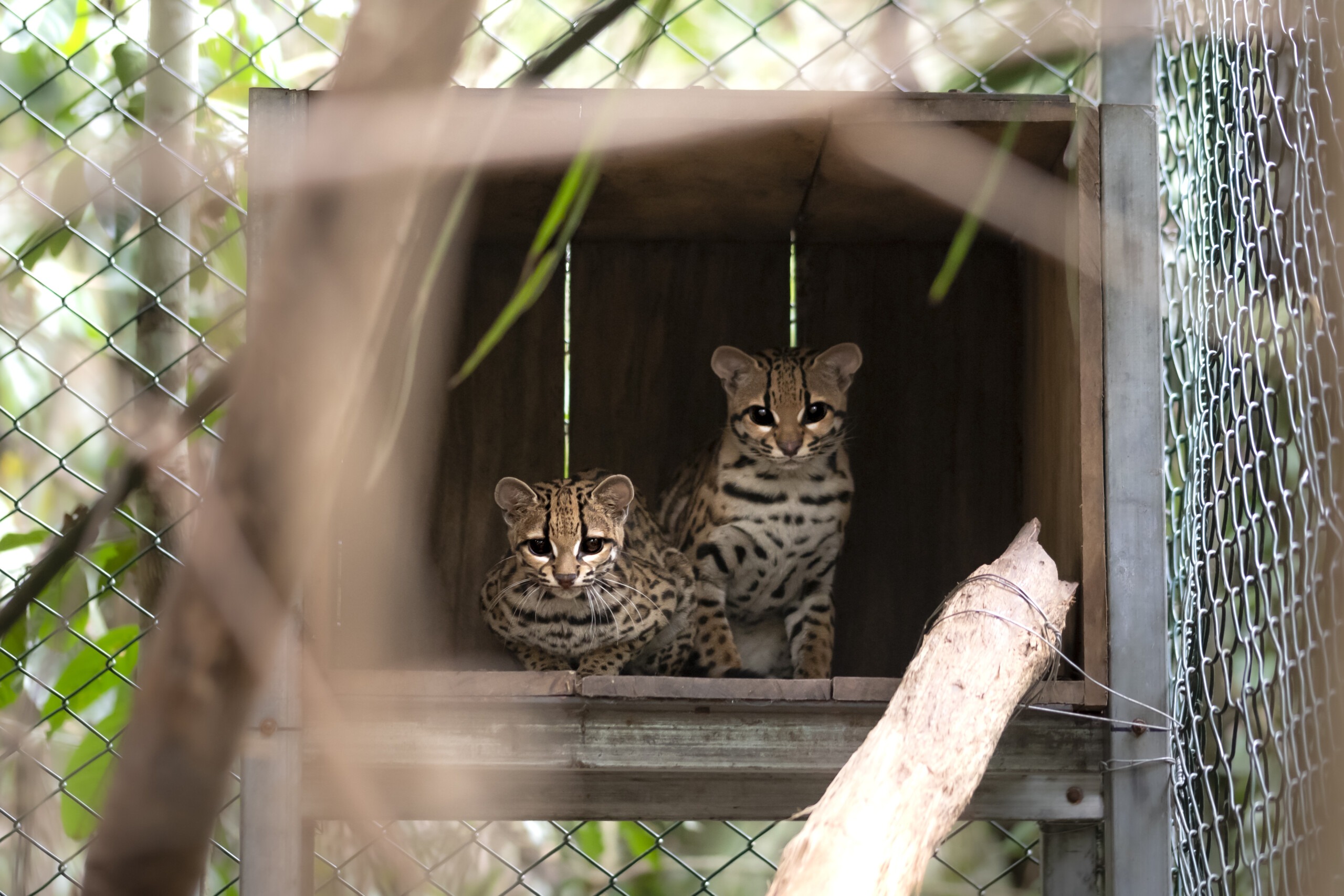
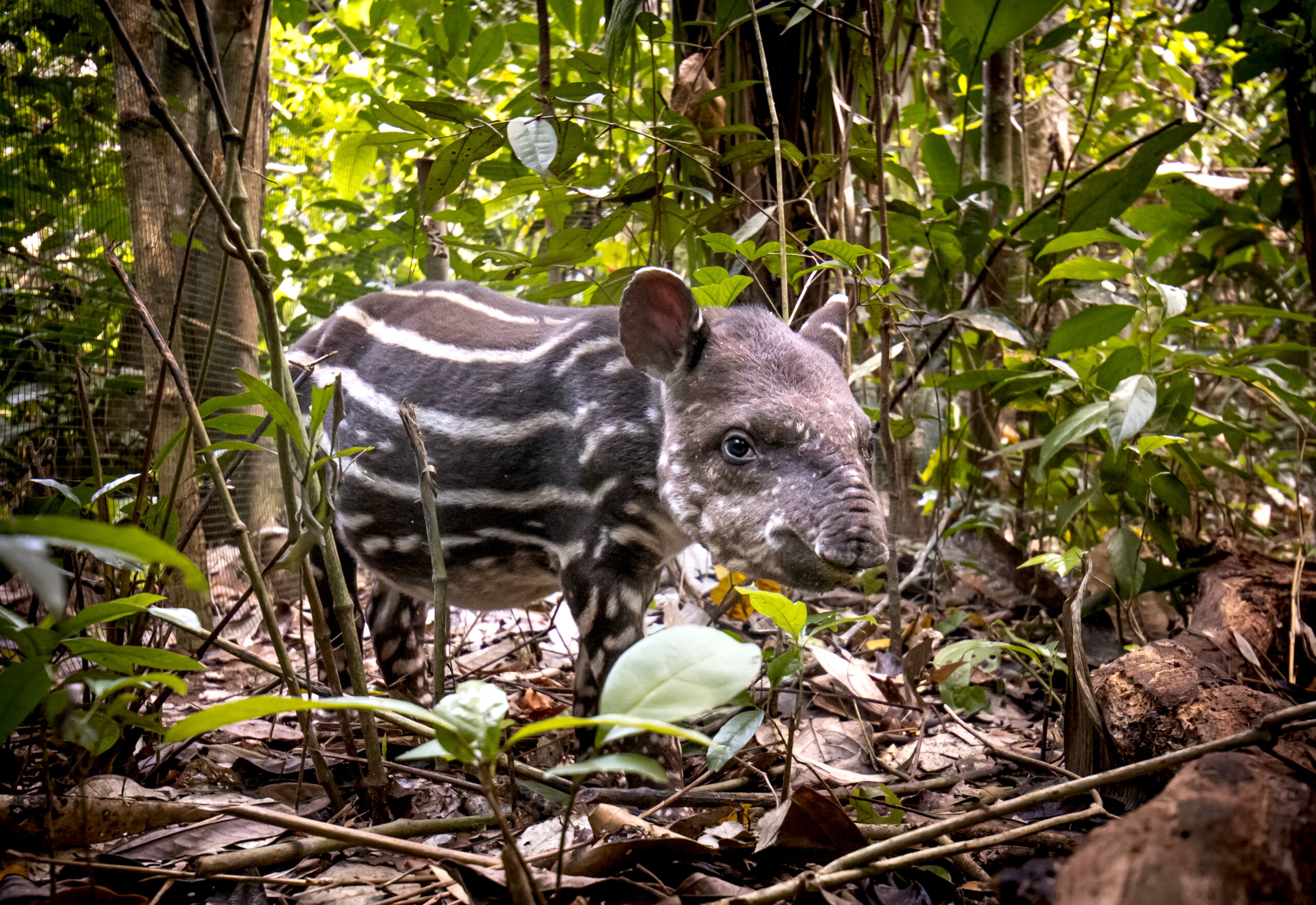
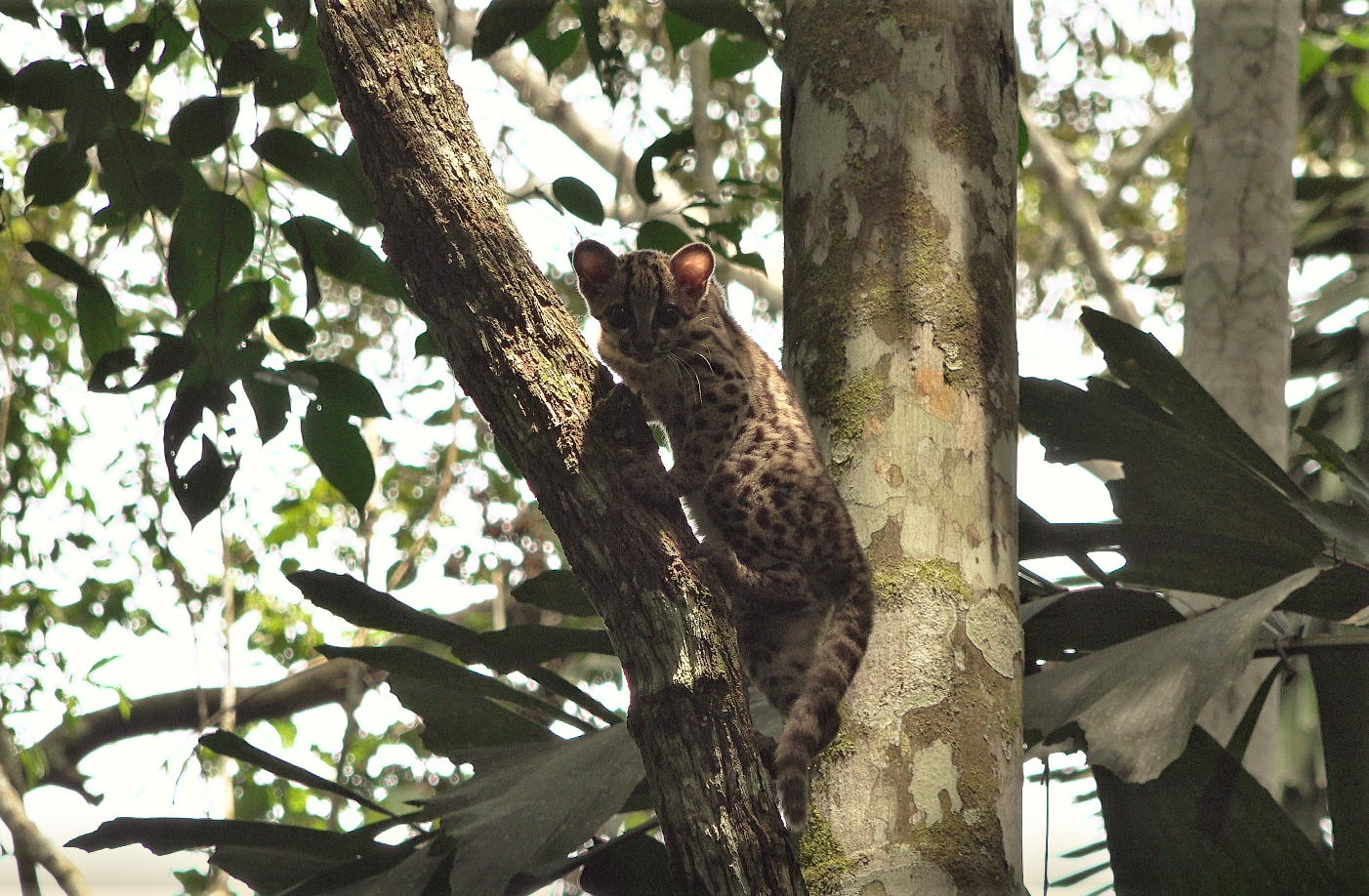
We rescue, rehabilitate, and rewild native Amazonian wildlife affected by trafficking, illegal captivity, conflict, displacement, and other human pressures.
Our goal is not simply to remove an animal from immediate danger. Whenever release is biologically and ethically appropriate, we work to restore the health, behavior, independence, and wariness of people that animal will need to survive without us.
BUILT FOR RELEASE, NOT DISPLAY
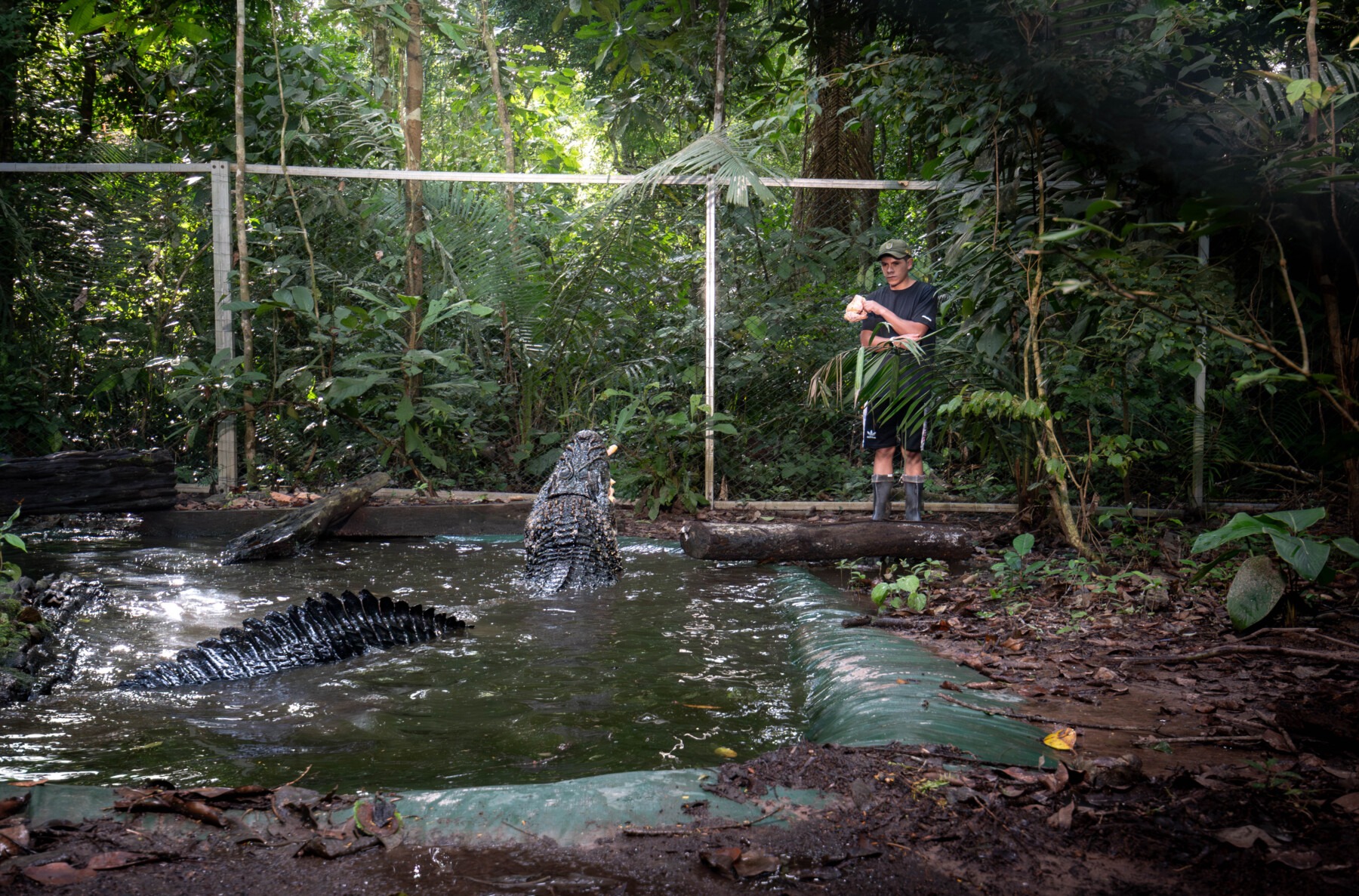
Rehabilitation takes place in large, naturalistic forest enclosures where unnecessary human contact is intentionally minimized.
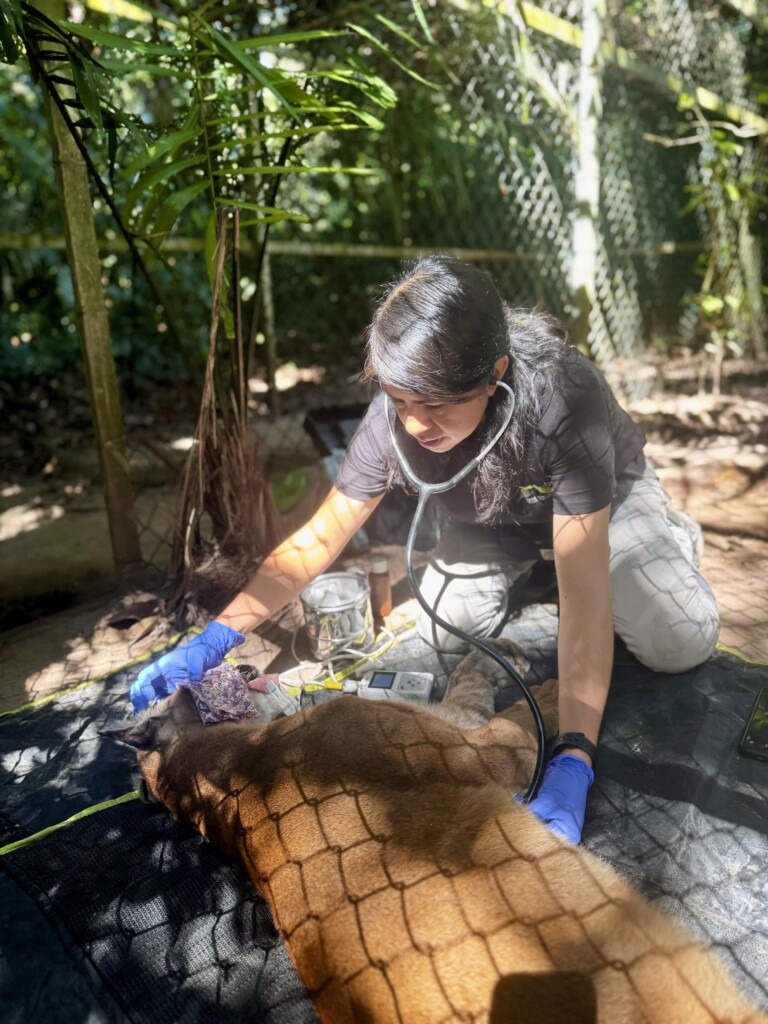
Programs are adapted to each species and individual and may incorporate natural foraging, complex enrichment, behavioral assessment, social rehabilitation, hunting opportunities and live prey where appropriate, veterinary care, physical conditioning, and progressive preparation for release.
Our wildlife center is not operated as a tourism attraction. Animals preparing for release are protected from unnecessary exposure to people. Animals that cannot be released are provided long-term care designed around their welfare rather than their value as entertainment.
Students and professional trainees may support the center through hands-off activities such as diet preparation, sanitation, gathering native plants and materials, enrichment creation, behavioral monitoring, and rehabilitation recordkeeping. Direct contact is never the point.
In 2025, OSINFOR publicly highlighted Hoja Nueva’s model as distinct from tourism-oriented centers, emphasizing its technical and scientific focus, carnivore specialization, behavioral preparation, and return-to-wild objective.
BEYOND WILD CATS
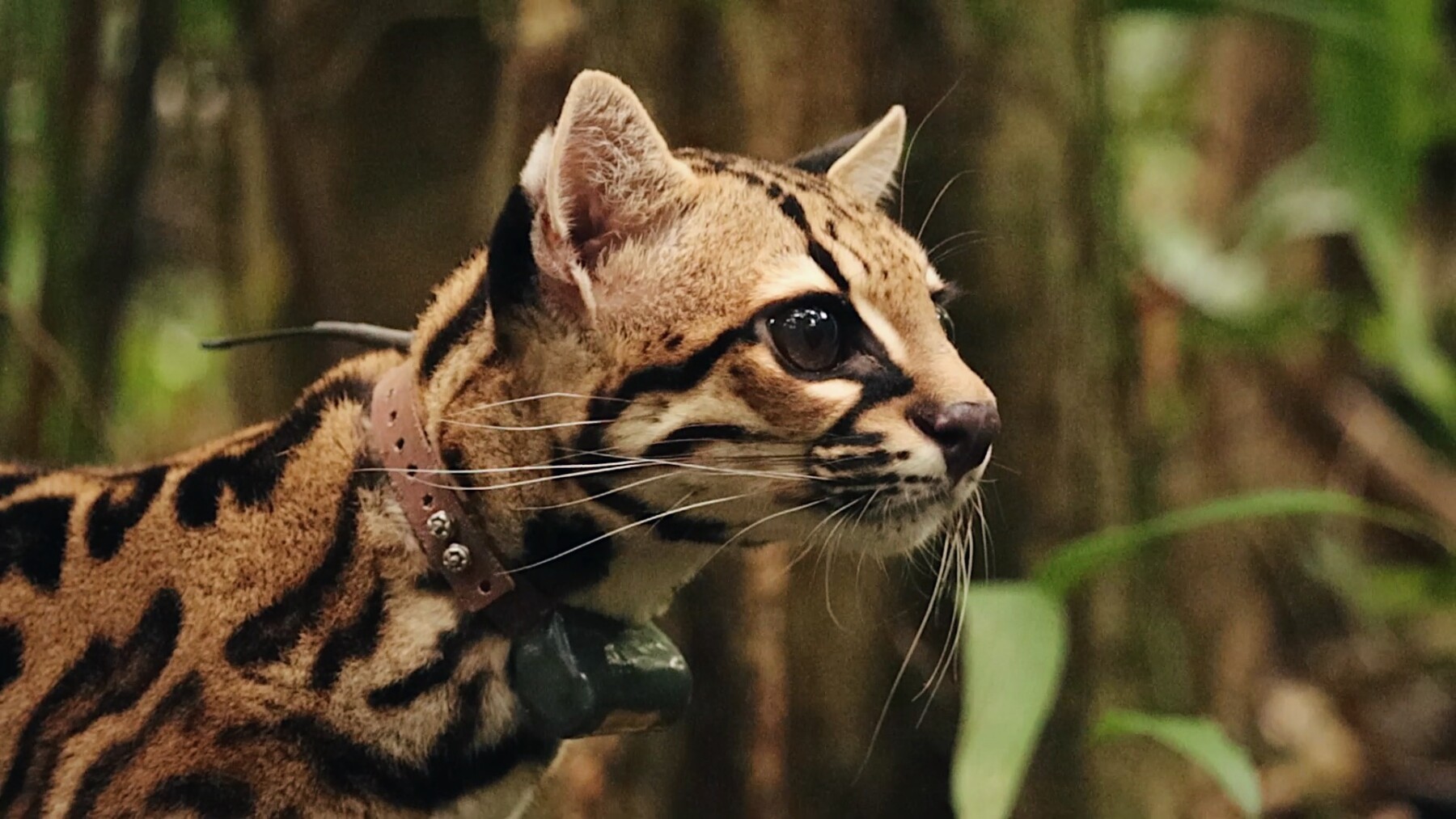
Hoja Nueva is best known for its work with Amazonian felids, but some of our most informative recent releases have involved species frequently considered difficult to rehabilitate after prolonged human contact.
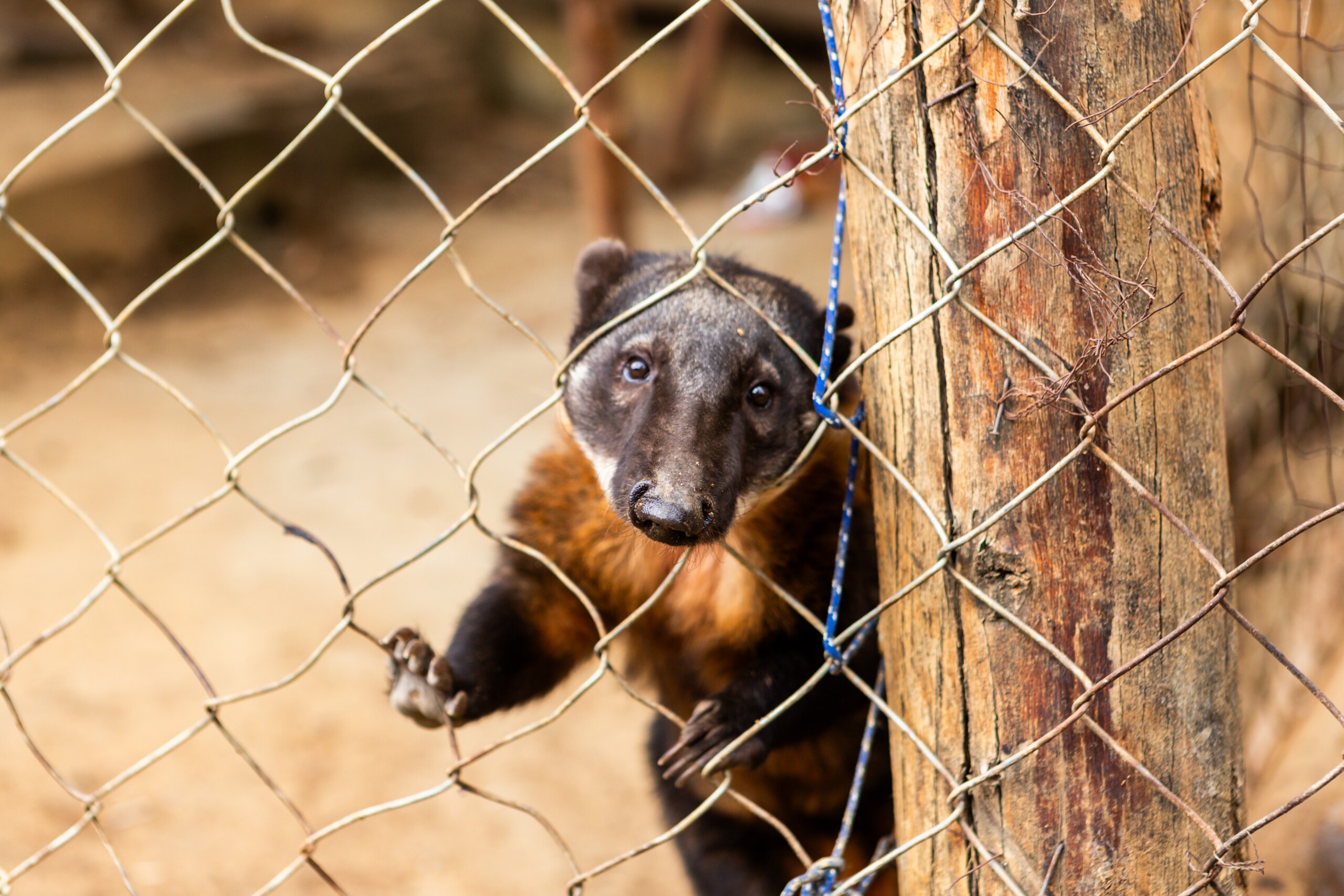
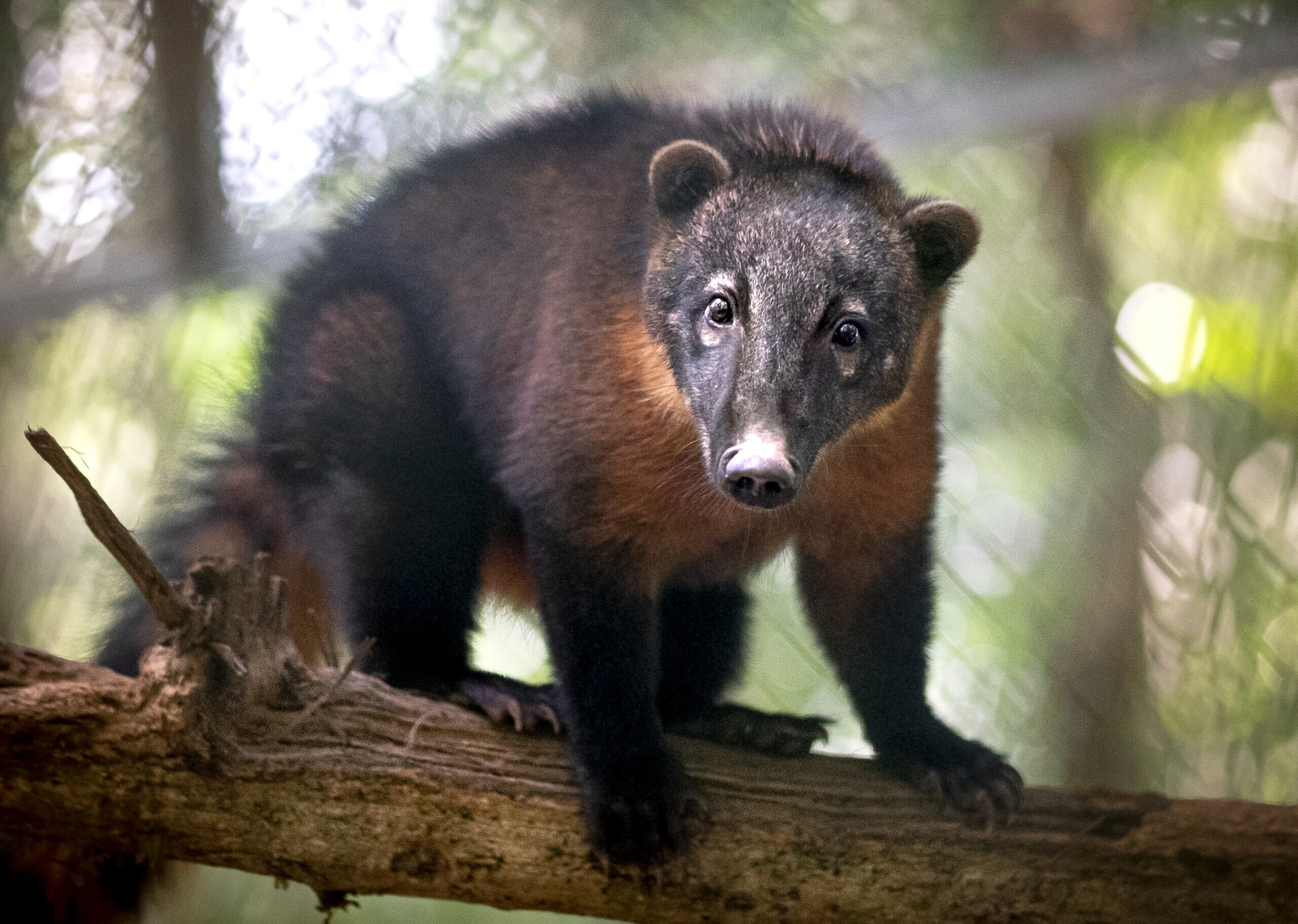
Across three separate group releases, we have returned more than 30 coatis to the forest. Many arrived highly habituated after life in captivity, zoos, or the pet trade.
Only three have subsequently returned to Hoja Nueva or approached neighboring human infrastructure. Most dispersed rapidly, and the post-release evidence available to us indicated independent foraging and successful movement into the surrounding wild landscape.
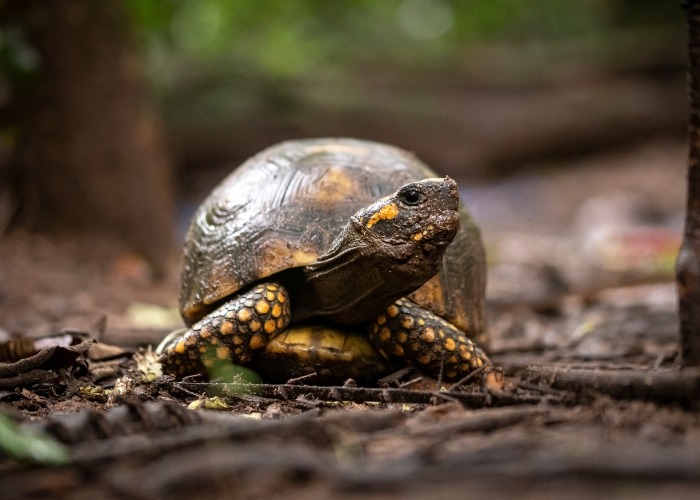
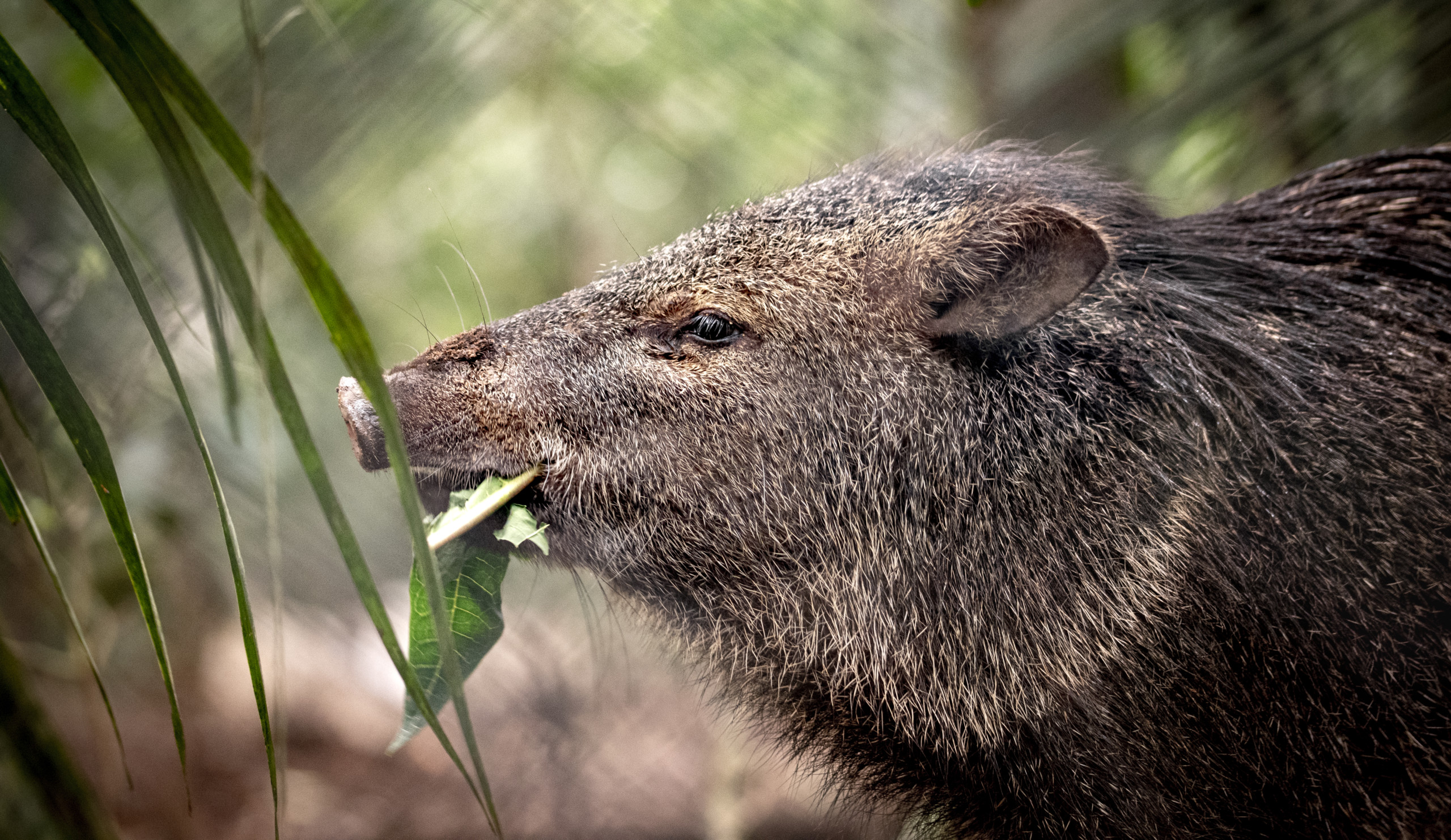
We have also released two groups of collared peccaries and one group of white-lipped peccaries.
These releases incorporated a graduated soft-release strategy, with supplementary feeding progressively reduced over approximately eight weeks. Camera traps allowed us to monitor many of the animals for more than four months after release.
Four collared peccaries remained close to human infrastructure longer than expected. Only one ultimately required recapture and release in a different location. The majority dispersed successfully, and monitoring indicated that animals were feeding independently and interacting with the surrounding wildlife community.
These experiences have reinforced an important principle in our work:
Human habituation can be a rehabilitation problem without necessarily being a permanent sentence to captivity.
SUCCESS, FAILURE & UNCERTAINTY
Rewilding is complex, and release is never a guarantee of success.
Some cats that performed extremely well during rehabilitation — including successfully hunting live prey inside large forest enclosures — later struggled to hunt consistently after release.
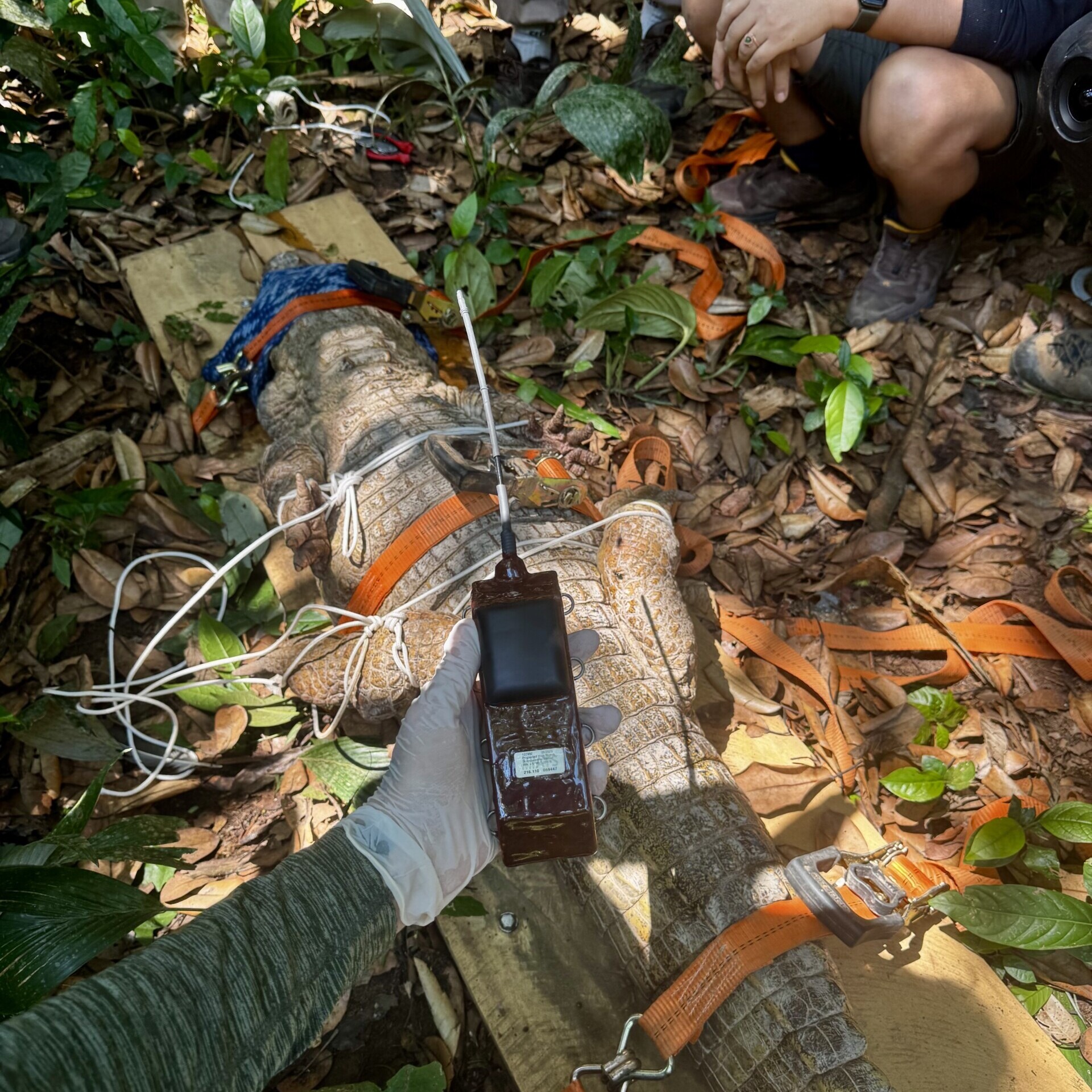
Other animals dispersed outside the effective range of our camera traps or VHF telemetry, leaving gaps in what we can responsibly claim about their long-term fate.
We do not hide those outcomes.
Failures, uncertainty, and limitations are scientifically valuable. They help us improve rehabilitation methods, make better release decisions, and prevent other organizations from repeating the same mistakes.
We are preparing a scientific publication on the rehabilitation and release of small neotropical wild cats that includes successful outcomes alongside unsuccessful outcomes, monitoring limitations, and lessons for future programs.
As wildlife-tracking technology improves — particularly smaller GPS devices with reliable drop-off systems — our ability to evaluate survival, movement, hunting, dispersal, and integration after release should improve substantially.
Transparency is part of rewilding. Conservation advances when organizations share what worked, what failed, and what remains unknown.
THE NEXT FRONTIER: JAGUARS
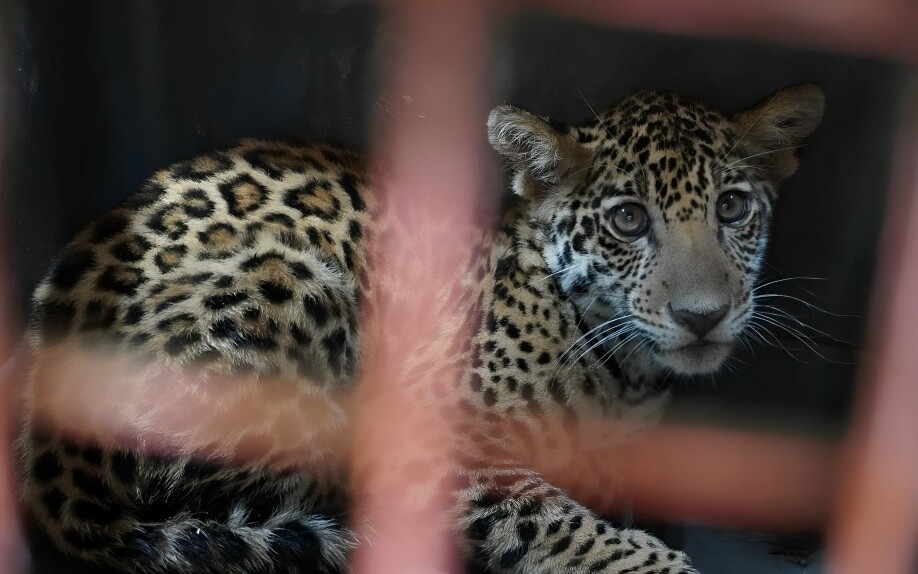
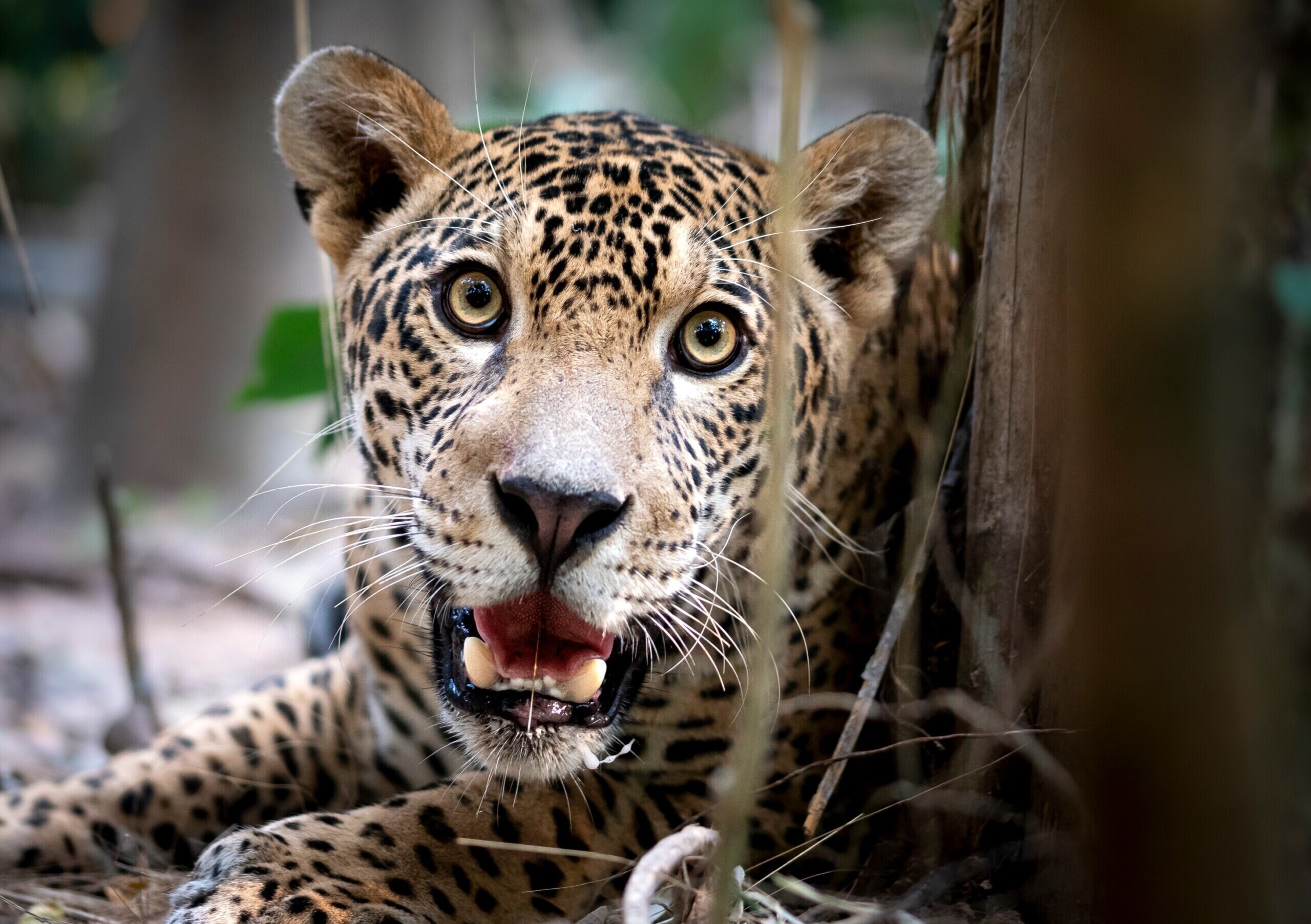
We are currently working with SERFOR to develop the release planning and protocols for Artemis and Amaru, our first two planned rehabilitated jaguar releases.
Large-carnivore release requires exceptionally careful behavioral assessment, veterinary screening, genetics and population considerations, release-site evaluation, community coordination, monitoring, contingency planning, and long-term risk management.
The objective is therefore not simply to open an enclosure door.
We are approaching these releases as long-term conservation and research projects designed to generate knowledge that may be useful far beyond two individual jaguars.
02. ECOLOGICAL RESEARCH
SCIENCE THAT CHANGES CONSERVATION PRACTICE
The Amazon is extraordinarily biodiverse, yet much of its wildlife ecology remains poorly understood.
Knowing which species are present is only the beginning. Effective conservation requires understanding where animals live, how populations change, how species interact, how they respond to human pressure, and whether conservation interventions actually work.
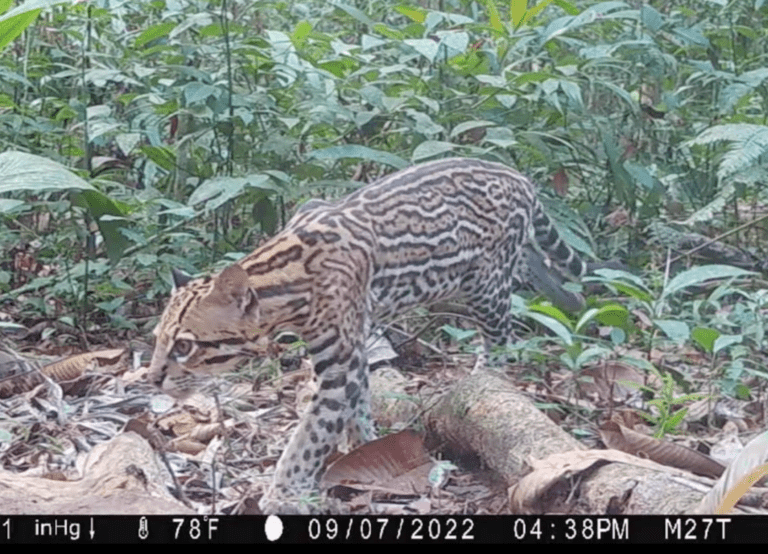
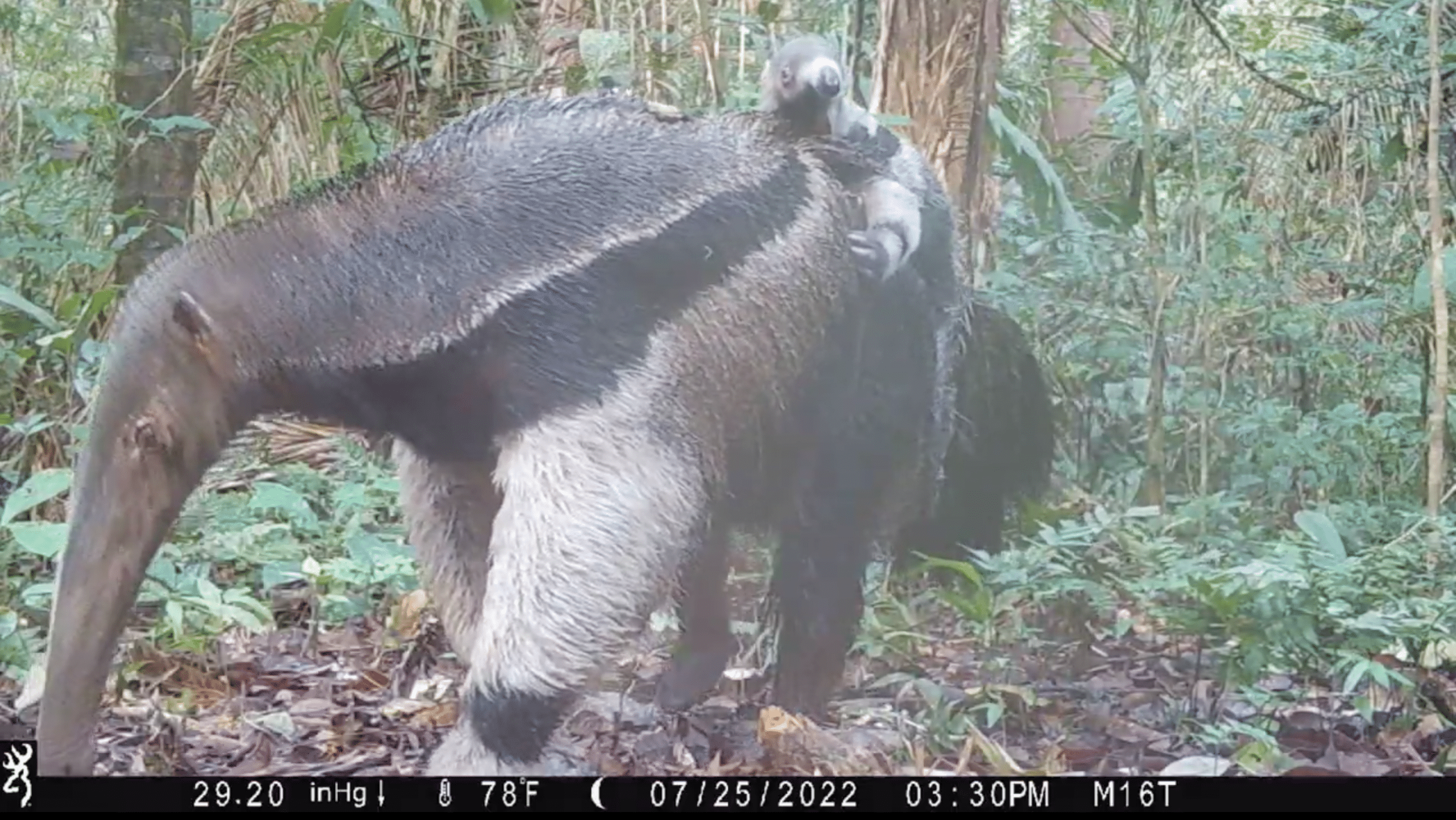
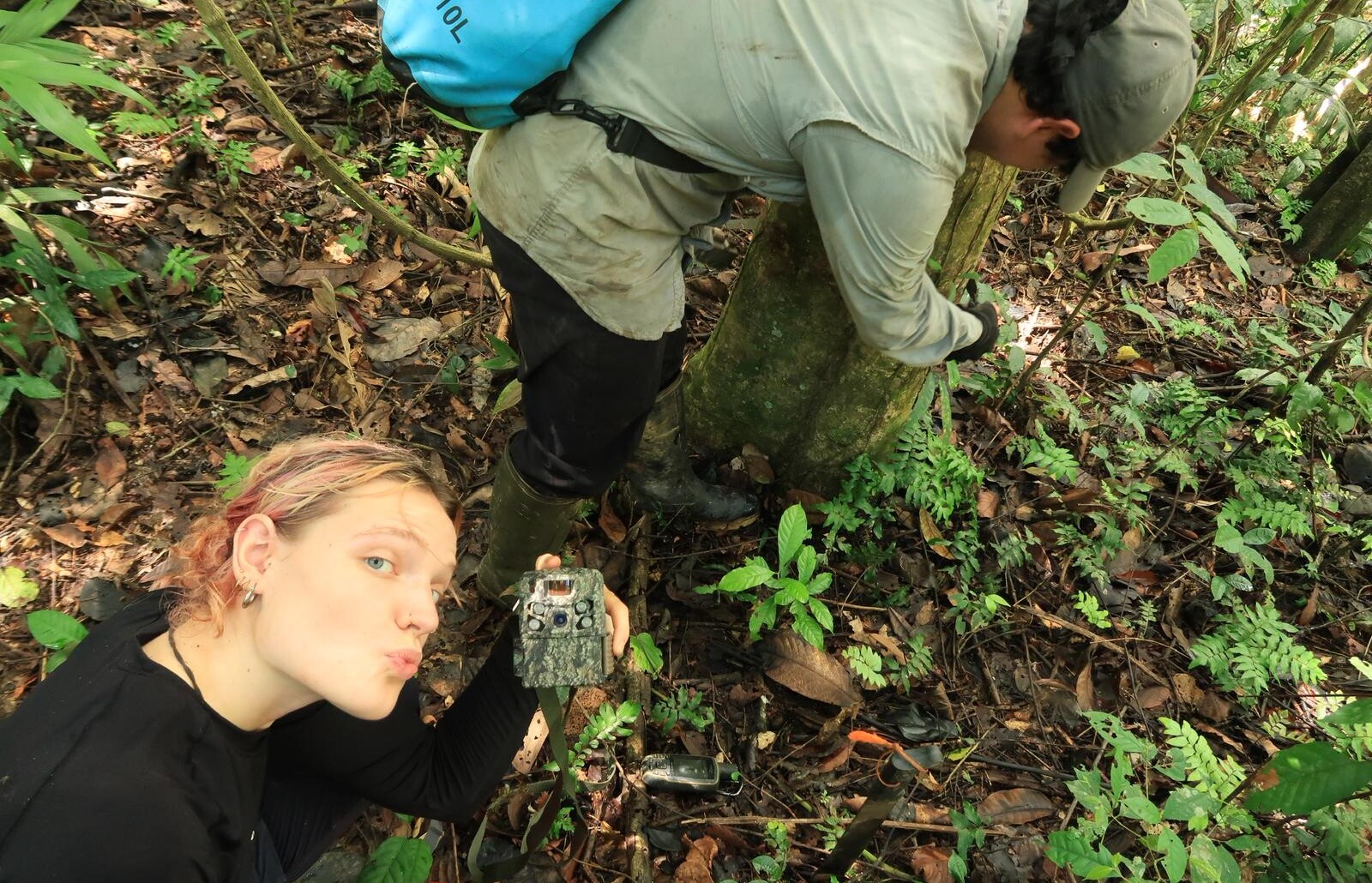
We have been collecting ecological data across Las Piedras for more than a decade. Our long-term camera-trap program now includes approximately 75 monitoring stations spanning intact conservation forest, community lands, agricultural areas, and other landscapes experiencing different levels of human influence.
Our research focuses strongly on mammals — particularly felids and other carnivores — while extending into broader wildlife communities, primates, caimans, herpetofauna, and other ecological systems.
Projects examine questions including occupancy and distribution, population density, spatial ecology, temporal activity, species interactions, habitat use, prey dynamics, human disturbance, behavior, and long-term changes in wildlife communities.
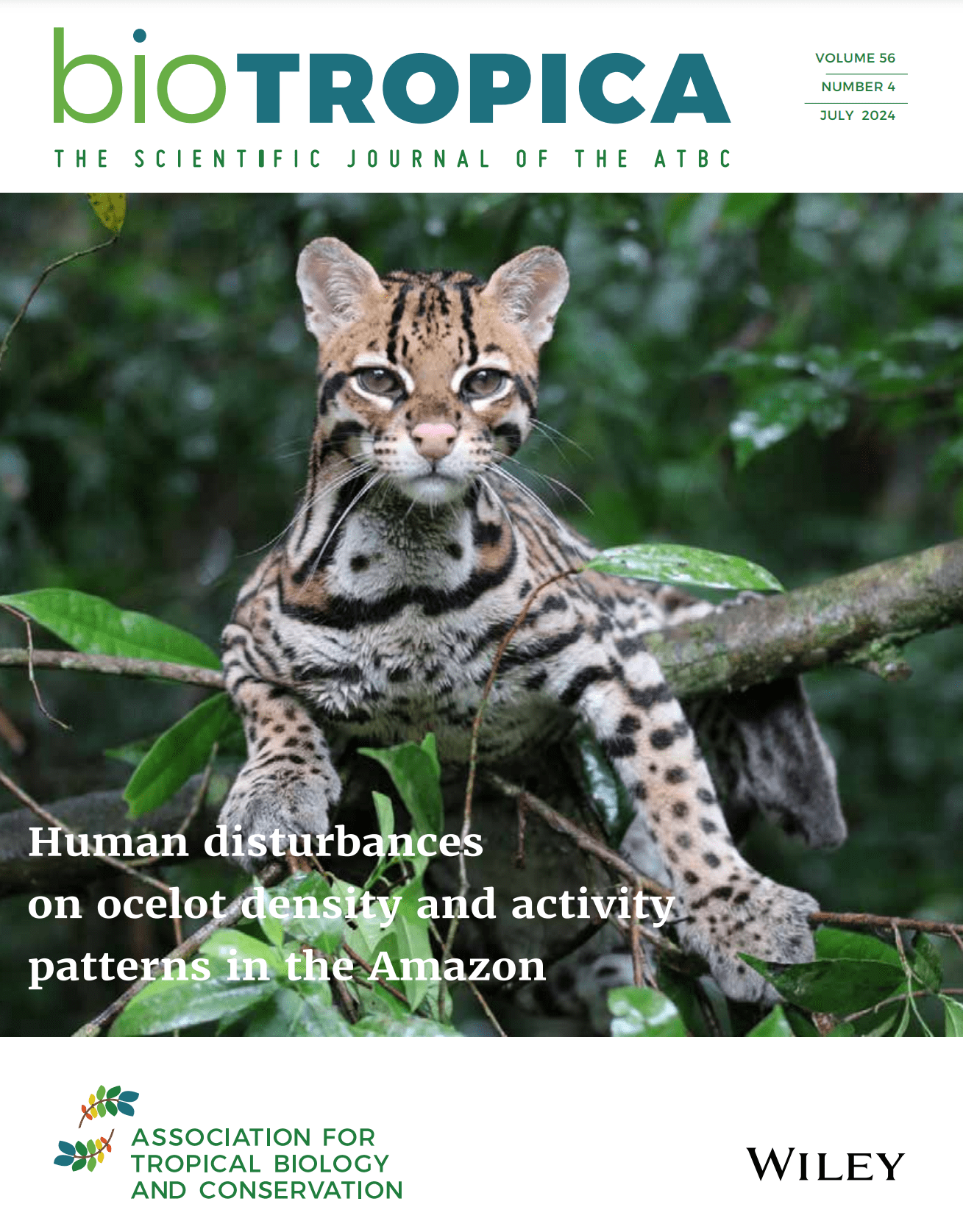
Recent peer-reviewed research has examined mammal responses to moderate human disturbance across Las Piedras, while a 2026 study used an extensive camera-trap dataset to assess puma density, space use, predator-prey relationships, and coexistence with jaguars.
RESEARCH WITH A PURPOSE
We do not measure scientific success by how quickly we can produce publications.
Publication is an outcome, not the objective.
Our priority is research built around meaningful ecological questions, robust study design, appropriate quantitative methods, reproducible workflows, transparent assumptions and limitations, and conclusions that are actually supported by the evidence.
Sometimes that means years of data collection before a question can be answered properly.
Sometimes the result is less dramatic than expected.
Sometimes the most useful finding is discovering that a method, assumption, or hypothesis did not perform as anticipated.
That is part of responsible science.
Our goal is to produce work that other scientists can trust, conservation practitioners can use, and future researchers can build upon.
This is a more mature version of the scientific philosophy already present on the old research page, which emphasized population dynamics, statistical ecology, species interactions, and conservation application.
TRAINING RESEARCHERS THROUGH REAL SCIENCE
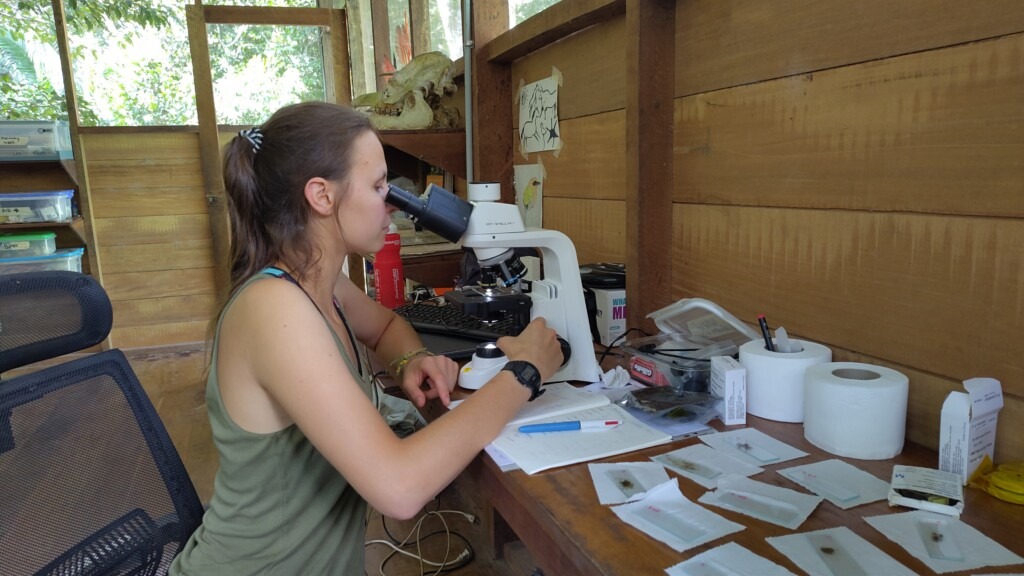
Our Advanced Research program is designed for students and early-career researchers who want to move beyond observational field experience and undertake serious scientific work.
Participants develop focused questions, work with long-term datasets or collect new field data, learn quantitative and statistical methods, interpret results, and develop projects toward theses or publishable manuscripts.
The current placement is explicitly designed around independent, publication-oriented research rather than simplified student exercises.
Since expanding this model in 2025, multiple student-led and collaborative studies have already reached publication, with a substantial pipeline of additional projects and manuscripts in development.
We would rather publish fewer rigorous studies than produce large quantities of work that do not meaningfully advance ecological understanding.
03. HABITAT & LANDSCAPE CONSERVATION
PROTECTING FOREST MEANS WORKING BEYOND ITS BOUNDARIES
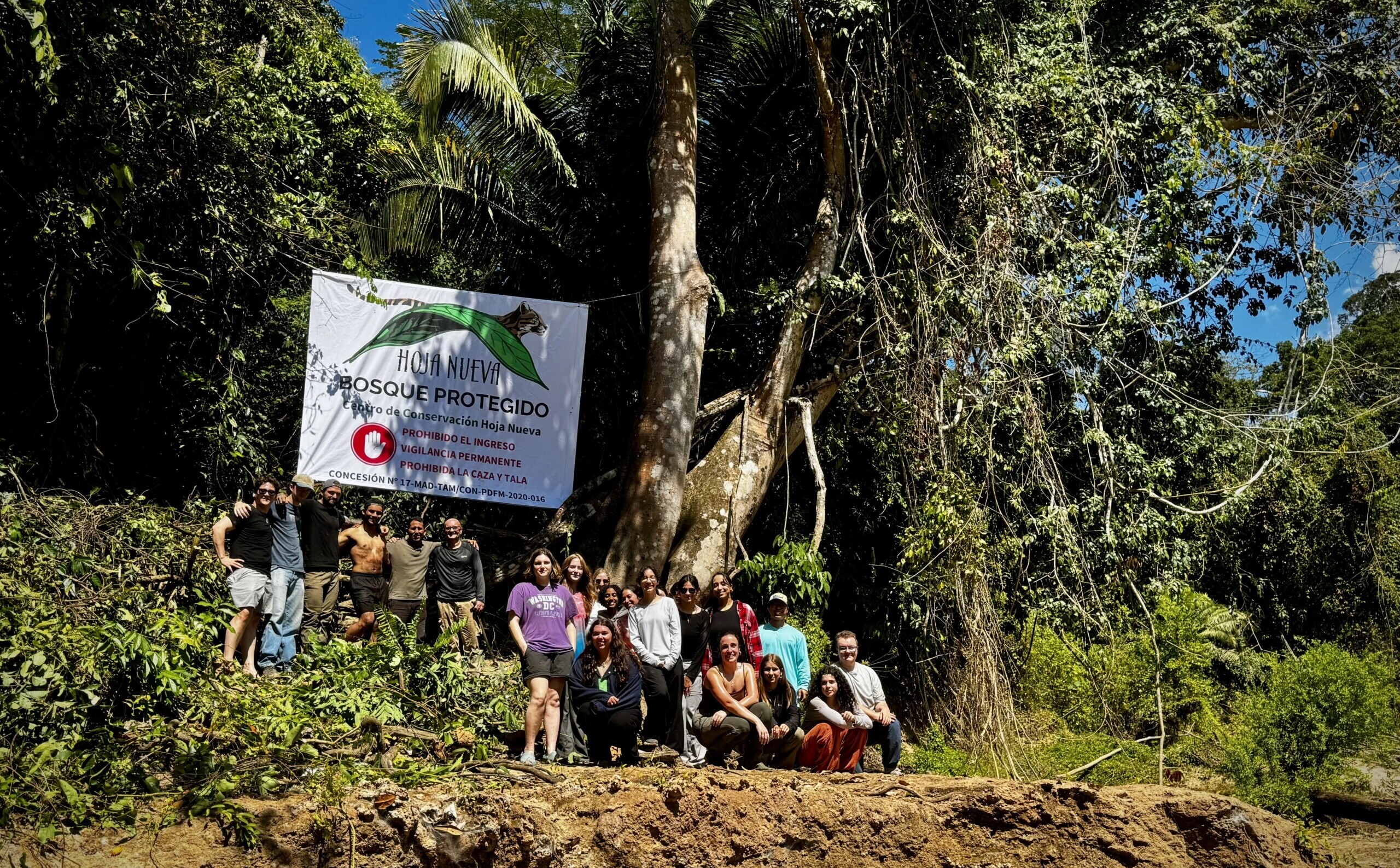
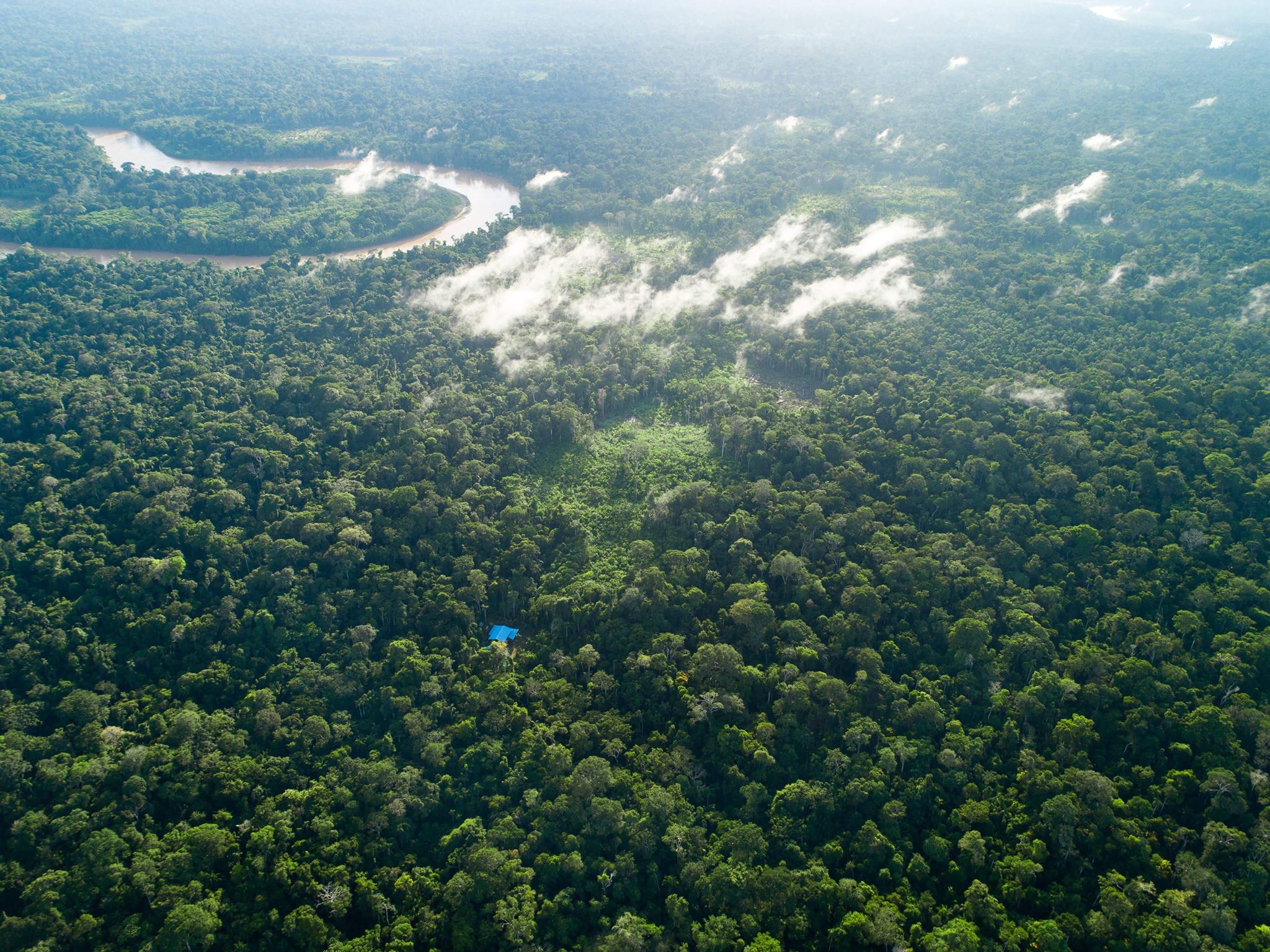
We directly protect more than 3,000 hectares of primary rainforest in Las Piedras.
Together with neighboring landholders and conservation partners, those lands form part of a connected conservation landscape exceeding 100,000 hectares.
But property boundaries mean very little to wildlife.
Animals move through communities, farms, rivers, concessions, roads, and neighboring forests. Disease, hunting, wildlife trafficking, domestic animals, waste, water quality, and economic opportunity can influence biodiversity far beyond the line separating one property from another.
For that reason, our approach to landscape conservation extends well beyond owning and protecting forest.
ONE HEALTH: DOMESTIC ANIMALS ARE A WILDLIFE ISSUE
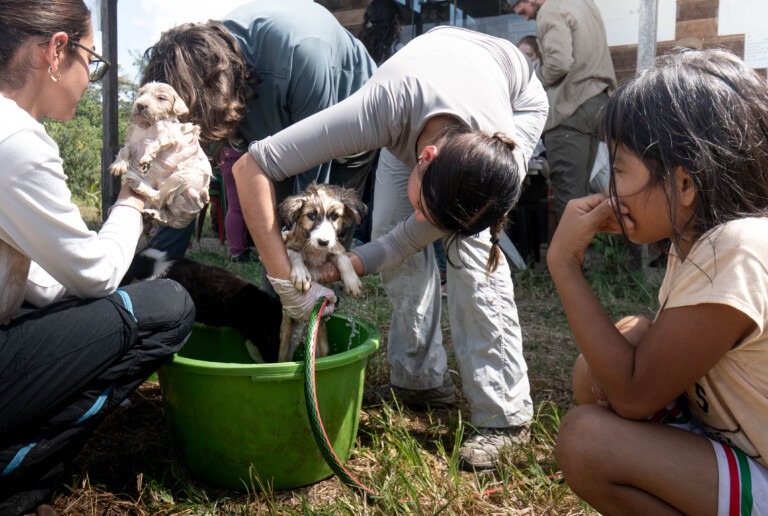
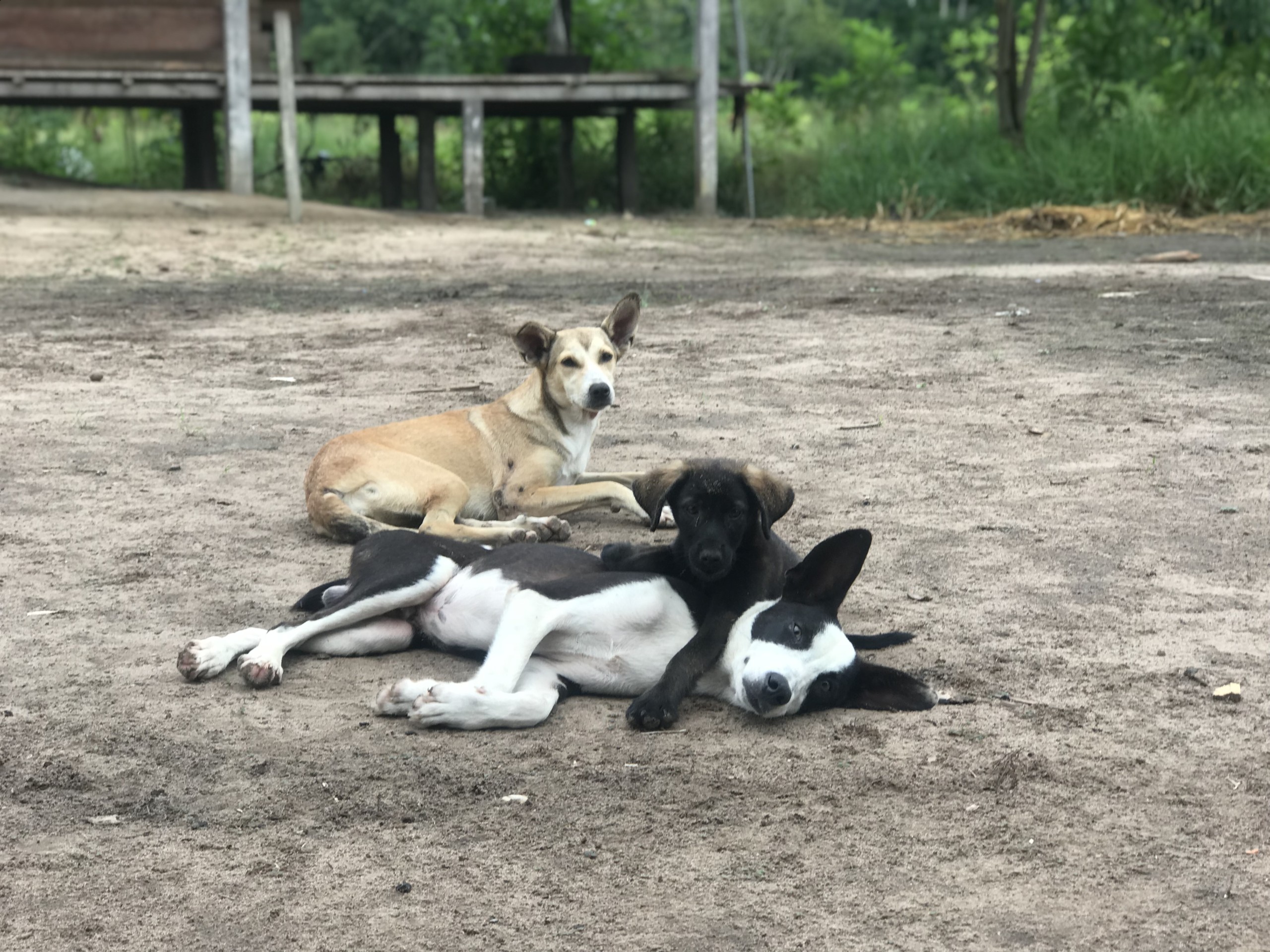
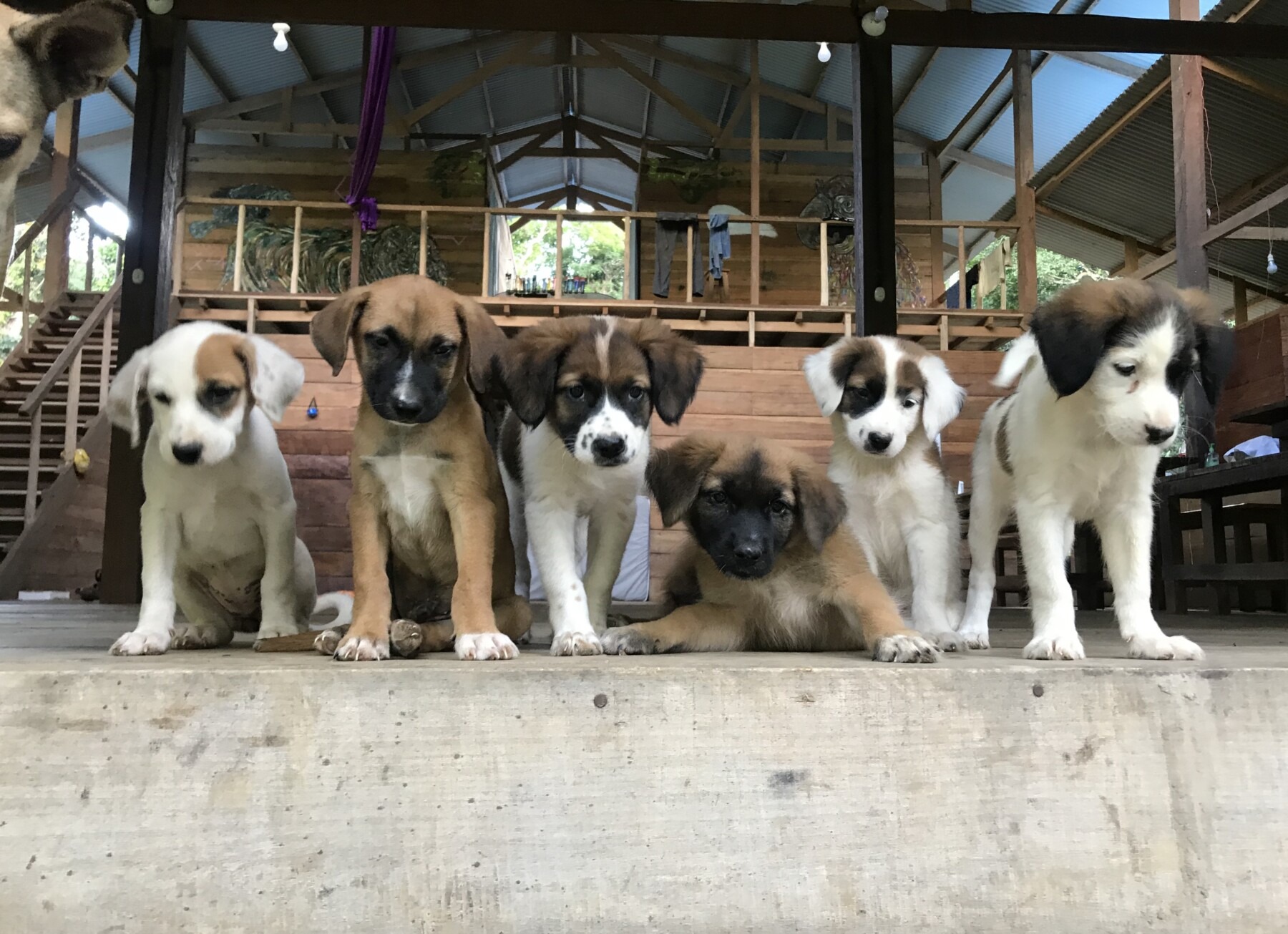
Free-roaming, unvaccinated, sick, and abandoned dogs and cats can affect wildlife through disease transmission, predation, competition, and conflict.
We therefore work with remote communities to provide sterilization, vaccination, deworming, veterinary treatment, and other care for domestic animals.
When dogs or cats are abandoned and cannot safely remain in their communities, we work to rescue and rehome them.
We have directly rescued hundreds of domestic animals and supported many more through veterinary treatment and community campaigns.
We are also developing a larger, purpose-built dog and cat rescue facility in Puerto Maldonado so this work can continue at a greater scale.
This is expensive and logistically difficult work, but it reflects a fundamental One Health principle:
The health of people, domestic animals, wildlife, and ecosystems cannot be separated.
Our current Immersive Conservation program likewise treats One Health and domestic-animal health as part of conservation practice rather than a separate welfare issue.
CONSERVATION WITH COMMUNITIES
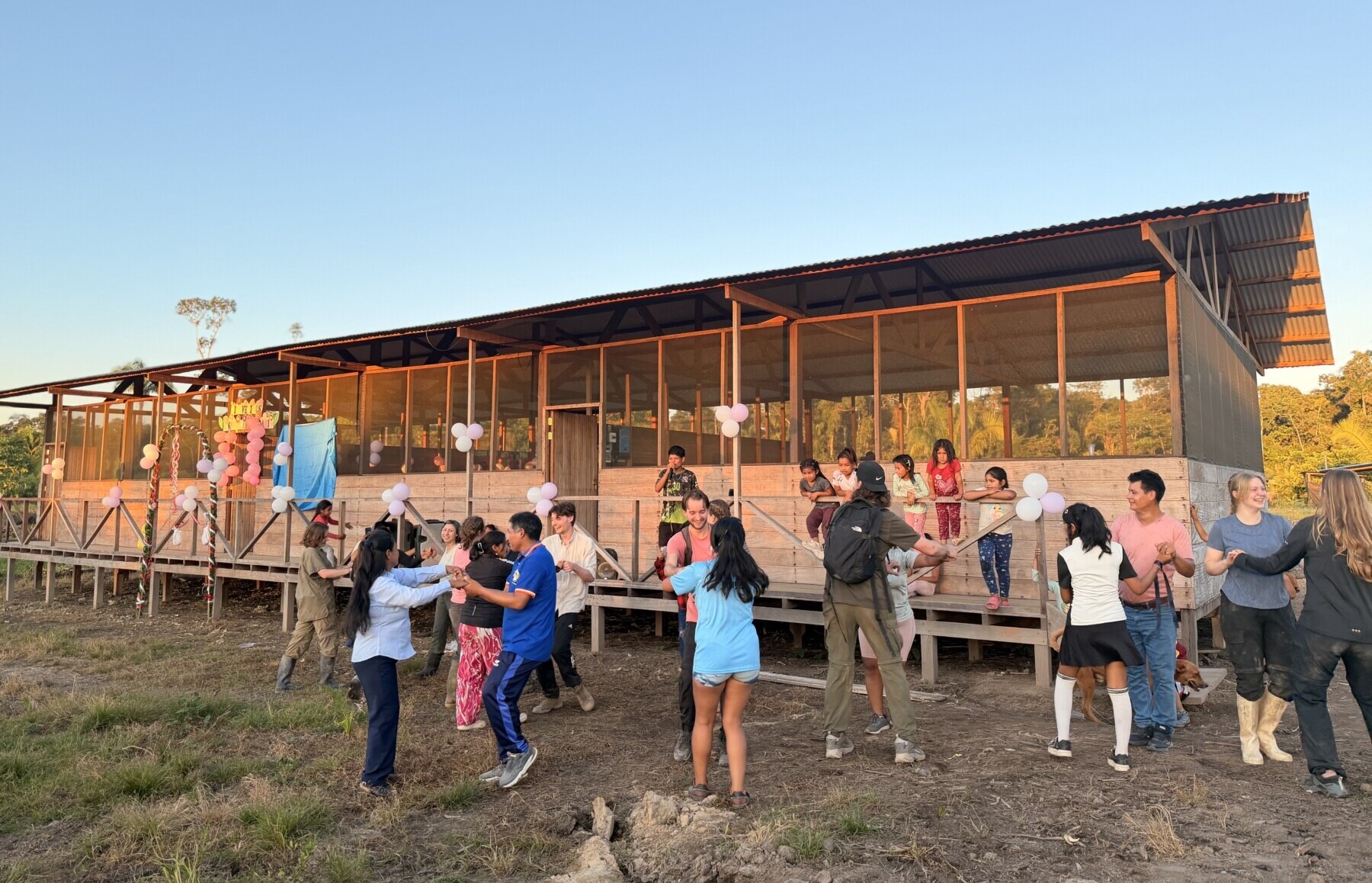
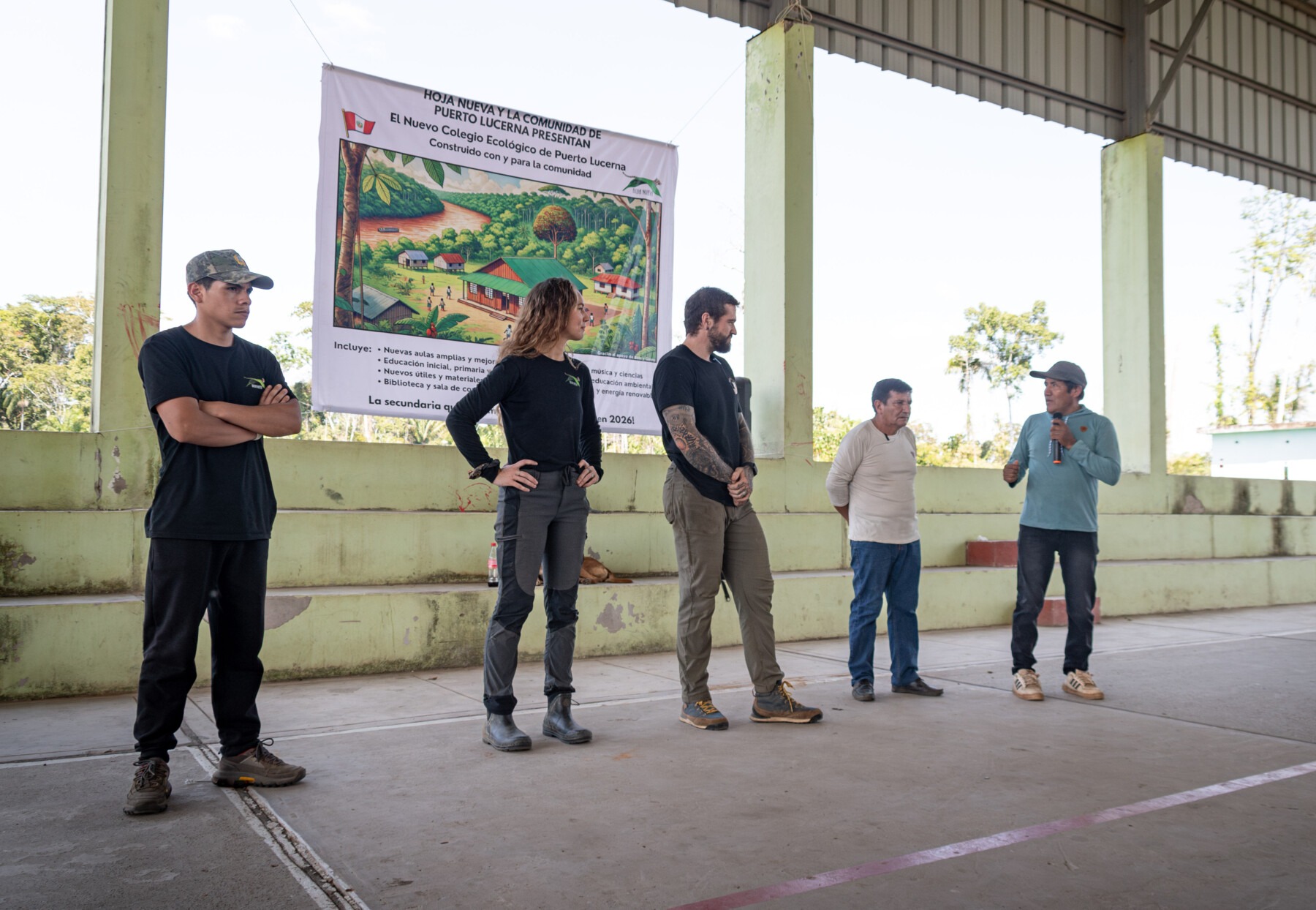
Our relationship with Puerto Lucerna extends far beyond occasional conservation workshops.
We help support maintenance of the community’s clean-water system and local waste-management infrastructure in a place where conventional municipal waste extraction is not available.
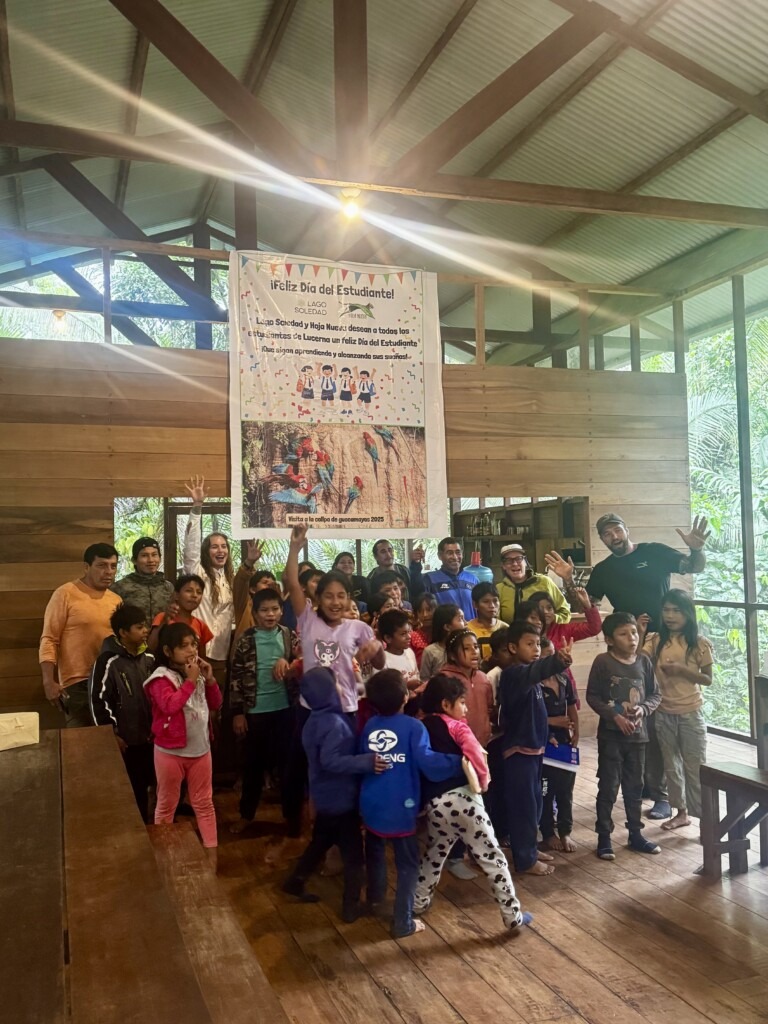
We conduct environmental and wildlife education with students from initial education through secondary school.
In 2025–2026, Hoja Nueva helped build Puerto Lucerna’s first local secondary-school facility, giving families an option for their children to continue their education without necessarily leaving the community.
The school currently includes three classrooms and has been equipped with solar power, water, furniture, whiteboards, and audiovisual equipment.
We are also working with the De la Cruz family and conservation partner Lago Soledad to co-create a riverfront community space for education, gathering, and locally driven initiatives.
These projects may not always look like traditional wildlife conservation.
But functioning infrastructure, education, public health, trusted relationships, and viable local communities all shape whether forest conservation succeeds over decades rather than years.
CONSERVATION AS A LOCAL ECONOMY
We maintain approximately 15 permanent positions and create additional seasonal work through research, transportation, construction, maintenance, logistics, wildlife care, fieldwork, and conservation projects.
Many members of our team developed their expertise through years of practical work and increasing responsibility within Hoja Nueva.
Long-term conservation is stronger when protecting the forest also creates meaningful opportunities for the people who live alongside it.
The original Applied Conservation page already recognized this connection between protected forest, local stakeholders, infrastructure, employment, and community initiatives; this version makes that relationship much more concrete.
04. EDUCATION & CAPACITY BUILDING
BUILDING THE PEOPLE WHO WILL CARRY THE WORK FORWARD
Conservation cannot remain dependent on a small number of specialists.
One of our largest long-term investments is therefore in people.
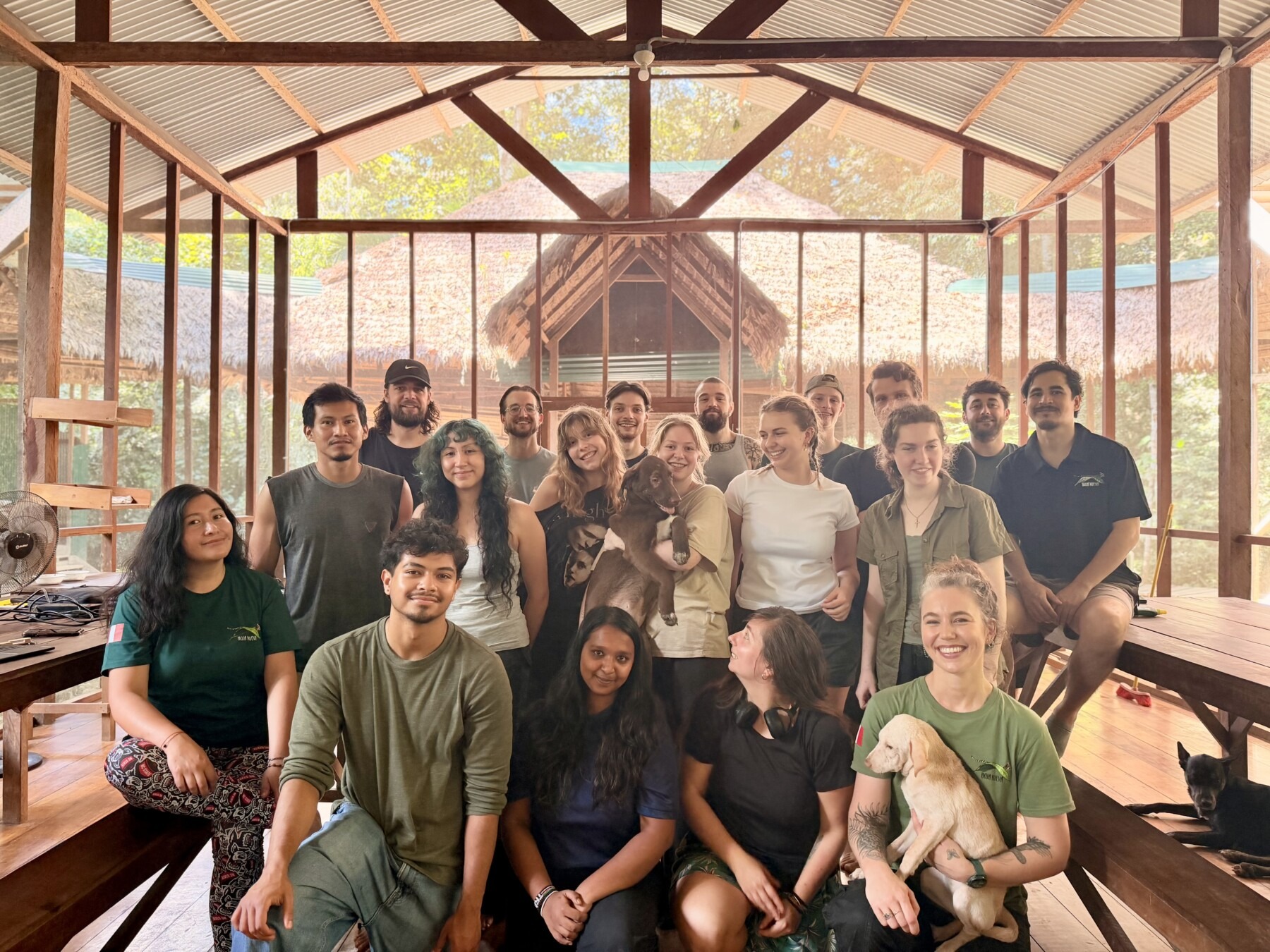
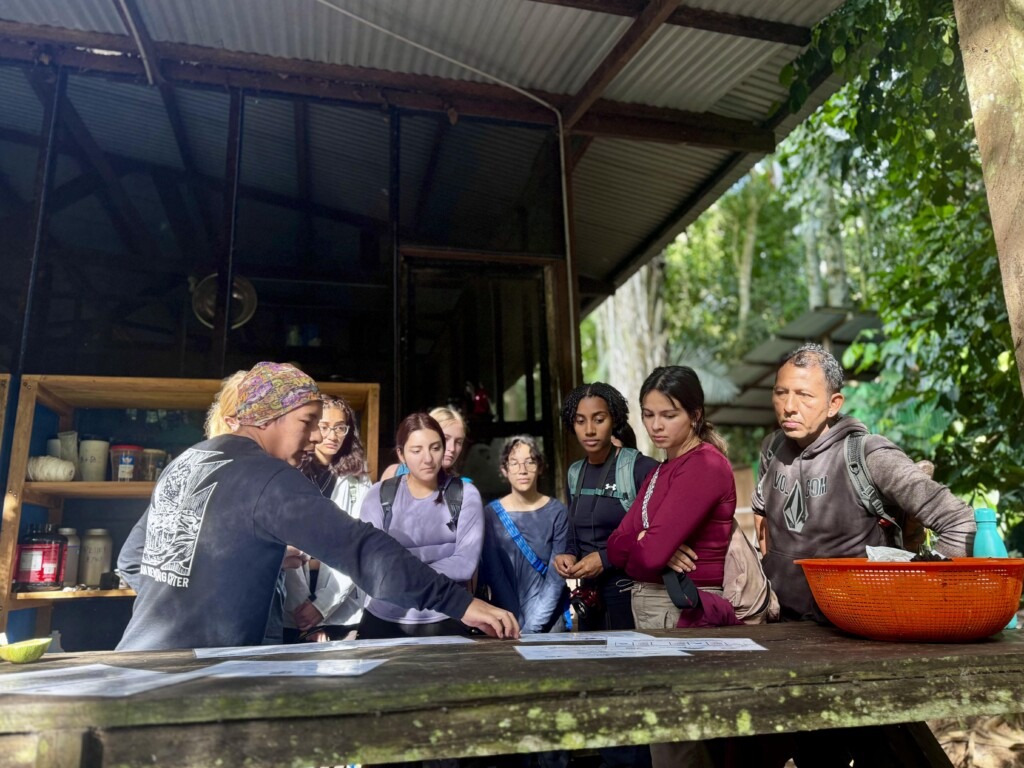
Approximately 75-100 Peruvian and international students now participate in Hoja Nueva programs each year, ranging from people encountering field conservation for the first time to advanced researchers developing publishable scientific projects.
LEARNING CONSERVATION AS IT ACTUALLY HAPPENS
Our Immersive Conservation Internship exposes participants to the interconnected reality of conservation rather than presenting wildlife care, science, community work, and field ecology as isolated disciplines.
Participants may contribute to camera trapping, ecological monitoring, wildlife-rehabilitation support, rainforest field skills, enrichment, One Health activities, environmental education, and community conservation projects.
The objective is not wildlife tourism.
It is to understand what conservation work actually looks like — including the physical, repetitive, logistical, scientific, and sometimes emotionally difficult parts of the job.
The current program is explicitly structured around this combination of field research, rehabilitation support, community conservation, and practical rainforest experience.
FROM IMMERSION TO SPECIALIZATION
For people ready to go deeper, our specialized programs provide more focused training.
The Advanced Research Placement supports thesis-level and publication-oriented ecological research.
Our Wildlife Rehabilitation & Rewilding Certificate Course combines structured scientific instruction with hundreds of hours of supervised practical experience inside a functioning wildlife center.
Veterinary and quantitative-ecology programs provide additional pathways into wildlife health, field data collection, ecological modeling, and applied conservation science.
The purpose across all of these programs is the same: not simply to give students an unusual experience, but to develop judgment, practical competence, scientific literacy, and a more realistic understanding of conservation work.
A RESEARCH STATION BUILT FOR THE AMAZON
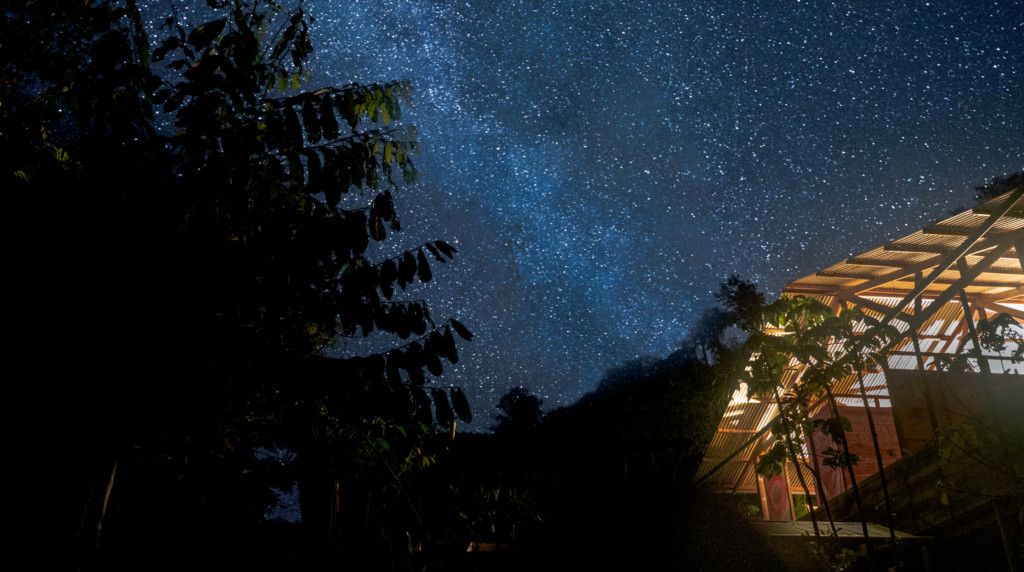
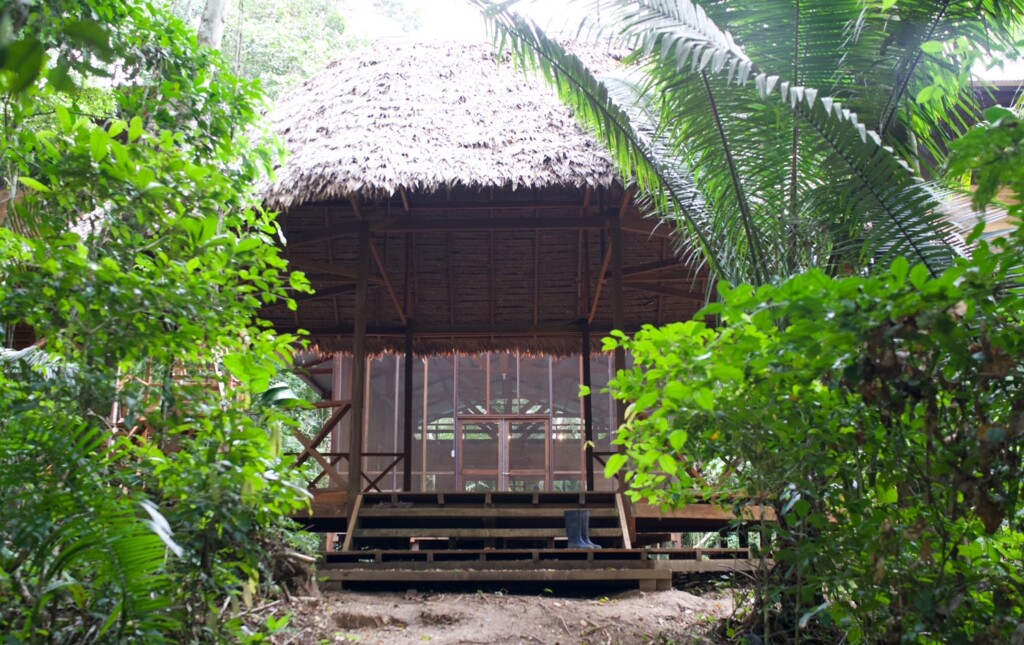
In 2024, we completed a purpose-built research and education center inside the protected forest.
The station is intentionally remote and low-impact but designed to make serious long-term work possible.
It operates primarily on solar power and incorporates composting sanitation, water systems, communal accommodation, a large kitchen and dining space, offices and work areas, observation infrastructure, and connectivity for researchers and students spending extended periods in the field.
It is rustic because it is deep in the Amazon.
But it is also comfortable enough for people to stay for weeks or months and focus on the work they came to do.
EDUCATION STARTS LOCALLY
Capacity building is not limited to people who travel internationally to study with us.
In Puerto Lucerna, we work with students from early childhood through secondary school, providing environmental and wildlife education grounded in the ecosystems that surround their own community.
Our objective is not simply to tell young people that the Amazon should be protected.
It is to help create the knowledge, infrastructure, and opportunities that allow them to imagine themselves as scientists, conservationists, wildlife professionals, educators, entrepreneurs, or community leaders without having to disconnect from the place they call home.
FOUR PILLARS. ONE CONSERVATION SYSTEM.
Wildlife rehabilitation cannot succeed without suitable forest to release animals into.
Forest protection cannot be strategically managed without understanding the species and ecological processes within it.
Research has limited conservation value if its findings never influence what happens on the ground.
And none of those systems can endure without trained people, healthy communities, strong institutions, and local leadership.
That is why we do all four.
We protect wildlife today while studying how to protect it better tomorrow.
We protect forest while addressing threats that originate beyond its boundaries.
We generate science while applying what we learn.
And we train people while building institutions capable of continuing the work without depending forever on the people who started them.
Our work is not a collection of separate projects.
It is one long-term effort to make the Las Piedras landscape stronger, wilder, and more resilient.